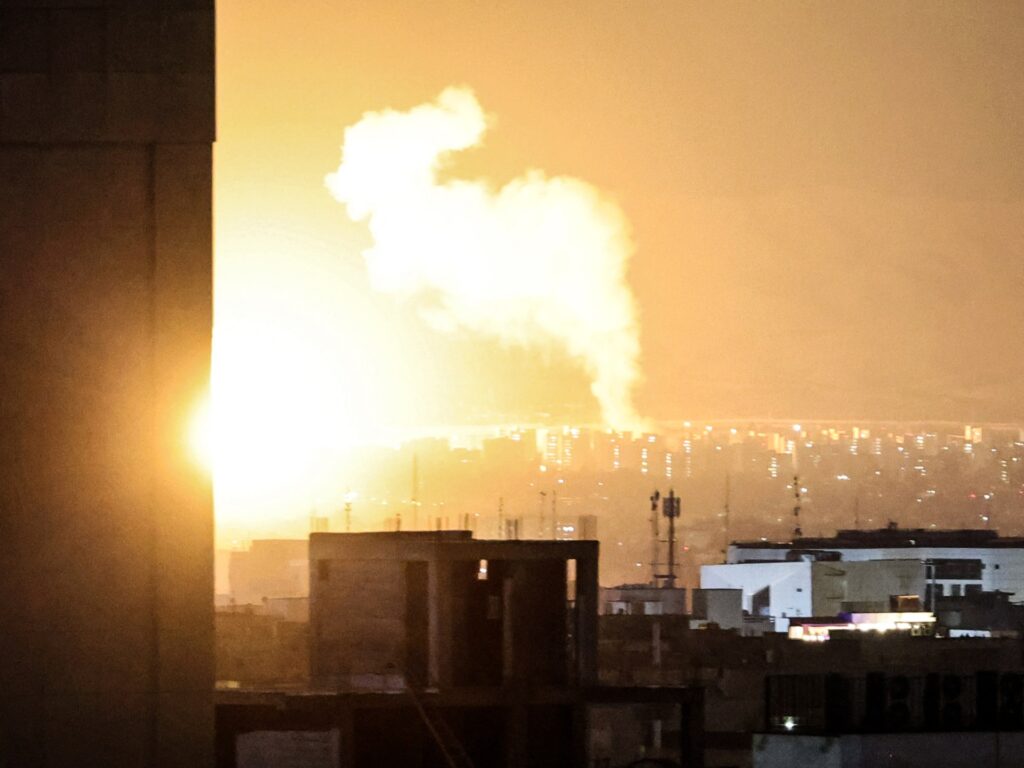
The conflict involving the US and Israel against Iran has now entered its second week, showing no signs of de-escalation. This war, marked by intense military actions and diplomatic deadlock, continues to dominate international headlines. The situation remains volatile, with both sides engaged in persistent confrontations.
Former US President Donald Trump has weighed in on the ongoing conflict, asserting a hardline stance. In a statement, Trump declared that there would be no deal with Iran unless it agrees to ‘surrender,’ signaling a rejection of any compromise that does not involve complete capitulation by Iran.
The fighting, which originated from long-standing tensions between the US, Israel, and Iran, has escalated to a level that threatens regional stability in the Middle East. The conflict’s persistence through its second week highlights the challenges faced by international diplomats and the difficulty of reaching a peaceful resolution.
Iran, backed by various regional allies, continues to resist pressures and has maintained its strategic positions despite significant military and economic pressures. The Israeli forces, supported by the United States, have conducted multiple operations aiming to weaken Iran’s influence and military capabilities.
Civilians and infrastructure have been caught in the crossfire, exacerbating humanitarian concerns and prompting calls for ceasefires and peace negotiations from global organizations and governments.
The international community watches closely, expressing both concern and urgency in seeking an end to hostilities. Economic repercussions from the war are also being felt worldwide, with fluctuations in oil prices and regional markets responding to ongoing instability.
Efforts by the United Nations and other international bodies are underway to mediate peace talks, but progress remains slow amid deeply entrenched positions on all sides.
As the war drags into its second week, the prospects for a swift resolution appear dim. The declaration from Trump underscored the polarized nature of negotiations, where one side’s demands are rooted in submission rather than dialogue.
The coming days will be critical, as strategic decisions and diplomatic maneuvers might alter the trajectory of this conflict. Meanwhile, the international community continues to hope for a de-escalation before the war inflicts more devastation on the region and the world.