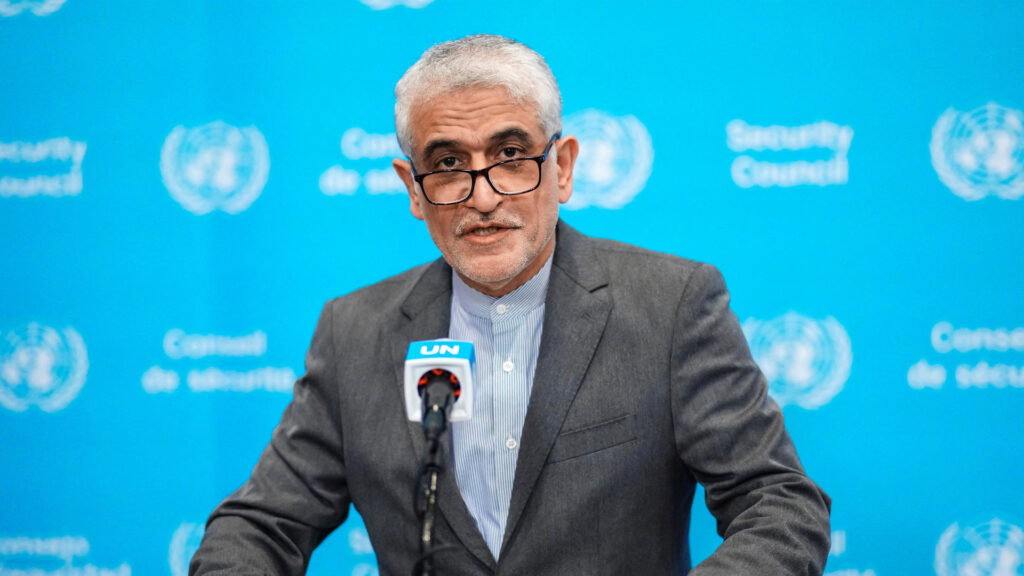
In a forceful address to the United Nations Security Council, Iranian Ambassador Amir-Saeid Iravani vehemently condemned the ongoing conflict involving the United States and Israel, labeling it a ‘criminal war.’ He appealed to the international body to intervene and stop what he described as aggressive and unlawful acts perpetuated under this alliance.
Ambassador Iravani emphasized the devastating consequences of the war, highlighting the humanitarian crisis it has exacerbated in the region. He called on the Security Council to uphold international law and take immediate actions to cease hostilities.
The speech reflects Iran’s persistent criticism of US and Israeli policies in the Middle East, particularly regarding conflict and military interventions. Iravani’s plea urges the global community to prioritize diplomatic solutions and protect civilian lives.
This development adds to the ongoing tension at the United Nations, where member states are divided over actions and sanctions concerning the conflict. The call from the Iranian envoy underscores the urgency for a unified response to restore peace and security.
Iran’s stance, as conveyed by Ambassador Iravani, is rooted in its broader geopolitical strategy and support for regional allies affected by the conflict. The international community watches closely as debates unfold within the Security Council, hoping for resolutions that mitigate violence and foster dialogue.
As the situation evolves, the UN’s role remains critical in mediating conflict and coordinating humanitarian assistance. The Iranian ambassador’s address aims to galvanize member states into decisive measures against ongoing warfare described as ‘criminal.’
This incident marks another chapter in the complex relations between Iran, the United States, and Israel, reflecting deep-seated disputes that continue to challenge international peace efforts. The global implications of this conflict and diplomatic exchanges at the UN highlight the importance of collaborative peace initiatives.
The Security Council’s response in the coming days will be pivotal in shaping the future course of the conflict and international diplomatic relations concerning the Middle East. Ambassador Iravani’s condemnation calls attention to the urgent need for a resolution that prioritizes human rights and sovereignty.