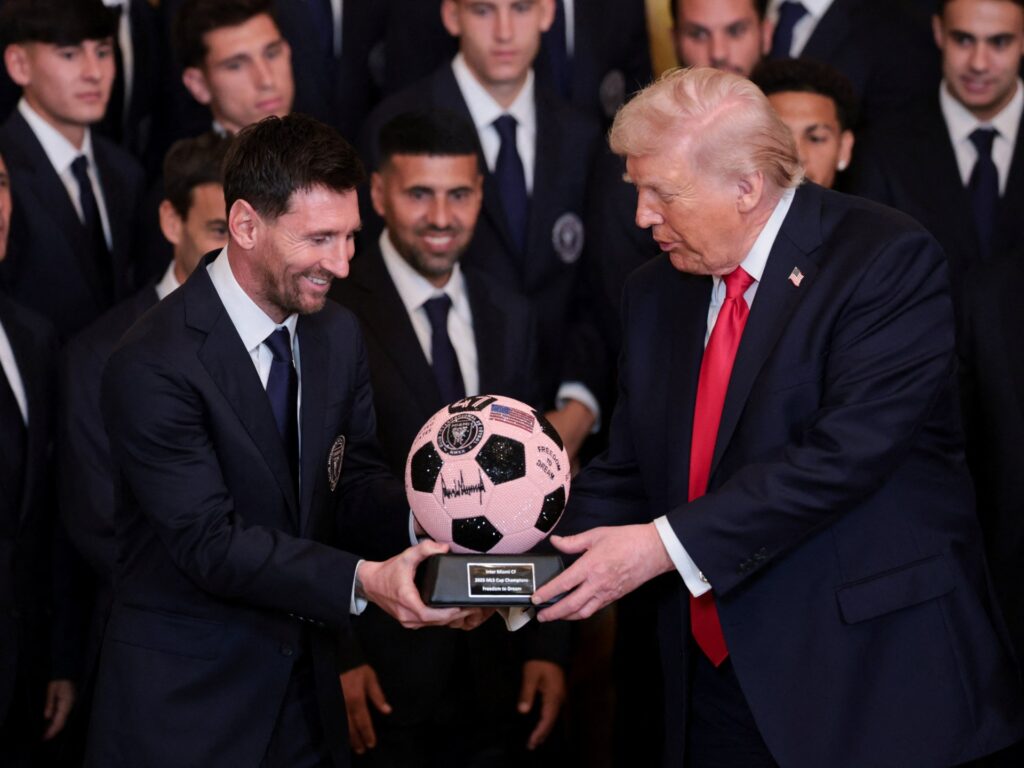
In a recent development that has sparked widespread controversy, Lionel Messi, one of the world’s most celebrated footballers, faced criticism after he met with US President Donald Trump and applauded his latest brief related to the ongoing conflict between the United States and Iran. The meeting and Messi’s public approval of Trump’s statements on the Iran war have ignited a storm of debate among fans, political commentators, and international observers.
Lionel Messi, known globally for his football prowess and philanthropic efforts, stepped into a politically charged spotlight when he attended a briefing where President Trump discussed recent US attacks on Iran. Following the briefing, Messi expressed his support by applauding the president’s remarks, a gesture that was quickly picked up by the media and scrutinized by the public.
Critics argue that Messi’s enthusiastic response to the briefing was inappropriate, especially given the sensitive nature of the conflict involving military actions that have led to significant geopolitical tensions and humanitarian concerns. Many have pointed out that as a global sports figure, Messi’s role should ideally focus on uniting people rather than appearing to endorse controversial political actions.
Supporters of Messi contend that his brief applause was a momentary and perhaps personal reaction, not necessarily a political endorsement. They stress that public figures often have their gestures misinterpreted, especially in high-stakes political contexts.
The US-Iran conflict has been a source of international anxiety, with the US conducting targeted strikes aimed at deterring further aggression from Iran. These military actions have escalated fears of a broader conflict in the Middle East.
In this climate, Messi’s presence at the White House briefing and his applause have been seen by some as aligning with one side of a deeply divisive international issue. Social media platforms witnessed a flurry of reactions, ranging from disappointment and anger to support and calls for understanding the context of Messi’s actions.
Political analysts suggest that high-profile figures like Messi should be cautious about how their interactions with world leaders and their public reactions can influence perceptions globally. The incident serves as a reminder of the intersection between sports, politics, and global diplomacy in today’s media landscape.
As the world watches the ongoing developments in the US-Iran situation, Messi’s brief but highly visible political moment continues to generate discussions about celebrity responsibility and the complex role athletes can play on the international stage. It remains to be seen whether Messi will respond to the criticism or clarify his stance regarding the incident.
This episode also highlights the delicate nature of public figures engaging with political controversies, especially those involving conflict and war, where every gesture risks being interpreted as a political statement. As tensions persist, Messi’s actions will likely be remembered as a notable, if contentious, moment in the intersection of sports and politics.