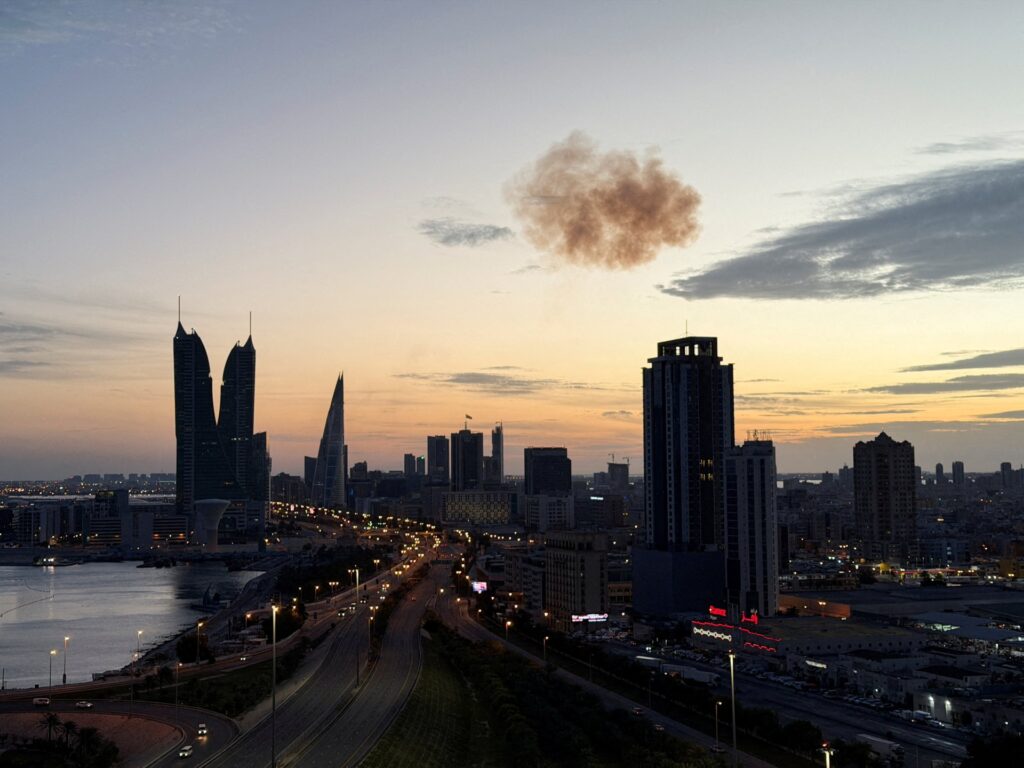
In a significant escalation in the Middle East conflict, Iran has reportedly targeted the Israeli embassy in Bahrain, an event that has heightened tensions across the Gulf region. This attack marks a critical point in the ongoing hostilities that have embroiled multiple countries, including various Gulf nations, Arab states, as well as Turkiye and Azerbaijan.
According to sources, Iran launched a missile aimed at the Israeli diplomatic mission located in Bahrain’s capital. The strike was reportedly intercepted by Saudi Arabian defense forces before it could reach its intended target, showcasing the heightened state of military readiness in the region.
The interception was confirmed by Saudi authorities, who stated that their air defense systems successfully detected and neutralized the incoming threat. This swift action prevented potential casualties and damage to the embassy, which is a significant symbol of Israeli presence in the Gulf.
This incident has intensified the already volatile atmosphere in the Middle East, where a complex web of political alliances and enmities fuels ongoing conflicts. The targeting of the Israeli embassy underlines the sharp animosities Iran has with Israel and its allies in the region.
Multiple Gulf nations, alongside other Arab states such as Saudi Arabia, the United Arab Emirates, and Bahrain, have been drawn deeper into the conflict, reflecting broader geopolitical struggles in the region. These nations, often caught between competing influences from Iran and other global powers, are grappling with security threats that now include missile attacks and potential proxy conflicts.
Moreover, the tensions have extended beyond the Gulf states. Countries like Turkiye and Azerbaijan, which maintain strategic and economic ties within the region, are also experiencing the spillover effects of this escalating war. Their involvement underscores the wider regional implications of the conflict and the risk of it expanding.
Analysts highlight that this development may prompt increased international diplomatic efforts to de-escalate tensions. However, the recent missile attempt and interception demonstrate the challenges ahead in achieving lasting peace.
The international community has reacted with concern to the missile attack, emphasizing the need for restraint and dialogue. The United Nations and several world powers have called for calm and urged all parties to avoid actions that could further destabilize the region.
In Bahrain, the authorities have increased security measures around the Israeli embassy and other key installations to prevent any further attacks. Similarly, Saudi Arabia has pledged to strengthen its defensive capabilities to safeguard its borders and allies.
This episode serves as a stark reminder of the fragility of the peace and stability in the Gulf and the broader Middle East. With Iran directly targeting diplomatic sites and Saudi Arabia intercepting missiles, the conflict dynamics are becoming more direct and dangerous.
The situation remains fluid, with diplomatic and military developments expected in the coming days. Regional leaders are under pressure to manage the crisis carefully to avoid a broader war.
In summary, the missile attack on the Israeli embassy in Bahrain by Iran and the subsequent interception by Saudi Arabia represent a critical escalation in a multi-faceted regional conflict. It involves not just the immediate Gulf actors but also underscores the wider strategic competition affecting Turkiye, Azerbaijan, and beyond.
The international community’s heightened attention highlights the urgent need for diplomatic solutions amid rising tensions. The unfolding events continue to shape the geopolitical landscape of the Middle East, with potential implications for global security.