Former US President Donald Trump has publicly expressed his support for a potential Kurdish ground offensive against Iran. In comments that have stirred significant attention, Trump stated that he would be “all for” such an operation, signaling potential backing for Kurdish groups considering military action within Iranian territory.
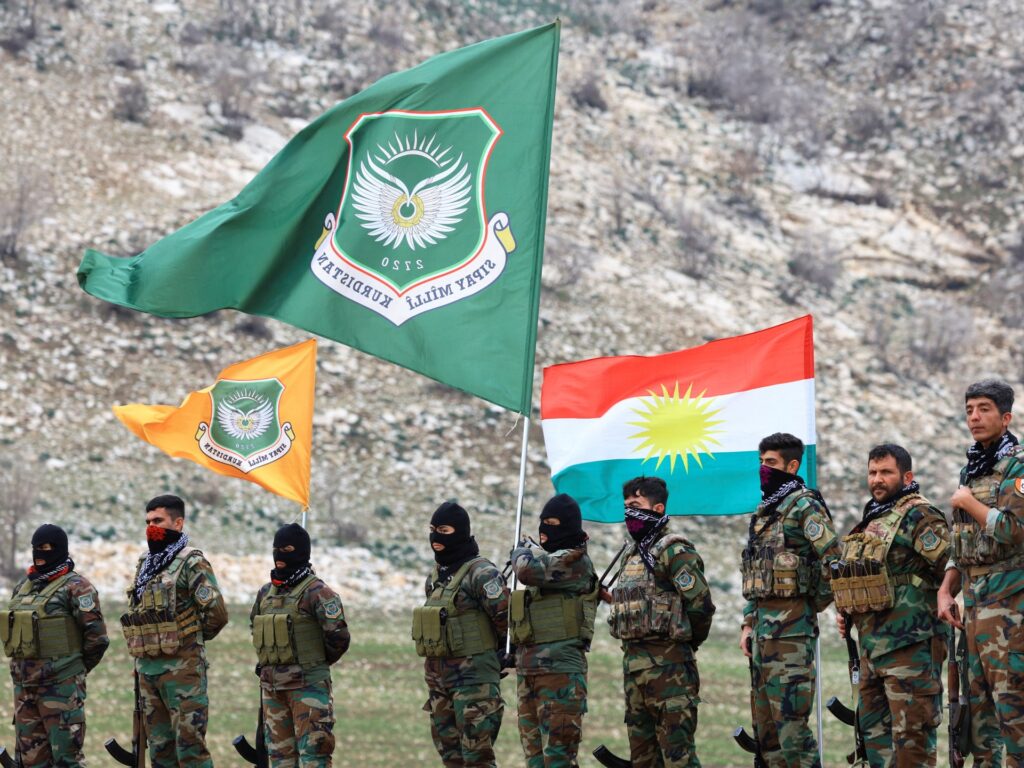
This development has emerged amid reports that the United States, while officially cautious, may be encouraging or facilitating elements of Kurdish rebellion against the Iranian government. The Kurds, an ethnic group spread across several nations including Iran, Iraq, Syria, and Turkey, have long sought greater autonomy and have engaged in various conflicts to advance their aspirations.
Trump’s endorsement comes as tensions between the US and Iran remain high, with both countries facing off over issues related to nuclear development, regional influence, and military presence. While the previous administration under Trump took a hardline stance against Iran, including withdrawing from the Iran nuclear deal and imposing severe sanctions, this new element reflects an escalation in advocating for proxy or allied actions on the ground.
The Kurdish region in Iraq has been viewed historically as semi-autonomous and at times allied with the US in fighting ISIS. However, Kurdish forces launching a direct ground attack into Iran would mark a significant shift, potentially destabilizing the region further. Iran has traditionally reacted strongly to any perceived threats from Kurdish groups within its borders, often clamping down on Kurdish political and militant activities.
Analysts suggest that Trump’s public support might be aimed at encouraging Kurdish groups to take more assertive actions, possibly as a strategy to undermine Iranian influence in the Middle East. Critics warn that such moves could exacerbate violence and lead to wider regional conflicts, destabilizing neighboring countries and complicating US foreign relations.
Washington’s possible role in ‘‘egging on’’ Kurdish rebellion reflects a complex geopolitical maneuver, leveraging minority uprisings to counter a powerful adversary. However, it also raises questions about the long-term consequences for Kurdish populations who could face brutal reprisals from Iranian forces.
The announcement has garnered mixed reactions internationally. Supporters argue that empowering the Kurds is a means to weaken an oppressive regime and advance the cause of freedom. Opponents caution that this path risks drawing the US into an unpredictable conflict with severe humanitarian ramifications.
In the broader context, this development is part of the ongoing tumultuous relations between the US and Iran, which have shaped Middle Eastern politics for decades. With regional and global powers closely watching, the implications of a Kurdish offensive supported by external forces could reshape alliances and trigger new confrontations.
As reports continue to emerge about the US involvement behind the scenes and Kurdish groups’ intentions, the international community remains alert to how this situation unfolds. The possibility of a Kurdish ground assault on Iran marks a significant new chapter in Middle Eastern dynamics, raising hopes for some and apprehension for many others about the future stability of the region.