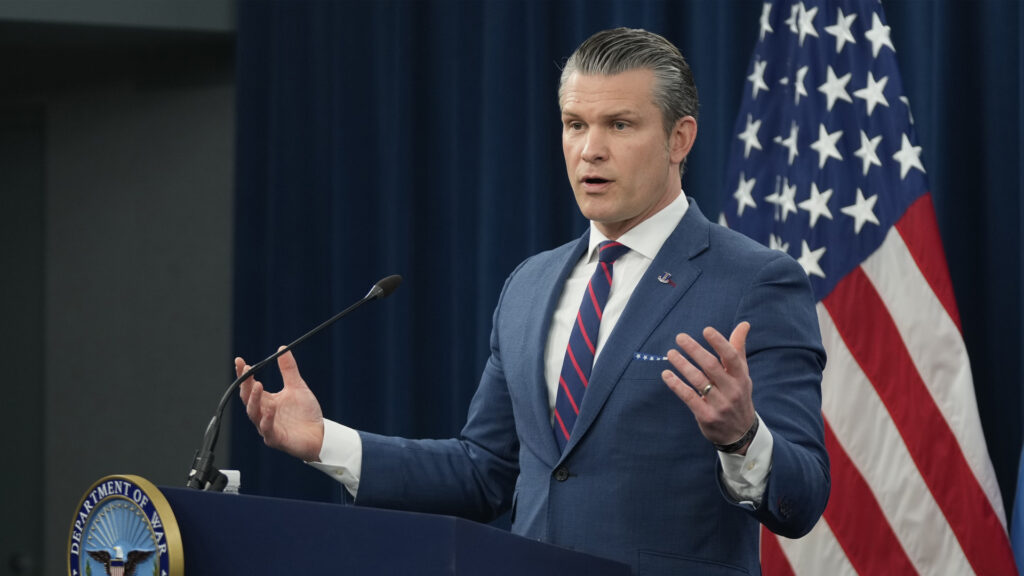
In a recent statement, Secretary of Defense Pete Hegseth addressed the ongoing conflict between the United States and Iran, asserting that the US did not initiate the war but is actively concluding it. Hegseth emphasized that recent military strikes carried out by the US in the Middle East are responses to attacks on American personnel and interests attributed to Iran and its proxies.
Hegseth pointed to a series of hostile actions previously targeted at American forces in the region, including missile strikes, drone attacks, and other forms of aggression. He argued that these provocations necessitated a decisive US military response to protect national security and regional stability.
“We are not the ones who started this conflict, but we are definitely finishing it,” Hegseth stated during a press briefing. He underscored that the US operations aim to dismantle Iran’s capability to conduct further attacks on US assets and allies in the area.
The Secretary of Defense clarified that while the US seeks to avoid permanent conflict, it remains committed to preventing Iran from escalating violence. This includes targeting infrastructure and command centers linked to Iranian-backed militias responsible for previous hostilities.
Hegseth’s remarks come amid heightened tensions in the Middle East, where US forces have faced repeated threats from Iran-supported groups. The recent US strikes have sparked both domestic debate and international reactions, highlighting the complexities of the geopolitical landscape.
Critics argue that these military actions risk escalating a volatile situation, while supporters contend that decisive US intervention is necessary to deter Iranian aggression. The balance between diplomacy and military strategy remains delicate as the region watches closely.
Furthermore, Hegseth called on international partners to hold Iran accountable for its actions and to support efforts to stabilize the Middle East. He emphasized that the US aims to protect its interests and those of its allies by taking calculated steps against destabilizing influences.
The conflict’s history dates back several years, involving a mix of sanctions, covert operations, and direct confrontations. While diplomatic channels remain open, the military dimension underscores the challenges facing US policymakers in managing the Iran issue.
As the situation evolves, the US continues to monitor Iranian activities and adjust its strategy accordingly. Hegseth’s declaration signals a steadfast US commitment to assert its influence and security priorities in a region marked by persistent volatility.
In conclusion, Secretary of Defense Pete Hegseth’s statement reflects a clear US stance: although not the originator of the conflict with Iran, the United States is determined to see its resolution on its own terms, prioritizing the safety of its forces and the stability of its allied nations in the Middle East.