In the wake of the recent US strikes on Iran, reactions from American politicians have underscored a deeply partisan divide. The Republican Party has largely coalesced behind former President Donald Trump, praising the decisive nature of the military action and framing it as a necessary step for national security and regional stability. Prominent Republican leaders and lawmakers have expressed strong support for the strikes, highlighting the threat posed by Iran’s activities and emphasizing the need to project American strength and deterrence in the Middle East.
On the other hand, Democrats have struggled to present a unified front in their response to the attacks. While some Democrats have voiced opposition to the strikes, citing concerns about escalating conflict and the lack of Congressional authorization, others have been more measured or even tacitly supportive, emphasizing the complexity of Iran’s behavior and the importance of diplomacy. This lack of a singular message from Democrats illustrates internal divisions within the party between hawkish and dovish perspectives on foreign policy.
The Republican embrace of Trump’s actions reflects a broader trend within the party to endorse assertive military measures as a means to counter what they perceive as Iranian aggression and destabilizing influence across the Middle East. This stance is also seen as a political strategy to capture support from conservative voters who prioritize national security.
Meanwhile, Democrats are navigating a delicate balance between advocating for restraint and diplomacy and confronting the reality of ongoing threats associated with Iran’s regional activities, including its nuclear program and support for proxy groups.
The partisan split has manifested in Congressional debates, public statements, and media appearances where Republicans have consistently framed the strikes as justified and necessary, whereas Democrats urge caution and advocate for a clear strategy to avoid prolonged conflict.
This divergence also reflects broader ideological differences regarding the use of military force, with Republicans typically favoring robust interventionist policies and Democrats often urging multilateral approaches and an emphasis on diplomatic solutions.
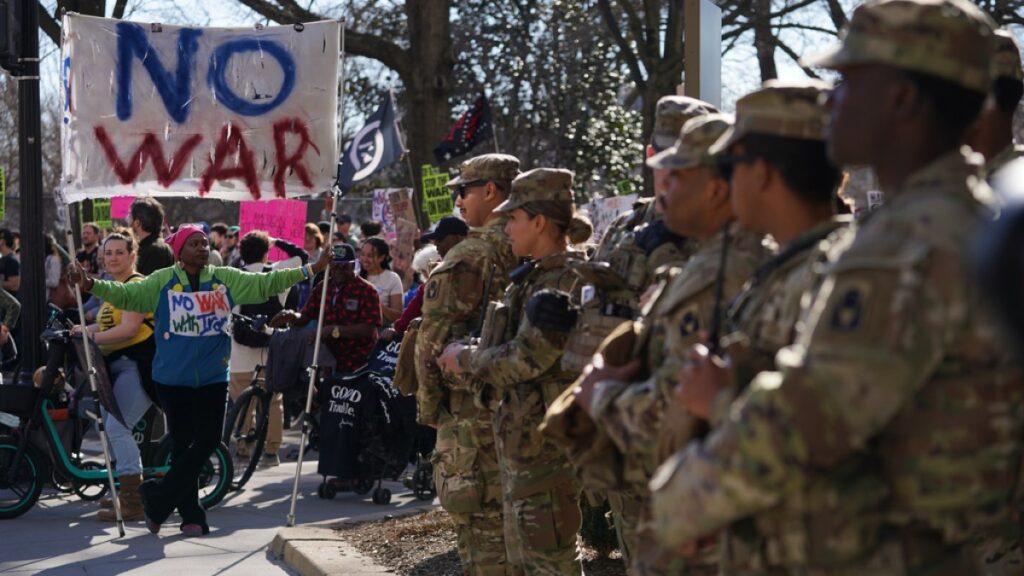
As the situation evolves, both parties face pressure from various constituencies—ranging from defense hawks to peace activists—which will likely continue shaping their responses.
Analysts note that the lack of a unified Democratic stance may complicate legislative oversight and efforts to define a coherent US policy toward Iran in the coming months. Conversely, the Republican rally around Trump’s actions has strengthened their messaging on national security but may also deepen political polarization.
Internationally, allies have been watching US political reactions closely, as internal divisions may impact the consistency and reliability of US foreign policy commitments.
In summary, the attack on Iran has highlighted the stark contrast between Republican support of a strong military response led by Trump-aligned figures and the Democratic Party’s fragmented approach, underscoring how partisan politics continues to shape America’s foreign policy debates.