In a significant political development, the Argentine Senate has approved a series of contentious labour reforms backed by the administration of President Javier Milei. The reforms, aimed at overhauling the nation’s labour market, are presented by the government as a necessary step to boost economic investment and drive job creation. President Milei, who assumed office with a platform centered on deregulation and market liberalization, has championed these changes as crucial to invigorating Argentina’s stagnant economy.
The Milei administration argues that the newly approved labour reforms will create a more attractive environment for both domestic and foreign investors. By streamlining regulations and adjusting workers’ rights, the government believes that businesses will have greater flexibility to hire, operate, and expand, ultimately fostering economic growth and reducing the country’s persistent unemployment rates.
However, the reforms have ignited fierce opposition from labour unions and workers’ rights advocates. Critics contend that the changes undermine essential worker protections, including job security, fair wages, and collective bargaining powers. Labour leaders warn that the reforms could lead to increased job insecurity and exploitation, worsening conditions for Argentina’s working class.
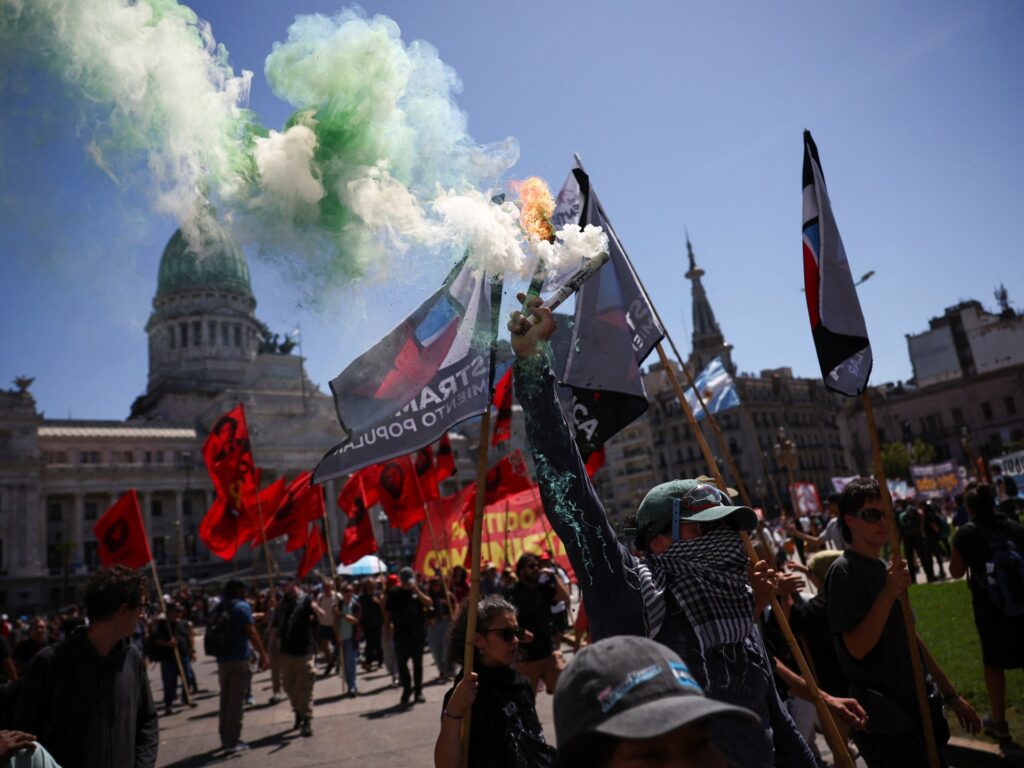
The Senate’s vote was met with strong protests across various cities, with unions and civil society groups organizing demonstrations to denounce the legislation. They argue that the reforms disproportionately favor employers and economic elites at the expense of the everyday worker.
The Milei-backed legislation includes provisions that alter the rules governing dismissal and severance pay, modify overtime and working hour regulations, and limit the scope of strikes and union activities. Supporters counter that these measures are designed to modernize an inflexible labour market that has been a bottleneck to investment.
Economic analysts are divided on the potential impact of the reforms. Some view the measures as a bold move to modernize Argentina’s labour framework in line with international standards. Others believe the reforms could exacerbate social inequality and lead to social unrest if workers feel their rights are being eroded without sufficient protections.
The government has promised to engage in ongoing dialogue with union representatives and stakeholders to monitor the reforms’ implementation and address any undue hardships faced by workers. However, the current sentiment among many unions remains deeply skeptical.
This legislative approval marks a key milestone for President Milei’s administration and reflects his broader economic agenda focused on liberalization and deregulation. As Argentina navigates these changes, the balance between economic growth and social justice remains a critical and contentious issue.
In summary, while the Argentine Senate’s approval of Mikei-backed labour reforms is hailed by the government as a catalyst for investment and job creation, it faces significant resistance from unions concerned about the erosion of worker protections. The coming months will be closely watched to assess how these changes affect Argentina’s economy and labour environment.