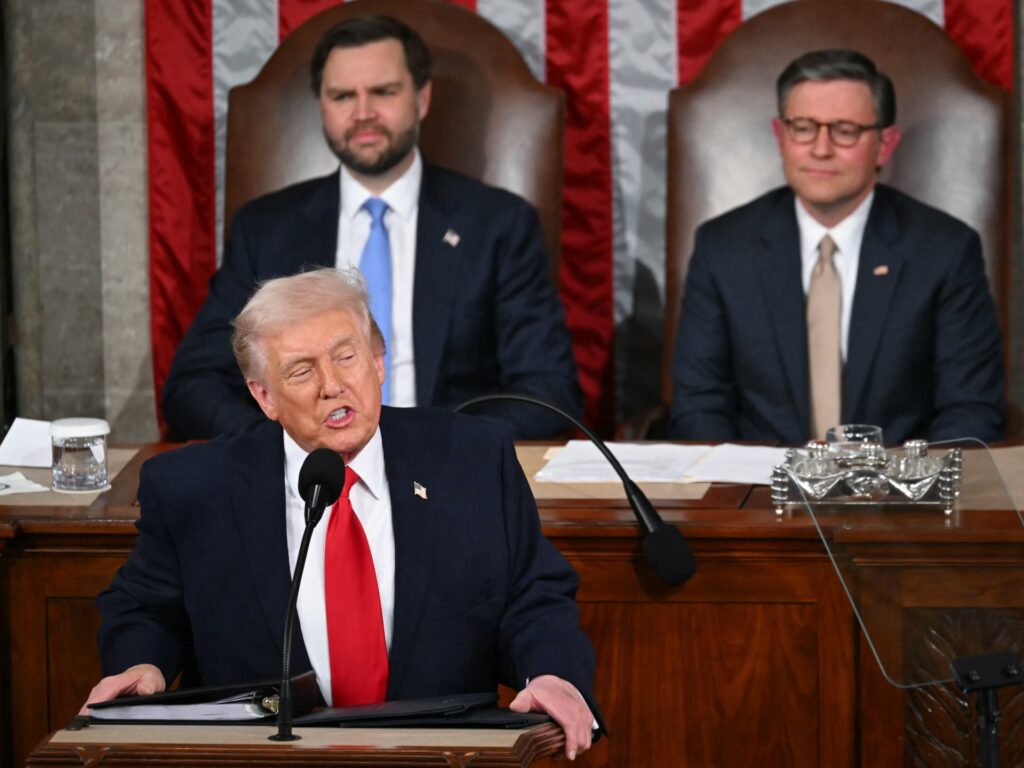
During his recent State of the Union address, former U.S. President Donald Trump accused Iran of developing missiles and being responsible for deaths during recent protests. Taking a firm and assertive stance, Trump emphasized the threat he believes Iran poses to regional and global security. His declarations included allegations linking Tehran to the facilitation and perpetuation of violence within its borders, particularly pointing to the fatal outcomes of demonstrations.
Trump’s rhetoric was marked by a belligerent tone, reflecting a hardline view that mirrors his previous policies toward Iran. He underscored the need for strong measures to counteract Iran’s missile program and called for international scrutiny and pressure to curb Tehran’s activities. These statements aimed to draw attention to what he describes as a dangerous trajectory of the Iranian regime.
However, the response from Tehran was swift and vehement. Iranian officials dismissed Trump’s claims as “big lies,” maintaining that the accusations were baseless and politically motivated. They argued that Iran’s missile programs are purely defensive and that all protests within the country are handled with adherence to legal and humanitarian norms. The Iranian government condemned what it described as deliberate misinformation designed to destabilize the region and damage diplomatic relations.
This exchange of allegations and denials further escalates the already tense relations between the United States and Iran. Experts suggest that Trump’s remarks could complicate ongoing diplomatic efforts aimed at addressing nuclear development and regional security concerns. The discourse also resonates within the broader geopolitical context, influencing alliances and strategic calculations among Middle Eastern and global powers.
The United Nations and various international observers have called for restraint and fact-based dialogue, encouraging both parties to engage in constructive communication rather than confrontational rhetoric. Civil society organizations have highlighted the need for transparency and independent investigations into the protests and any related human rights concerns.
As the situation develops, the international community remains watchful of the implications these statements might have on peace and stability in the Middle East. With each side entrenched in its narrative, the path forward demands careful diplomacy and a commitment to de-escalation to prevent further deterioration of relations.
In summary, Trump’s recent allegations about Iran’s missile capabilities and its role in protest-related deaths have sparked a fierce backlash from Tehran, highlighting ongoing tensions and the challenges in achieving mutual understanding and constructive engagement between the two nations.