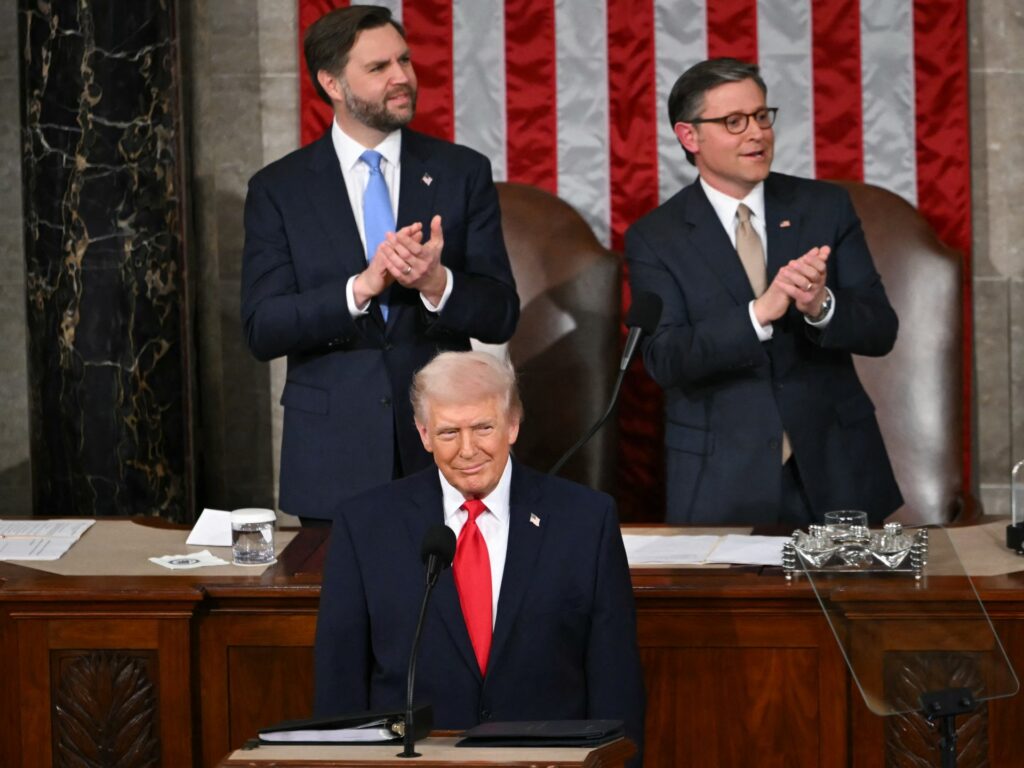
In a highly anticipated State of the Union address, President Trump took to the national stage during primetime to underscore the economic gains achieved under his administration. His speech was crafted to not only celebrate past successes but also to lay the groundwork for his policy agenda in the lead-up to the crucial midterm elections.
Highlighting key economic indicators such as job growth, stock market performance, and wage increases, Trump painted a picture of a thriving economy. He emphasized his administration’s efforts in deregulation and tax reform as pivotal factors driving these improvements.
The President’s tone was assertive and optimistic, aiming to bolster support among his base while appealing to undecided voters. He addressed issues such as infrastructure development, healthcare reform, and trade policies, promising continued progress and more robust economic opportunities.
Throughout the address, Trump also touched on national security and immigration, connecting these topics to economic prosperity and American jobs. He framed his agenda as essential for maintaining the nation’s strength and global competitiveness.
The State of the Union served as a platform for Trump to push his legislative priorities and energize the electorate, setting the stage for a contentious political battle in the coming months. The address received mixed reactions from lawmakers and analysts, reflecting the polarized political climate.
As the midterm elections approach, the President’s narrative centered on economic success is expected to be a cornerstone of his campaign efforts. The emphasis on tangible economic benefits seeks to resonate with American voters concerned about their financial well-being and the country’s future.
Overall, the State of the Union address highlighted President Trump’s commitment to advancing his economic agenda, underscoring his belief that his policies have catalyzed notable gains for the nation. The speech marked a significant moment in the political calendar, providing insights into the administration’s priorities and the challenges ahead.