On the anniversary of the Russia-Ukraine war, a significant escalation was observed as Russia launched strikes on the Ukrainian city of Zaporizhzhia, resulting in substantial damage to infrastructure. The attack comes amid ongoing tensions and conflict that have persisted since the outbreak of hostilities.
Ukrainian officials reported that several vital structures and public utilities were impacted by the strikes, exacerbating the challenges faced by the population amid the prolonged conflict. The damage to critical infrastructure has raised concerns about stability and civilian safety in contested regions.
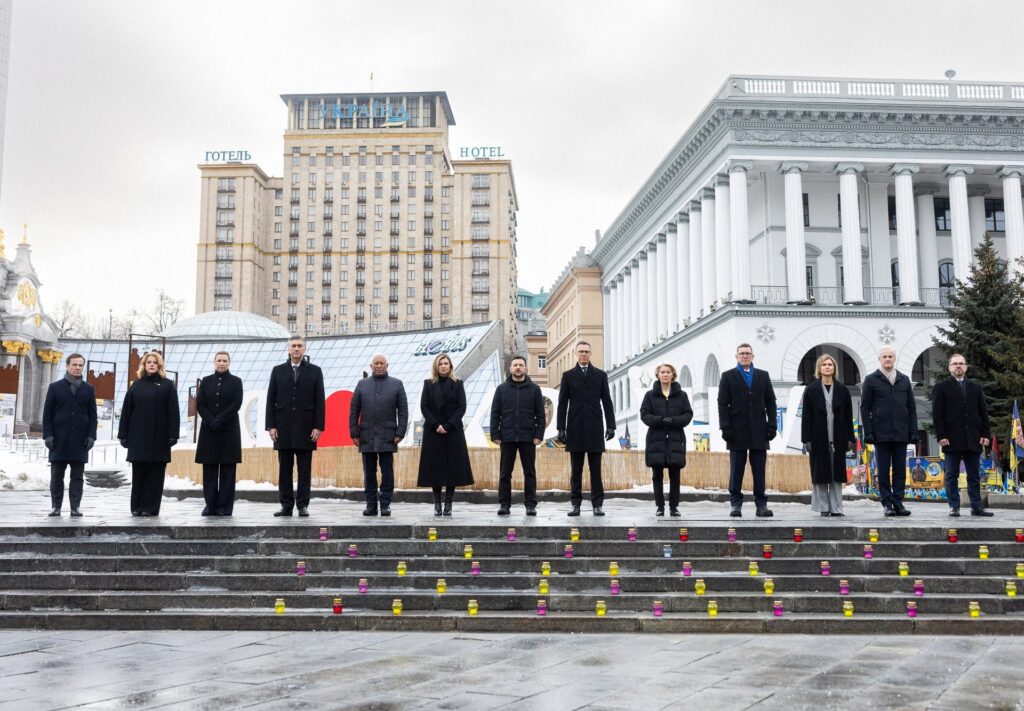
In response to the aggression, European leaders have issued a united statement pledging to “stand firm” alongside Kyiv. The European Union and neighboring countries emphasized their commitment to supporting Ukraine through diplomatic, economic, and military means as the conflict continues.
This announcement followed high-level discussions within the EU Council, where member states debated deeper sanctions against Russia and increased aid to Ukraine. The growing solidarity reflects Europe’s recognition of the wider geopolitical impact of the war.
The Zaporizhzhia region has been a flashpoint in the conflict, with its strategic importance due to energy infrastructure and proximity to contested territories making it a frequent target for Russian military operations. The recent strikes disrupt local life further, impacting power supply and water access critical to civilians.
Humanitarian organizations have expressed alarm over the worsening situation, noting that the destruction complicates relief efforts and threatens the health and safety of displaced families.
Experts warn that the timing of the strike, coinciding with the anniversary of the war’s outbreak, could be intended as a political message as much as a military maneuver. Analysts suggest this act signals Russia’s resolve and serves as a reminder of the ongoing war’s toll.
International responses have varied, with NATO reaffirming support for Ukraine’s sovereignty and condemning attacks on civilian infrastructure. Meanwhile, diplomatic channels remain open, with talks about potential ceasefires and negotiations ongoing but stalled by lack of trust and security guarantees.
The European solidarity on display marks a significant chapter in the conflict, highlighting increased unity against what is viewed as unjustified aggression. This backing is crucial for Ukraine’s resilience and ability to continue its defense efforts.
Civilians in Zaporizhzhia and other impacted regions continue to bear the brunt of the conflict’s harsh realities. Access to essential services remains uncertain as authorities scramble to restore what has been lost.
The war’s anniversary serves as a stark reminder of the human and material cost of the conflict, reiterating the urgent need for a peaceful resolution. Meanwhile, the international community watches closely as the situation evolves, hoping for stability but preparing for continued volatility.
In summary, the pivotal events surrounding the anniversary have underscored the persistent volatility and international stakes of the Russia-Ukraine war. Europe’s vow to stand firm with Kyiv reinforces the geopolitical dimensions, as both diplomatic and military measures intensify in the face of ongoing Russian incursions.