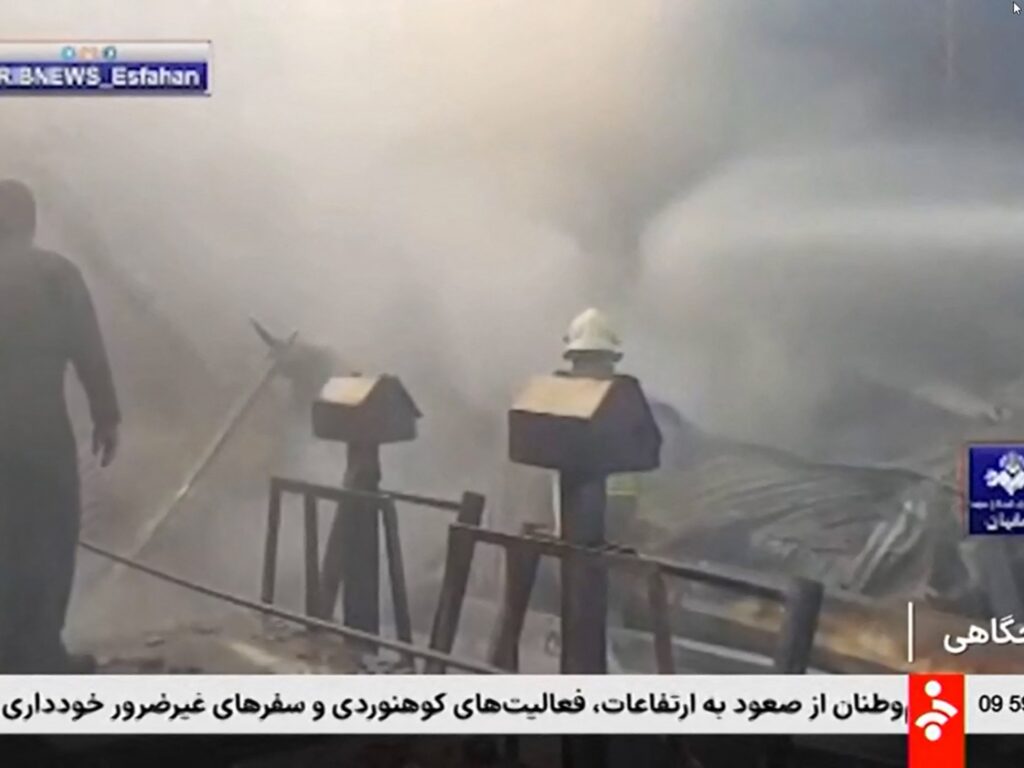
Tragedy struck in Isfahan province, Iran, as an army helicopter crashed into a local market, resulting in the death of all on board and two civilians. The incident led to the loss of two pilots and two merchants who were present at the busy market at the time of the crash.
The crash has raised alarming safety concerns following another military aviation accident in the country. Less than a week prior, a fighter jet had also crashed in Hamadan province, adding to a troubling pattern of aviation incidents in Iran.
The army helicopter, whose specific model has not been disclosed, was engaged in routine operations when it suddenly went down in the bustling market area of Isfahan. Eyewitnesses reported hearing a loud explosion followed by chaos as emergency responders rushed to the scene.
Authorities have launched a thorough investigation to determine the exact cause of the crash. Various hypotheses are being considered, including mechanical failure, pilot error, and potential external factors, though no definitive conclusions have been announced at this stage.
Local officials have expressed their condolences to the families of the victims and have promised support during this difficult period. Efforts are underway to provide aid to those affected and to secure the crash site to prevent further harm.
This latest incident has sparked a broader discussion about the safety protocols governing military aviation in Iran. Analysts point out that the recent spate of accidents may indicate deeper systemic issues within the military aviation sector, ranging from outdated equipment to gaps in pilot training or maintenance procedures.
The Iranian military has not yet issued a comprehensive statement on both crashes, but sources close to the defense sector indicate that a review of military aviation practices is imminent.
The people of Isfahan province remain shaken by the tragedy, with the community mourning the loss of local merchants who played vital roles in the area’s economy. Market vendors have shown resilience by coming together to support one another amid the grief.
The aviation accidents pose significant challenges for Iranian military leadership, highlighting the urgent need for improved safety measures and modernized equipment. Observers note that addressing these challenges is crucial for safeguarding lives and maintaining operational readiness.
In summary, the helicopter crash in Isfahan marks a somber moment in recent Iranian military history, underscoring the need for vigilance and reform to prevent future tragedies. As investigations continue, the nation watches closely, hoping for answers and the prevention of further loss.