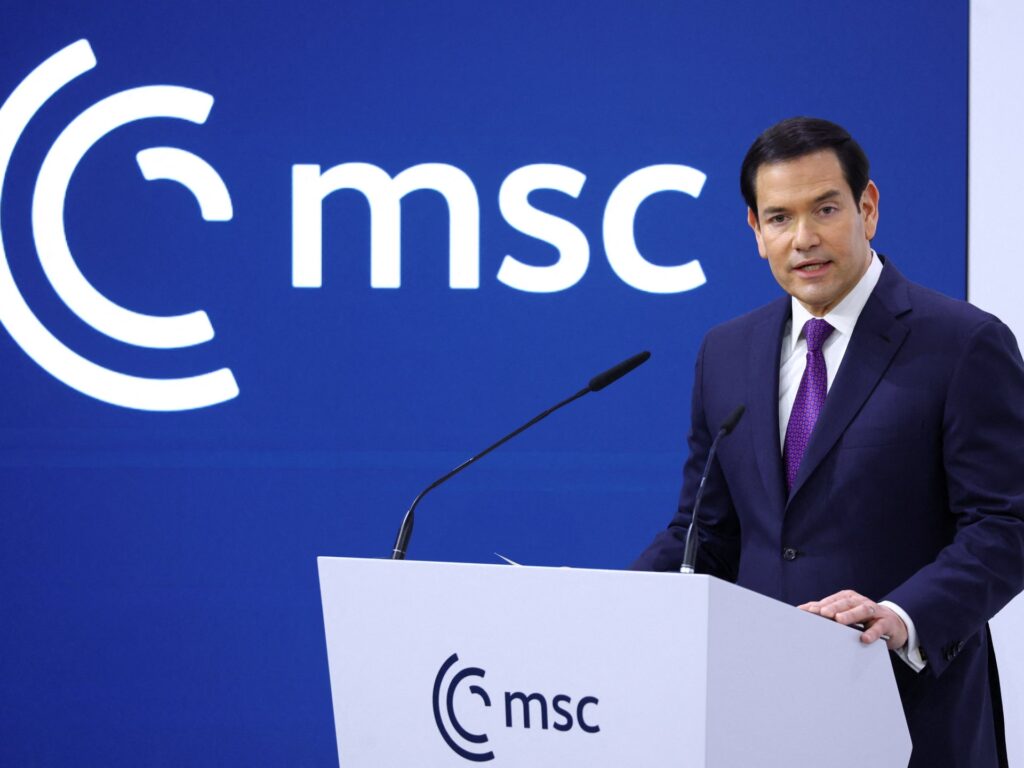
In a significant address delivered in Munich, Senator Marco Rubio underlined the importance of transatlantic unity between the United States and Europe, emphasizing shared values and strategic interests that bind the two regions together. While his speech radiated a more conciliatory tone compared to Vice President JD Vance’s speech last year, substantial tensions remain, particularly over approaches to migration.
Rubio’s remarks illuminated the delicate balance the US seeks to maintain in its relationship with Europe. The senator conveyed a strong message urging alliance solidarity, suggesting that in the face of global challenges – such as security threats, economic instability, and geopolitical rivalry – the US and Europe must present a united front. However, he did not shy away from addressing sensitive topics that have strained ties, most notably Europe’s handling of migration flows.
Migration has become a flashpoint issue in transatlantic relations. Rubio criticized Europe for policies that, in his view, do not adequately address the complexities and challenges of migration, potentially jeopardizing border security and social cohesion. He argued that some European countries have been slow or reluctant to adopt more robust measures to manage migration effectively, which could have repercussions beyond their borders, impacting the US as well.
Unlike more confrontational tones in prior speeches, Rubio’s discourse sought to balance critique with calls for cooperation. He acknowledged Europe’s efforts and the diverse pressures it faces in handling migration, yet reiterated the need for more aligned, comprehensive strategies. This approach reflects an understanding of the political sensitivities involved and a desire to maintain the broader strategic partnership.
Rubio’s speech highlighted a nuanced perspective: while he advocates for strong borders and controlled immigration, he also recognizes the importance of collaboration between US and European policymakers. He proposed enhanced information sharing, joint border management initiatives, and coordinated responses to migration crises as ways to strengthen ties and address shared concerns.
The senator’s remarks come amid ongoing debates in both the United States and Europe regarding immigration policy, national security, and the future of the transatlantic alliance. As migration continues to be a critical issue influencing domestic politics on both sides of the Atlantic, Rubio’s call for unity, coupled with pointed critiques, underscores the complexity of maintaining a cohesive alliance.
In conclusion, Senator Marco Rubio’s Munich speech encapsulated the ongoing challenges and opportunities within US-EU relations. His message was clear: unity is essential but must be built on honest dialogue about difficult issues like migration. As the transatlantic partnership navigates an evolving global landscape, voices like Rubio’s illuminate the path forward, balancing cooperation with necessary critique to foster a resilient alliance.