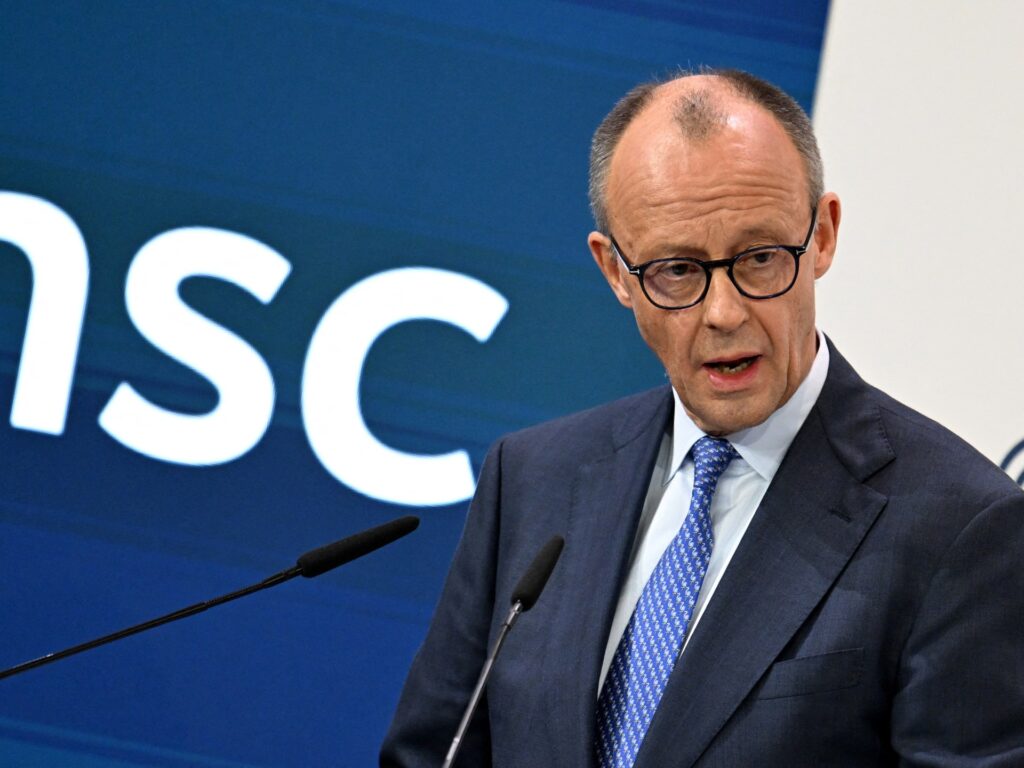
At the forefront of the Munich Security Conference, German leader Friedrich Merz emphasized the urgent need for the United States and Europe to repair and revive their transatlantic ties. This call underscores a pivotal moment in international relations, underlined by a shared vision of unity and collaboration in a changing global landscape.
Merz, speaking at this influential forum, highlighted the historical and strategic importance of the transatlantic partnership. He stressed that the current geopolitical environment demands a renewed commitment and strengthened cooperation between the US and Europe to address common challenges such as security threats, economic instability, and geopolitical shifts.
The Munich Security Conference, a key event that draws global leaders to discuss security and policy issues, served as the backdrop for Merz’s message aiming to set a tone of unity. His remarks came at a time when tensions and fractures had appeared to strain the relationship between the two continents, calling for a proactive approach to rebuilding trust and cooperation.
Supporting this sentiment, a top US diplomat attending the conference declared the dawn of a “new era in geopolitics.” This statement reflects the evolving nature of global power dynamics and the increasing complexity of international relations.
The diplomat’s remarks acknowledged that previous strategies may no longer be sufficient to navigate the emerging challenges. Instead, there is a profound need for innovative diplomatic efforts and strategic partnerships, particularly between longstanding allies like the US and Europe.
The emphasis on transatlantic ties is also a response to growing global uncertainties, including the rise of new power centers and the shifting alliances. Both Europe and the US face common threats such as cybersecurity challenges, regional conflicts, and economic competition that necessitate a unified response.
Merz’s leadership and his call to action resonate with the broader objectives of the Munich Security Conference: to foster dialogue, promote security cooperation, and develop multilateral solutions to complex threats that no nation can tackle alone.
Reviving transatlantic relations is seen not only as a diplomatic imperative but also as crucial for maintaining the rules-based international order that has underpinned global peace and prosperity since World War II.
In his address, Merz urged policymakers and stakeholders to embrace collaboration, transparency, and mutual respect as foundational principles. These, he argued, will enable the US and Europe to better anticipate and respond to global crises.
The implications of this call extend beyond political rhetoric. It signals potential shifts in policy direction, increased diplomatic engagement, and possibly the initiation of new security frameworks or agreements.
Furthermore, the emphasis on unity during the Munich Security Conference serves as a reminder to both public and private sectors of the interconnectedness of global issues – from defense and trade to technology and energy security.
Experts attending the conference have noted that this renewed focus on transatlantic cooperation is timely and necessary, given recent geopolitical disruptions and the uncertain trajectory of international relations.
In conclusion, Germany’s Merz has set a clear agenda for the future of US-Europe relations: repair and revive the transatlantic ties that are pivotal to global stability and prosperity. As the world confronts new geopolitical realities, this message of unity, cooperation, and shared responsibility becomes ever more critical.