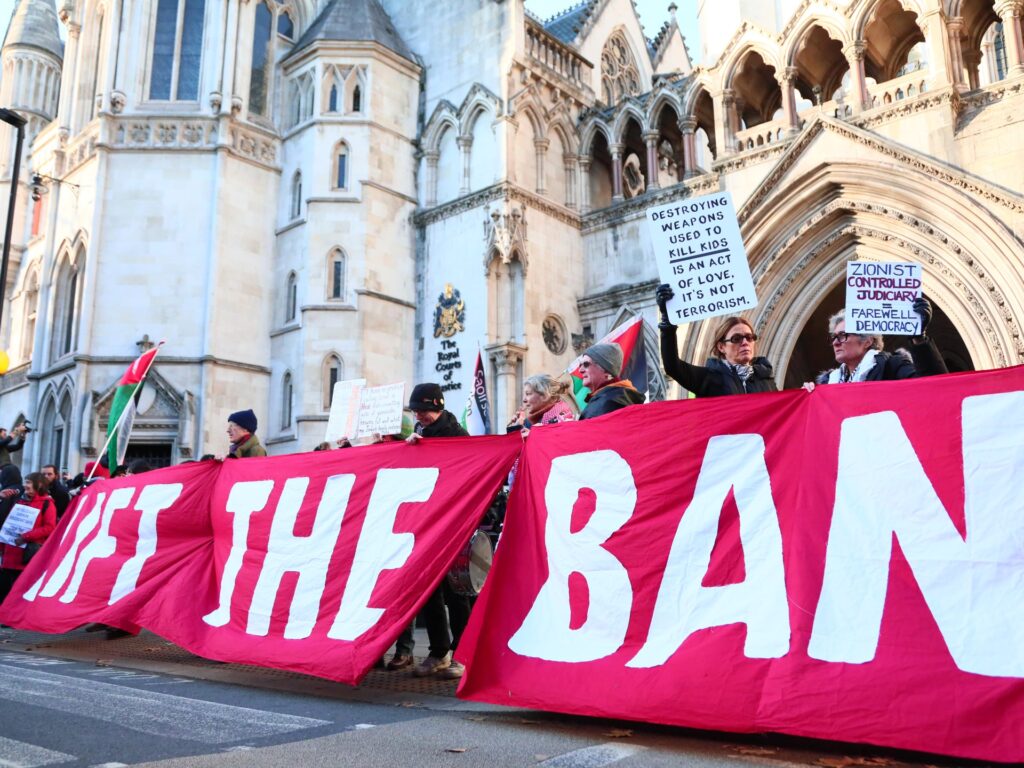
In a landmark ruling, a UK court has declared the government’s decision to ban Palestine Action as a ‘terror group’ unlawful. This judgment challenges the legal basis of the designation and has sparked widespread discussion about the government’s approach to such groups.
Palestine Action, a campaigning organization known for its direct actions and protests against arms trade and Israeli policies, was banned under the UK’s anti-terror legislation last year. The government argued that the group was involved in violent activities and posed a threat to national security.
However, during the court proceedings, evidence presented by Palestine Action’s representatives showed that the organization primarily engaged in peaceful protest and civil disobedience. The court found that the government’s decision lacked sufficient evidence to justify labeling the group as a terror organization.
Judges emphasized the importance of upholding democratic rights, including freedom of expression and assembly, particularly in cases involving activism and political protest.
Legal experts have hailed the ruling as a significant reinforcement of civil liberties in the UK. They noted that the case sets a precedent for future government actions against activist groups, ensuring that bans must be grounded in clear and compelling evidence.
The government has not yet announced whether it will appeal the decision, but officials have expressed concern about the ruling potentially hampering efforts to counter genuine security threats.
Palestine Action supporters have welcomed the verdict, stating that it vindicates their right to campaign against arms trading and human rights abuses. They have pledged to continue their activism within the boundaries of the law.
The court’s ruling highlights ongoing tensions between national security measures and the protection of civil liberties in democratic societies. It also calls attention to the need for transparent and accountable government decisions when designating organizations as terrorist entities.
This case will likely influence future judicial and political debates about how to balance security concerns with fundamental freedoms. It underscores the vital role of the judiciary in reviewing executive decisions to ensure they comply with legal standards and protect citizens’ rights.
As the story develops, all eyes will be on the next steps from both the government and Palestine Action as they navigate the implications of this unprecedented ruling.