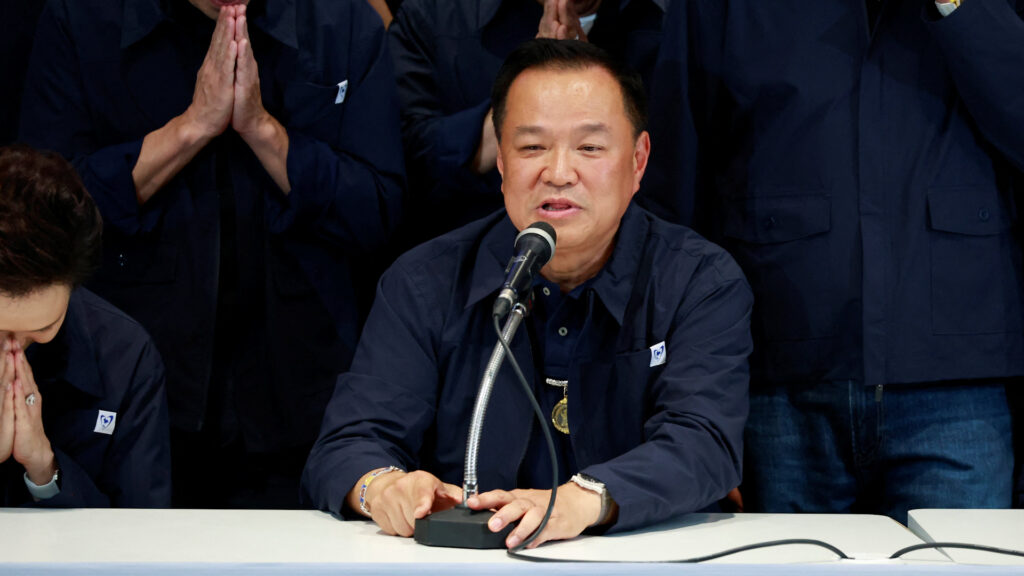
In a significant political development, Thailand’s Prime Minister Anutin Charnvirakul, leader of the Bhumjaithai Party, has proclaimed victory in the recent general election. The Bhumjaithai Party secured the largest share of parliamentary seats, marking a pivotal moment in the nation’s political landscape.
The general election, closely watched by both domestic and international observers, demonstrated strong support for Anutin’s administration. Under his leadership, the Bhumjaithai Party focused on policies that addressed economic recovery and public welfare, themes that resonated with a large segment of the electorate.
Prime Minister Anutin Charnvirakul, who has been a key political figure in Thailand, emphasized that this victory is a testament to the public’s confidence in his government’s ability to steer the country towards stability and growth. The election results underscore the effectiveness of the party’s campaign strategy and its appeal to voters across various demographics.
Political analysts note that the election outcome could shape Thailand’s policy direction in the coming years, with potential impacts on regional cooperation, economic reforms, and social policies. The Bhumjaithai Party’s increased representation in the legislative body empowers it to push forward its agenda more effectively.
Voters demonstrated a desire for continuity and progress, supporting Anutin’s platform that prioritized health care improvements, infrastructure development, and sustainable economic policies. The win also suggests a broad mandate for addressing ongoing challenges such as the post-pandemic recovery and international trade relations.
Opposition parties, while acknowledging the results, have pledged to continue advocating for their constituents and maintaining a balanced political dialogue. The democratic process in Thailand remains vibrant, with this election further strengthening the nation’s parliamentary system.
Looking ahead, Prime Minister Anutin Charnvirakul and the Bhumjaithai Party face the task of fulfilling campaign promises and managing the complex dynamics of governance. Their ability to deliver tangible results will be crucial in maintaining public trust and political stability.
This election victory reiterates Thailand’s evolving political landscape, reflecting the electorate’s priorities and the country’s aspirations for a prosperous future under experienced leadership. As the new government takes shape, all eyes will be on how it navigates the challenges ahead while harnessing opportunities to enhance Thailand’s position on the global stage.