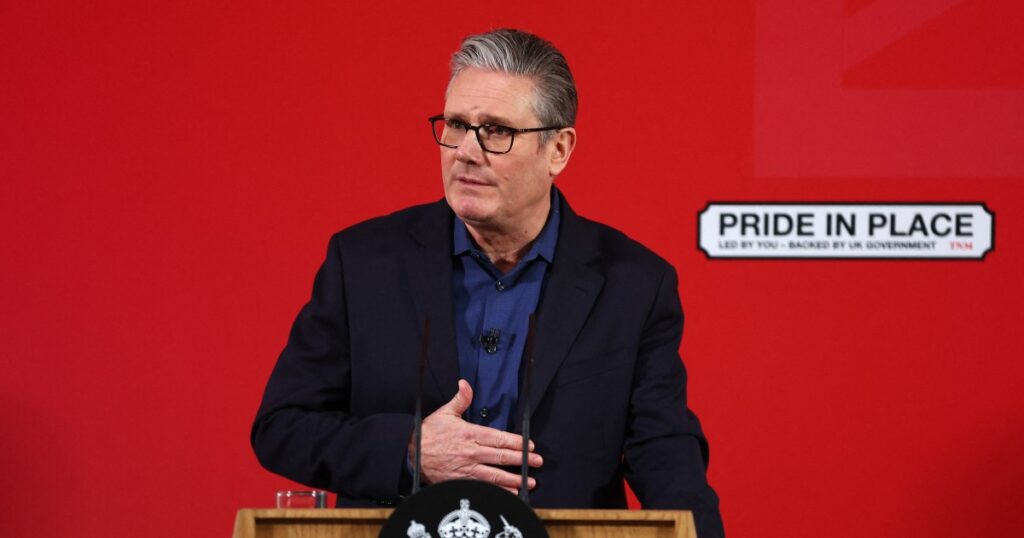
In recent political developments within the United Kingdom, Prime Minister Keir Starmer has come under intensified scrutiny following contentious decisions and criticisms from within his own party. The mounting pressure reached a peak after the Scottish Labour leader publicly urged Starmer to step down from his position, citing concerns over his leadership and decision-making.
The core of the controversy revolves around Starmer’s backing of Peter Mandelson as the UK’s ambassador to the United States. Mandelson, a prominent figure in the Labour Party and a former cabinet minister, has been appointed despite his controversial associations, most notably with Jeffrey Epstein, a financier whose connections have sparked significant scandal internationally.
Critics argue that Starmer’s decision to support Mandelson damages the credibility of his administration and undermines public trust. Epstein’s links have been the subject of numerous investigations and have tainted many high-profile figures. The endorsement of Mandelson, given these concerns, has been perceived as a political miscalculation that jeopardizes diplomatic integrity and raises ethical questions.
The Scottish Labour leader’s call for Starmer to resign reflects broader dissatisfaction within the party ranks. This dissent highlights the challenges Starmer faces in uniting his party and maintaining a cohesive leadership front. The internal party conflict also signals possible fractures that could impact Labour’s standing nationally and its performance in upcoming elections.
Political analysts observe that this controversy could have significant ramifications not only for Starmer’s leadership but also for the Labour Party’s overall image. Public confidence may wane if the party appears divided or willing to overlook contentious associations for political convenience.
Furthermore, the situation poses questions about vetting processes and accountability measures in government appointments. The international diplomatic implications are also critical, as the ambassador to the U.S. plays a vital role in fostering UK-US relations.
Starmer’s response to the criticism and his next steps will be closely watched by both his supporters and opponents. The Prime Minister faces the dual challenge of addressing internal party concerns and managing the fallout in the international diplomatic arena.
This episode underscores the complex interplay between individual political decisions, party dynamics, and international relations. As pressure builds, the coming days will be pivotal in determining whether Starmer can navigate through the crisis or if the calls for his resignation will gain further traction.
With the Scottish Labour leader’s public stance, the Labour Party’s unity appears tested, and the UK’s political landscape may experience significant shifts as the situation unfolds. Observers suggest that the Prime Minister must engage in transparent communication and decisive action to restore confidence and chart a clear path forward for his leadership and the party’s future.