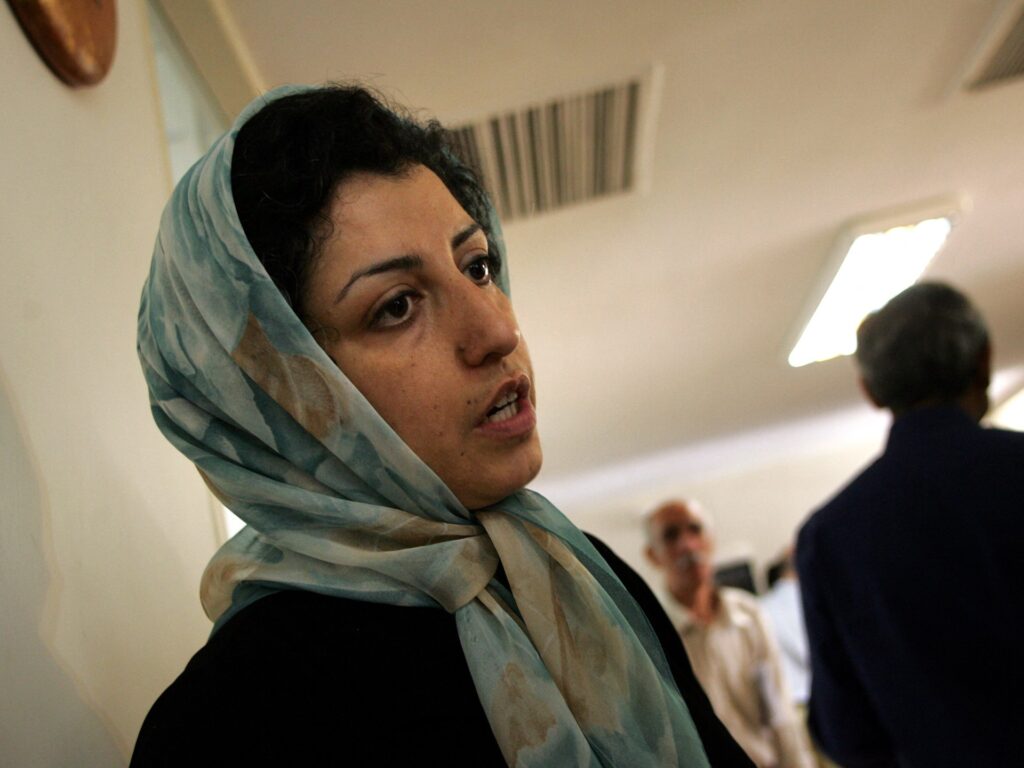
Narges Mohammadi, a renowned women’s rights activist and Nobel laureate, has been sentenced to an additional seven years in prison by Iranian authorities. Mohammadi was arrested in December while attending a memorial ceremony in the city of Mashhad. This latest sentence extends the time she must spend incarcerated and highlights the ongoing repression faced by activists in Iran.
Mohammadi has long been an outspoken advocate for women’s rights and human rights in Iran. Her activism and courage in the face of government crackdowns have earned international recognition, including the Nobel Peace Prize. Despite the accolades, her activism has made her a target for the Iranian government, which has repeatedly charged her with security offenses.
The circumstances surrounding Mohammadi’s arrest in December suggest an attempt by authorities to stifle public gatherings and commemorate events significant to the opposition and reform movements within the country. Memorial ceremonies often serve as focal points for expressions of dissent, and the government’s decision to detain Mohammadi during such an event is seen by many as politically motivated.
This sentence comes amid a broader crackdown on dissenters and activists in Iran, where the government has intensified efforts to silence challenges to its authority. Numerous activists, journalists, and political figures have faced arrests, lengthy imprisonments, and harsh sentences in recent years under various pretexts.
The international community has condemned the treatment of Mohammadi, with many human rights organizations calling for her immediate release. They argue that her imprisonment is unjust and violates fundamental human rights, including freedom of expression and peaceful assembly.
Mohammadi’s continued imprisonment is a stark reminder of the risks faced by activists in Iran. It underscores the broader struggle for human rights and justice in a country where dissent is often met with severe punishment. Her case remains a symbol of resistance and resilience for oppressed groups within Iran and around the world.
The detention and sentencing also highlight the challenges faced by women’s rights activists in Iran, who campaign against discriminatory laws and policies. Mohammadi’s efforts have brought international attention to the plight of Iranian women and the need for reform, even as she faces harsh repercussions at home.
Despite these challenges, Mohammadi’s resolve remains strong. Her case has galvanized international support and brought renewed focus to human rights abuses in Iran. Advocacy groups continue to lobby governments and international bodies to increase pressure on Iran to uphold the rights of its citizens and release political prisoners like Mohammadi.
The sentencing of Narges Mohammadi is a tragic development in the ongoing struggle for justice and equality in Iran. It serves as a critical call to action for global leaders and human rights defenders to redouble their efforts in supporting the courageous activists who risk their lives to fight for freedom and dignity in repressive environments.