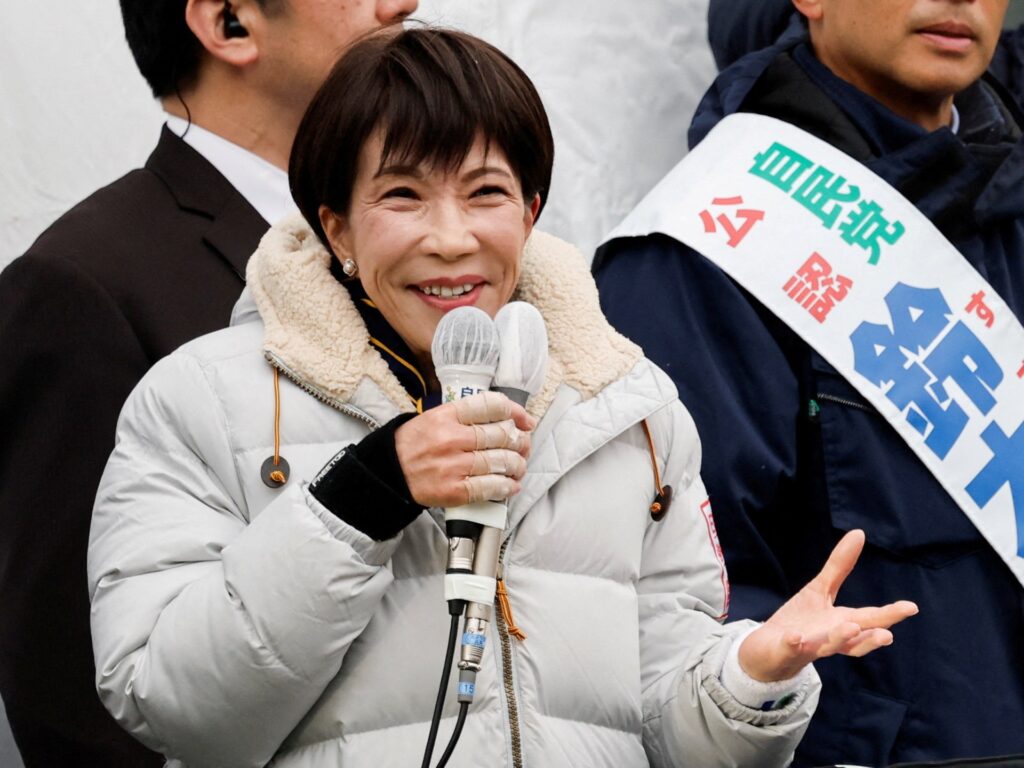
Japan is currently heading towards a critical election phase as Yuko Takaichi, the leader of the conservative coalition, seeks a fresh mandate from the electorate. Opinion polls suggest that Takaichi’s coalition has the potential to secure a substantial victory, possibly winning up to 300 of the 465 seats in the lower house of the Japanese parliament.
This election is pivotal for Japan’s political landscape, with Takaichi pushing a conservative agenda aimed at strengthening Japan’s economy, national security, and traditional values. The conservative coalition’s platform includes policies that promote a strong stance on defense, economic revitalization through deregulation, and bolstering Japan’s role on the global stage.
Takaichi, a prominent political figure known for her steadfast conservative views, has been campaigning vigorously, promising to lead Japan through a period of stability and growth. Her supporters believe that her leadership will bring much-needed reforms and address key issues such as aging demographics, technological innovation, and diplomatic challenges within the region.
Opinion polls reflect a favorable public response to Takaichi’s vision, with her coalition potentially gaining a commanding majority in the lower house. Such a majority would provide a strong mandate to implement the proposed policies and ensure legislative effectiveness.
The election campaign has witnessed intense debates between the conservative coalition and opposition parties with differing views on economic policy, social welfare, and Japan’s international relations. Despite this, Takaichi’s coalition appears poised to capitalize on voter concerns regarding national security and economic uncertainty.
Analysts suggest that if Takaichi’s coalition achieves the predicted victory, it could signify a period of conservative dominance in Japanese politics, shaping the nation’s policy direction for years to come. The emphasis on conservative principles may also influence Japan’s interactions with neighboring countries and its stance on global issues.
Voters are expected to turn out in large numbers, recognizing the significance of this election in determining Japan’s future course. As the polls open, all eyes are on the unfolding political drama and the electorate’s decision, which will resonate beyond Japan’s borders.
In conclusion, the upcoming Japanese lower house election represents a decisive moment, with Yuko Takaichi’s conservative coalition aiming for a strong mandate. The potential victory signals a shift toward conservative governance, emphasizing economic strength, national security, and traditional values, promising to shape Japan’s trajectory domestically and internationally.