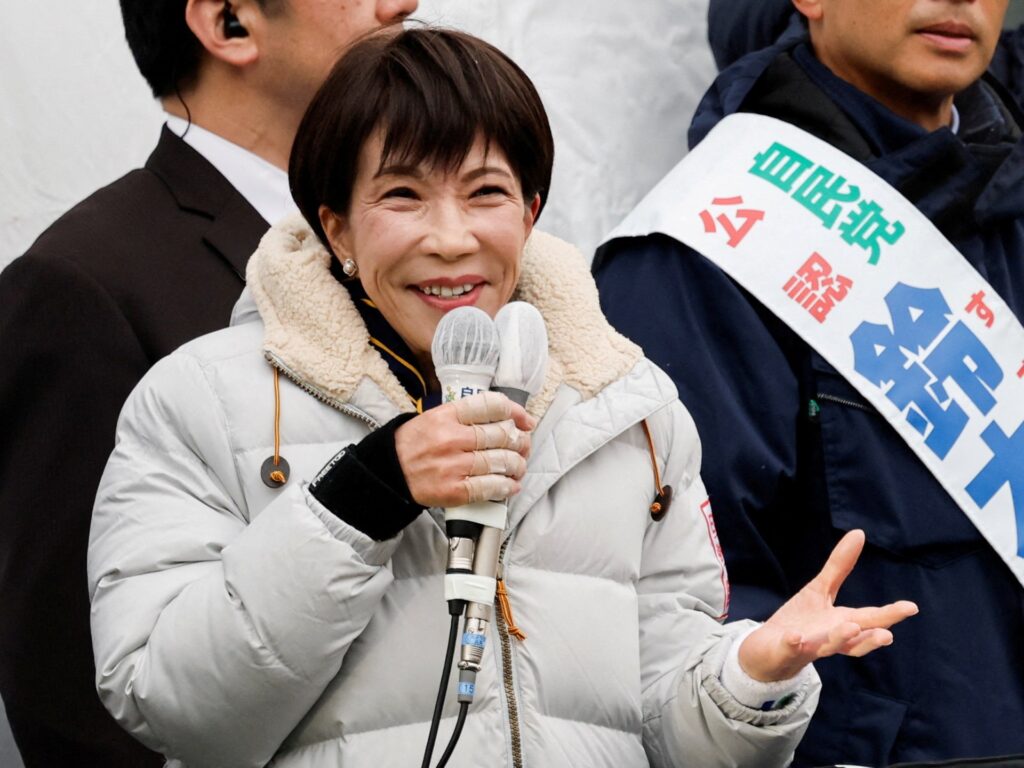
Japan has entered a critical phase in its political landscape as snap elections commenced, with opinion polls indicating a strong lead for Sanae Takaichi and her conservative coalition. Takaichi, a prominent political figure known for her conservative stance, is reportedly on track to secure a significant victory in the lower House elections.
The current polls suggest that Takaichi’s coalition could capture as many as 300 out of the 465 seats in the House of Representatives, a commanding majority that would solidify her influence and potentially shape the country’s policies for years to come.
This election comes at a pivotal moment for Japan, with many voters seeking stability and clear direction amid various national and international challenges. Takaichi’s campaign has focused on conservative values, economic reforms, and a strong stance on security and foreign policy, which seem to resonate with a broad segment of the electorate.
Analysts believe that the possible large majority win for Takaichi’s coalition could lead to significant changes in legislative priorities and governance style. It may also impact Japan’s position on key global issues, given the country’s critical role in regional and international affairs.
The snap election was called unexpectedly, adding an element of uncertainty and excitement to the political environment. However, early indications from opinion polls show that Takaichi’s coalition has successfully mobilized support across the nation, outpacing rivals.
This upcoming term is expected to be decisive for Japan as it navigates economic recovery post-pandemic, relations with neighboring countries, and internal political reforms. The anticipated mandate for Takaichi and her coalition could provide the government with a strong platform to implement their agenda more effectively.
Observers are closely watching voter turnout and the final results, which will confirm whether the polls captured the true leaning of the electorate. If the projections hold, Japan may witness one of the most pronounced conservative victories in recent memory.
As polls continue, all eyes are on Sanae Takaichi, whose leadership style and policy priorities will now face the test of public approval and parliamentary support. The election outcome will not only shape Japan’s domestic future but also influence its international diplomatic and economic engagements.
Japan stands at a crossroads with this election, and the verdict from its citizens could redefine the political equation both at home and abroad. The coming weeks will be critical in determining the next chapter in Japanese governance and policy direction.