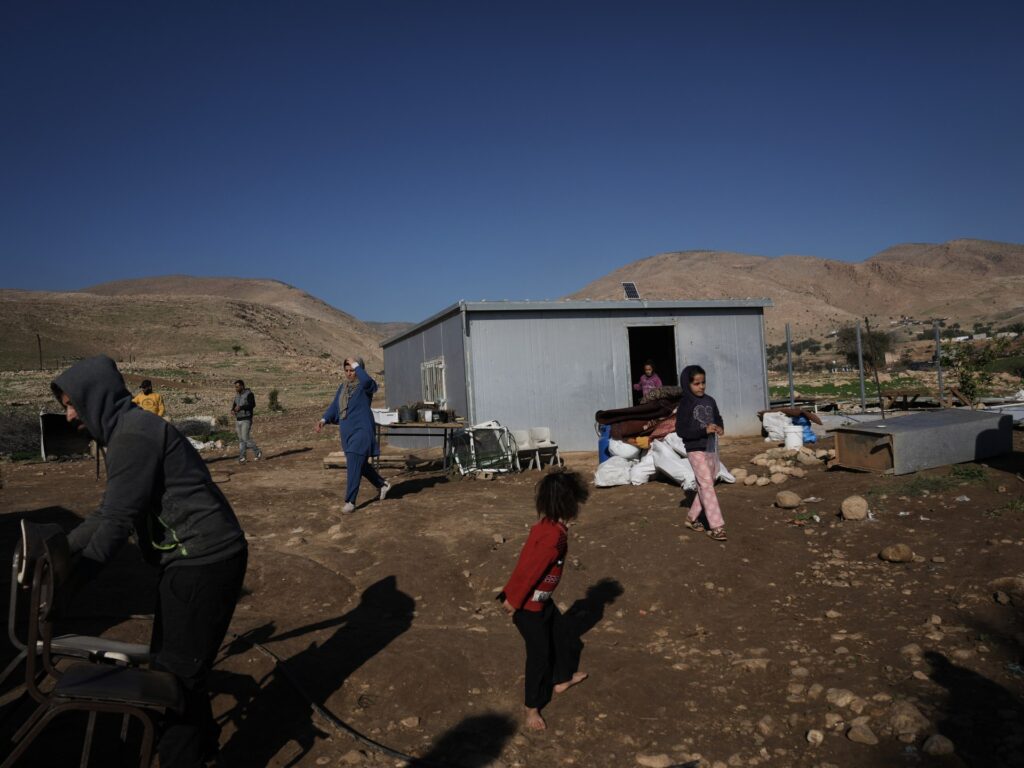
The United Nations has reported a significant spike in displacement across the West Bank since October 2023, attributing the rise chiefly to escalating violence perpetrated by settlers. January 2024 marked a particularly troubling period, with the highest recorded displacement figures largely driven by the forced removal of an entire herding community from the Jordan Valley. This development underscores growing tensions and instability in the region, prompting widespread concern among international observers and humanitarian organizations.
According to the UN Office for the Coordination of Humanitarian Affairs (OCHA), January’s displacement levels far exceeded those of the previous months, indicating an alarming upward trend linked to settler-related violence. The targeted removal of the herding community in the Jordan Valley, a fertile and strategically significant area in the eastern West Bank, has not only uprooted families but also disrupted their traditional livelihoods and social fabric.
Humanitarian officials emphasize that the displacement is contributing to an already precarious humanitarian situation in the West Bank. Displaced families face numerous challenges, including lack of access to adequate shelter, water, healthcare, and education. The OCHA report highlights the urgent need for protective measures and interventions that address the immediate needs of those affected while seeking to prevent further violence and displacement.
Settler violence has been a persistent issue in the West Bank, often characterized by attacks, property damage, and intimidation targeted at Palestinian communities. This latest wave of displacement is raising alarm about the potential for escalating conflict and long-term instability in the region. The removal of the herding community is seen as part of a broader pattern of pressures that Palestinian residents are facing, including demolition of homes and restrictions on movement.
International responses have called for de-escalation and respect for human rights in the area. Various stakeholders, including the United Nations, humanitarian agencies, and international governments, emphasize the importance of dialogue and peaceful resolution to address the root causes of the conflict. There is a growing call for accountability and protective oversight to safeguard vulnerable populations from violence and displacement.
The situation in the West Bank continues to be fluid, with humanitarian organizations closely monitoring developments. The UN has appealed for increased funding and support to respond effectively to the displacement crisis and to provide aid to affected populations. The recent surge in displacement highlights the urgent need for sustained international attention and action to promote stability, security, and human rights in the region.
In summary, the spike in displacement driven by settler violence represents a critical challenge for the West Bank. The forced removal of an entire herding community in the Jordan Valley is emblematic of the broader humanitarian and political issues at play. Continued violence and displacement risk exacerbating tensions and undermining prospects for peace, making the situation a focal point for concerted international efforts and humanitarian response.