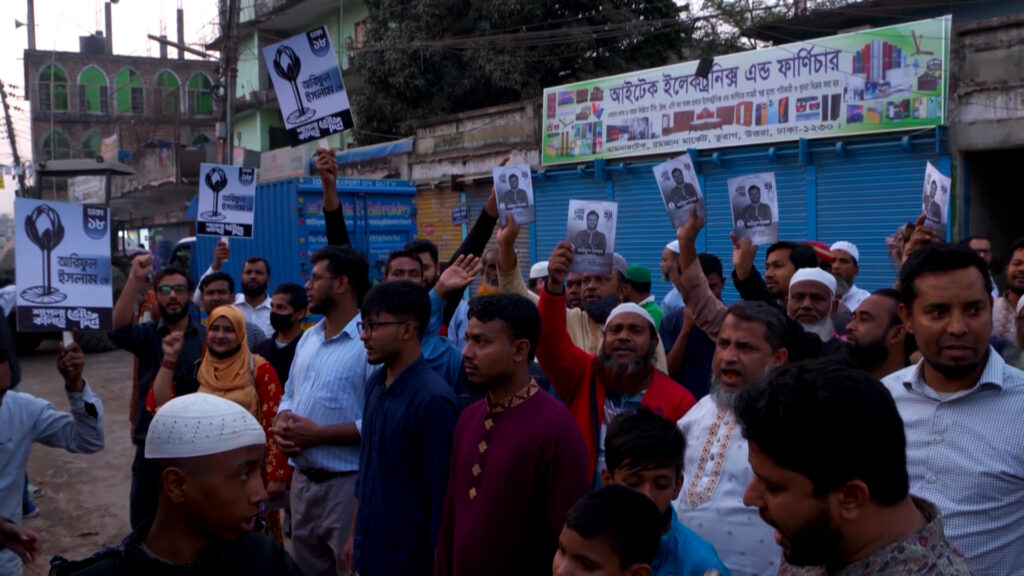
Bangladesh is witnessing a significant political transformation as the banned Jamaat-e-Islami party prepares to re-enter the political arena for the first time in the country’s history. Traditionally sidelined due to its controversial past and legal restrictions, Jamaat-e-Islami now stands poised to potentially take power, marking a historic development in Bangladesh’s electoral landscape.
Jamaat-e-Islami, the country’s largest Muslim party, has had a turbulent journey marked by allegations of militancy and participation in the 1971 Liberation War atrocities, leading to its ban from mainstream politics. However, recent changes in the political and legal environment have paved the way for its return, signaling a shift in voter sentiments and political alliances.
The upcoming election is not just another routine political event but a critical juncture that could reshape Bangladesh’s future governance. The party’s increasing popularity among certain voter demographics, particularly those who resonate with its religious and social policies, has created a new dynamic that challenges the long-standing dominance of secular parties in the nation.
Experts suggest that Jamaat-e-Islami’s re-entry could lead to a redefinition of policy priorities, especially around social and economic issues, intertwining governance with Islamic principles more prominently than before. This rise also reflects broader regional and global trends where Islamic parties gain momentum in competitive electoral environments.
However, the party’s resurgence is not without controversy. Critics argue that Jamaat-e-Islami’s past affiliations and ideological stance pose risks to Bangladesh’s secular fabric and communal harmony. Human rights organizations and some political entities have voiced concerns about the implications of lifting the ban, fearing it could embolden extremist elements and undermine the progress made in promoting pluralism and democracy.
Nonetheless, the election offers voters a choice between continuity and change, with Jamaat-e-Islami representing a platform for those seeking an alternative to the current political establishment. The party’s campaign emphasizes issues such as social justice, anti-corruption, and economic reform, aiming to address the grievances of marginalized communities.
International observers are closely monitoring the situation, recognizing that Bangladesh’s political stability is vital for the region’s security and economic growth. The outcome of this election will not only affect domestic policies but also Bangladesh’s diplomatic relations, particularly with neighboring countries and global powers.
As election day approaches, the country is bracing for robust political debates, voter mobilization, and potential challenges to the electoral process. The return of Jamaat-e-Islami represents a watershed moment that could redefine political participation and power distribution in Bangladesh.
In conclusion, the return of Jamaat-e-Islami to Bangladesh’s political mainstream signals a historic and potentially transformative phase in the nation’s democracy. While it offers new hopes and opportunities for some segments of society, it also brings forth critical questions about the balance between religion and politics, national unity, and the future trajectory of Bangladesh’s democratic values.