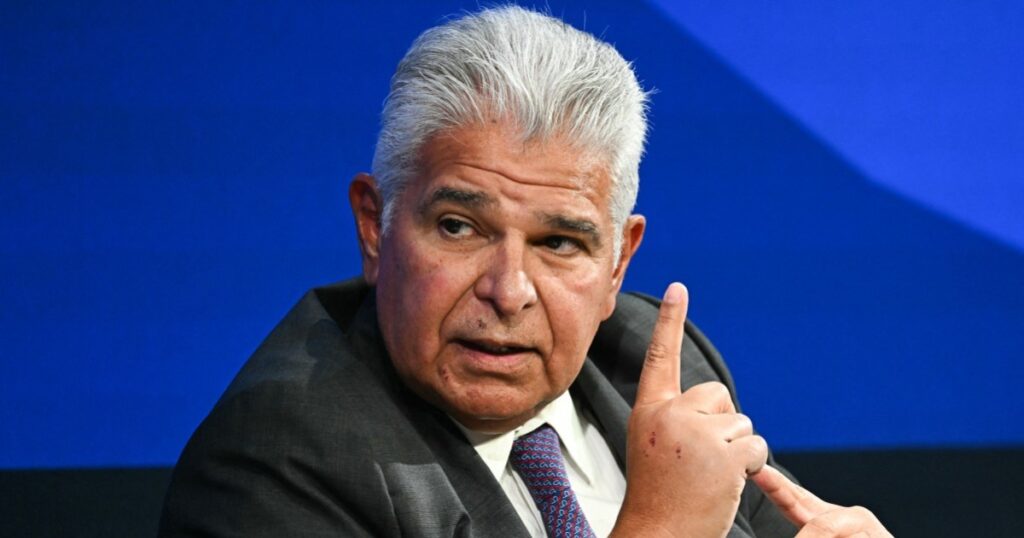
In a recent diplomatic confrontation, Panama’s President Mulino has strongly responded to threats from China regarding the control and management of Panama’s canal ports. The dispute centers on China’s growing influence in the region and its strategic interest in key ports along the Panama Canal, which is a vital global maritime passage.
President Mulino emphasized Panama’s commitment to upholding the rule of law and maintaining the sovereignty of its institutions. He reassured the public and international community that Panama possesses an independent judicial system capable of managing disputes and ensuring legal processes are respected without external interference.
The contention arose when Chinese officials reportedly issued threats or warnings about Panama’s regulatory actions on Chinese-operated ports, stirring tensions between the two countries. This situation has drawn attention to the broader issues of foreign investments and control over critical infrastructure in Latin America, highlighting concerns about sovereignty and national security.
Mulino’s firm response asserts that Panama will not bow to pressure that threatens its autonomy or legal frameworks. He underscored the importance of transparent and fair governance in managing its ports, which are not only central to Panama’s economy but also to international trade.
Experts note that the Panama Canal is a strategic asset, facilitating a significant portion of global maritime traffic. Control over its associated ports is highly sensitive, given the economic and geopolitical implications. China’s Belt and Road Initiative has expanded its footprint in Latin America, including investments in ports, raising fears in some quarters about potential erosion of national sovereignty.
The Panamanian government has taken steps to ensure that all foreign investments comply with national laws and that operations are conducted with transparency. President Mulino’s statement serves as a clear message that Panama values its independent institutions and will continue to safeguard them against any external coercion.
International observers view this situation as an important test of Panama’s resolve to manage foreign relations prudently while protecting its strategic interests. The dispute highlights the ongoing challenge many countries face in balancing economic benefits from foreign investments against the imperative of maintaining sovereign control.
Looking forward, dialogue between Panama and China will be critical to resolving differences amicably. Both nations have much to gain from cooperation but must navigate these tensions carefully to avoid escalation.
President Mulino’s stance signals Panama’s determination to assert its legal rights and defend its national interests in the complex landscape of international diplomacy and global trade.