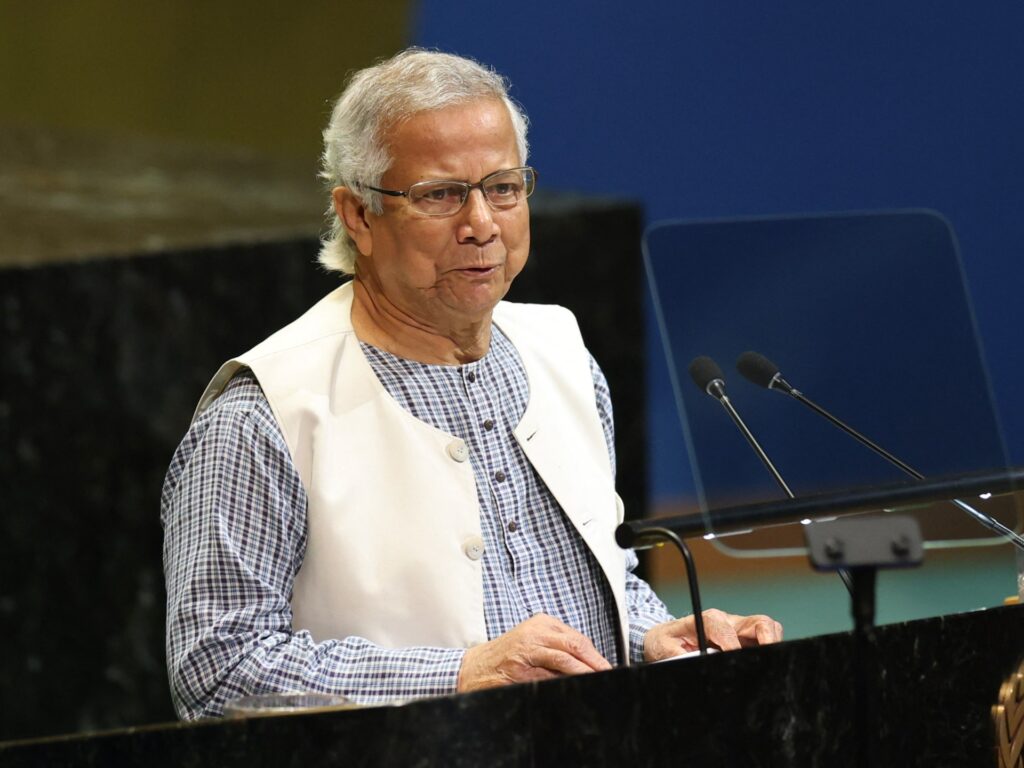
Muhammad Yunus, renowned globally as the pioneer of microfinance and a Nobel laureate, has been a towering figure in Bangladesh’s economic and social landscape. His vision of empowering the poor through microcredit has transformed millions of lives and has been a beacon of hope in a country often described metaphorically as a ‘Country of the blind’. As Yunus’s current leadership stint draws to a close, Bangladesh stands at a crossroads, reflecting on how it will remember this complex and influential figure.
Yunus’s contributions extend far beyond his famous microcredit initiatives. Throughout his career, he has championed reforms aimed at bringing justice to victims marginalized during the Hasina era, seeking to address deep-rooted economic and social disparities. His efforts often challenged entrenched systems and attempted to introduce transparency and fairness in policies affecting the underprivileged.
Despite his achievements, Yunus’s tenure has not been without controversy or criticism. Some critics argue that his approach, while visionary, sometimes clashed with prevailing political and economic forces, leading to tensions within the establishment. His push for reforms occasionally met resistance from those invested in maintaining the status quo, highlighting the difficulties of implementing change in a complex political environment.
Supporters, however, emphasize Yunus’s unwavering commitment to social justice and economic inclusion. They see him as more than just a financier or economist – a catalyst for social transformation who sought to widen the circle of opportunity for Bangladesh’s poorest citizens. His work in microfinance has inspired countless similar projects worldwide, demonstrating the power of grassroots development and entrepreneurial spirit.
Yunus’s legacy is further complicated by the political landscape in Bangladesh, where his initiatives intersect with broader questions of governance, accountability, and human rights. His advocacy for victims of political and social injustice has drawn both admiration and opposition, underscoring the polarized nature of his impact.
As his leadership role winds down, the question remains: how will Bangladesh remember Muhammad Yunus? Will he be hailed primarily for his groundbreaking innovations in poverty alleviation and social entrepreneurship, or will the contentious aspects of his career and his clashes with political authorities overshadow his achievements?
One thing is clear – Yunus has left an indelible imprint on the country’s social fabric. His vision and efforts have expanded the horizons for millions who were once relegated to the margins. Whether future generations will view him as a reformer, a visionary, or a polarizing figure will depend largely on how the country continues to evolve in terms of social justice, economic equity, and political openness.
In the end, Muhammad Yunus embodies the complex reality of Bangladesh itself – a nation striving towards progress amidst challenges, seeking to open the eyes of the ‘blind’ towards a future of opportunity and fairness. His legacy is a testament to the enduring power of hope, resilience, and the pursuit of justice, which will undoubtedly continue to fuel debates and inspire actions for years to come.