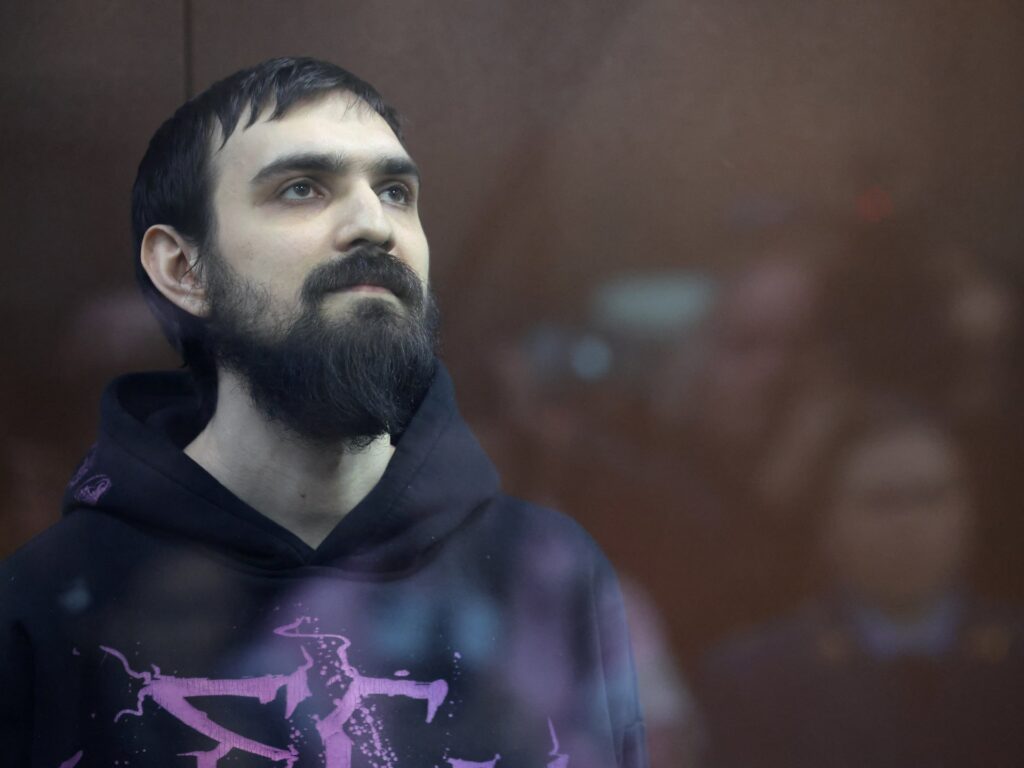
Russian stand-up comedian Artemy Ostanin has been sentenced to over five years in a penal colony following a controversial joke about a war veteran. The joke referenced a ‘legless’ war veteran, a sensitive subject in the country, especially amid the ongoing conflict and heightened nationalistic sentiments. This incident highlights the increasingly harsh legal environment in Russia concerning free speech and public criticism of the military and the war effort.
Ostanin’s sentencing has sparked a wave of concern among human rights organizations and free speech advocates, who argue that the punishment is disproportionate and signals a troubling crackdown on dissenting voices in Russia. Critics claim that the authorities are using legal measures to silence comedians, artists, and ordinary citizens who express opinions that challenge the official narrative of the government.
The comedian’s supporters emphasize that humor often serves as a social commentary tool and a means to cope with difficult realities. They argue that criminalizing jokes can stifle creativity and democracy, leading to a climate of fear.
Artemy Ostanin’s case is emblematic of the broader trend in Russia, where laws against extremism, discrediting the armed forces, or spreading false information have been applied with increasing severity, particularly in relation to the war. Many have noted that this crackdown undermines civil liberties and the principles of free expression enshrined in international human rights agreements.
International observers and free speech groups have called on the Russian government to reconsider the charges against Ostanin and to uphold the freedoms that allow for open dialogue and critique in society. They warn that punishing artistic expression over a joke may set a dangerous precedent, leading to further restrictions on communication and dissent.
This case also reflects the challenging environment for comedians and ordinary citizens operating in Russia today, where the boundaries of acceptable speech are tightly controlled and politically charged. It underscores the risks involved in confronting sensitive issues through humor in a state that prioritizes control over public discourse.
As Ostanin begins his sentence, there is an ongoing debate about the role of comedy in society and the limits of freedom of expression in authoritarian settings. His situation serves as a stark reminder of the fragile state of free speech in modern Russia amid heightened political and social tensions.