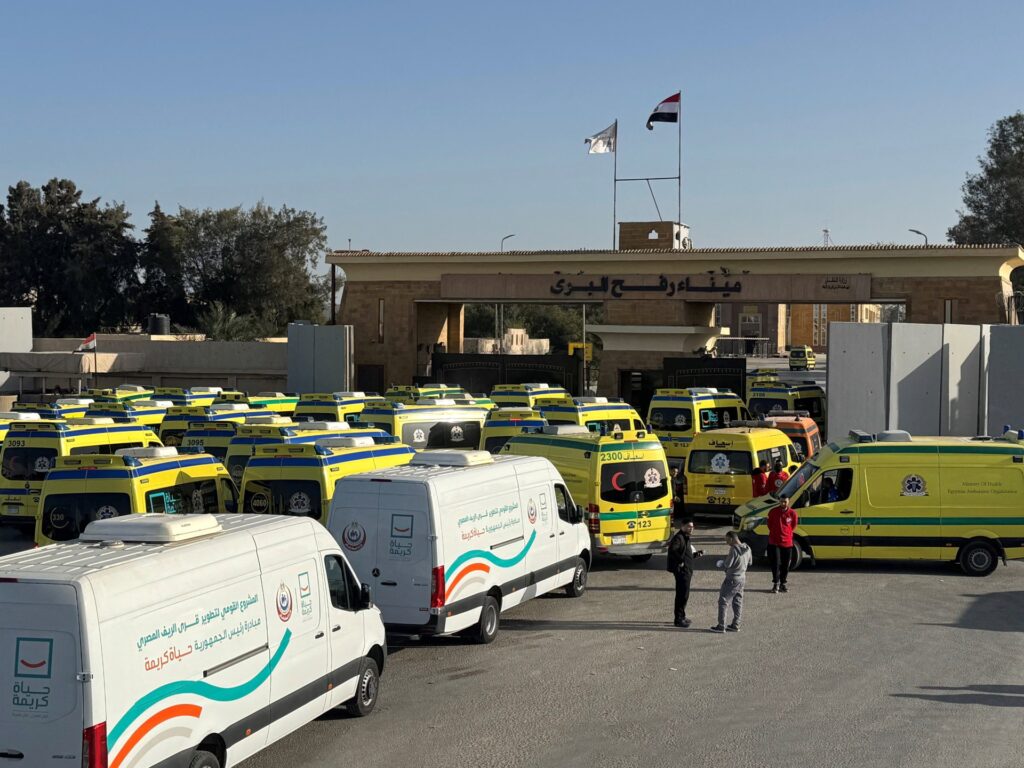
The Rafah crossing, a critical link between the Gaza Strip and Egypt, has officially reopened for limited traffic. This reopening is a significant development as it is part of the second phase of a US-brokered ceasefire agreement aimed at easing tensions and promoting stability in the region.
The Rafah crossing, which had been closed for an extended period, playing a crucial role in the movement of people and goods, especially in a territory heavily reliant on cross-border access. Its closure had contributed to severe restrictions on the flow of humanitarian aid, medical supplies, and commercial goods into Gaza, thereby exacerbating the hardships faced by the enclave’s population.
Under the terms of the US-mediated ceasefire, the reopening of the Rafah border is designed to facilitate the passage of essential items and allow limited civilian transit, mainly to provide relief in areas such as medical treatment, family reunification, and economic activities that require travel beyond Gaza’s borders.
The phased approach to reopening the crossing indicates a cautious but hopeful step towards normalization following periods of conflict and blockade. The limited traffic through Rafah is expected to gradually increase, contingent on the stability of the ceasefire and ongoing diplomatic efforts to maintain peace.
Egypt’s role in managing the crossing is critical, given its position as a neighbor to Gaza and its substantial influence in regional politics. The cooperation of Egyptian authorities in this initiative underscores a shared interest in reducing hostilities and supporting Gaza’s humanitarian needs.
In addition to its humanitarian significance, the reopening of Rafah crossing also holds political implications. It serves as a tangible outcome of the ceasefire negotiations and could be a foundational element for broader peace talks in the future. However, challenges remain, including ensuring security at the crossing, dealing with demands from various political factions, and addressing the overall psychosocial and economic impacts on Gaza’s residents.
International observers and humanitarian organizations have welcomed the reopening as a positive development, emphasizing the importance of maintaining access and preventing future closures. The United Nations and other agencies have reiterated their calls for sustained international support to address Gaza’s pressing needs.
In summary, the limited reopening of the Rafah crossing is a milestone in the ongoing efforts to stabilize Gaza through a US-brokered ceasefire. It offers a glimmer of relief to residents of the enclave and a potential pathway for further diplomatic engagement aimed at achieving long-term peace and stability in the region.