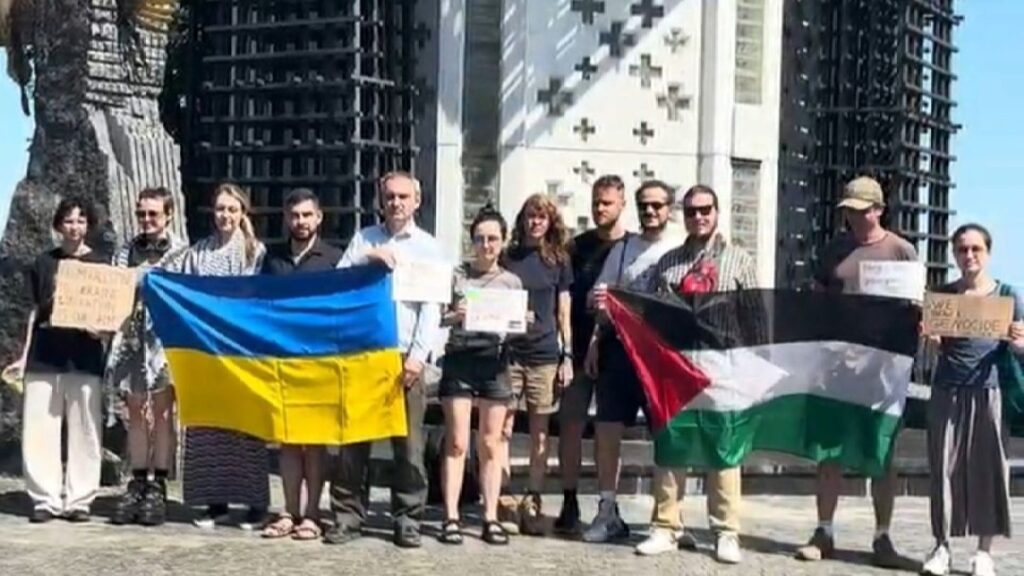
In the midst of the ongoing conflict in Ukraine, a notable shift is occurring in public discourse and political sentiment regarding the Palestinian situation. Traditionally, expressing sympathy for Palestine in Ukraine had been a sensitive topic, often avoided or suppressed due to the country’s own geopolitical struggles and alliances. However, recent developments indicate that this taboo is fading as debates about Gaza increasingly take center stage in Kyiv.
The evolution of this stance is closely tied to the shifting position of Washington on Ukraine and its broader strategic interests. As the United States revises its approach to Ukraine, there is a perceptible ripple effect influencing public opinion and political dialogue within the Ukrainian capital.
Ukraine, a nation grappling with its own severe crisis from Russian aggression, has historically aligned closely with Western powers, particularly the U.S., which has provided substantial support. This alignment has often translated into a cautious approach toward contentious global issues, including the Israeli-Palestinian conflict, where overt support or sympathy for Palestine was considered politically risky.
However, the growing humanitarian catastrophe in Gaza and the intense international spotlight on the region have prompted more open conversations in Ukraine. Citizens and politicians alike are increasingly voicing concern and empathy for the plight of Palestinians, recognizing parallels in suffering between their own people and those affected by the conflict in Gaza.
This shift reflects a broader trend of Ukraine asserting a more nuanced foreign policy posture as it navigates the complexity of its own fight for sovereignty and the global geopolitical landscape. It also underscores the importance of humanitarian considerations in foreign policy discussions, beyond traditional alliance politics.
Public forums, social media channels, and independent media in Ukraine are now buzzing with debates that were once marginalized or muted. Activists and human rights advocates are seizing the moment to highlight Palestinian issues, calling for greater empathy and international solidarity.
Moreover, this change hints at a potential realignment in Ukraine’s external relations, where engagement with Middle Eastern affairs might gain prominence alongside its immediate security concerns in Eastern Europe.
Analysts suggest that this emerging discourse is likely to influence Ukraine’s diplomatic positioning, possibly prompting a more balanced approach that considers a wider range of global perspectives.
In summary, the once-taboo topic of sympathy for Palestine in war-torn Ukraine is becoming a legitimate and vibrant part of national conversation. This development is fueled by changes in Washington’s stance and reflects Ukraine’s evolving identity on the world stage—a nation grappling with its painful realities while opening up to global humanitarian issues with newfound empathy and assertiveness.