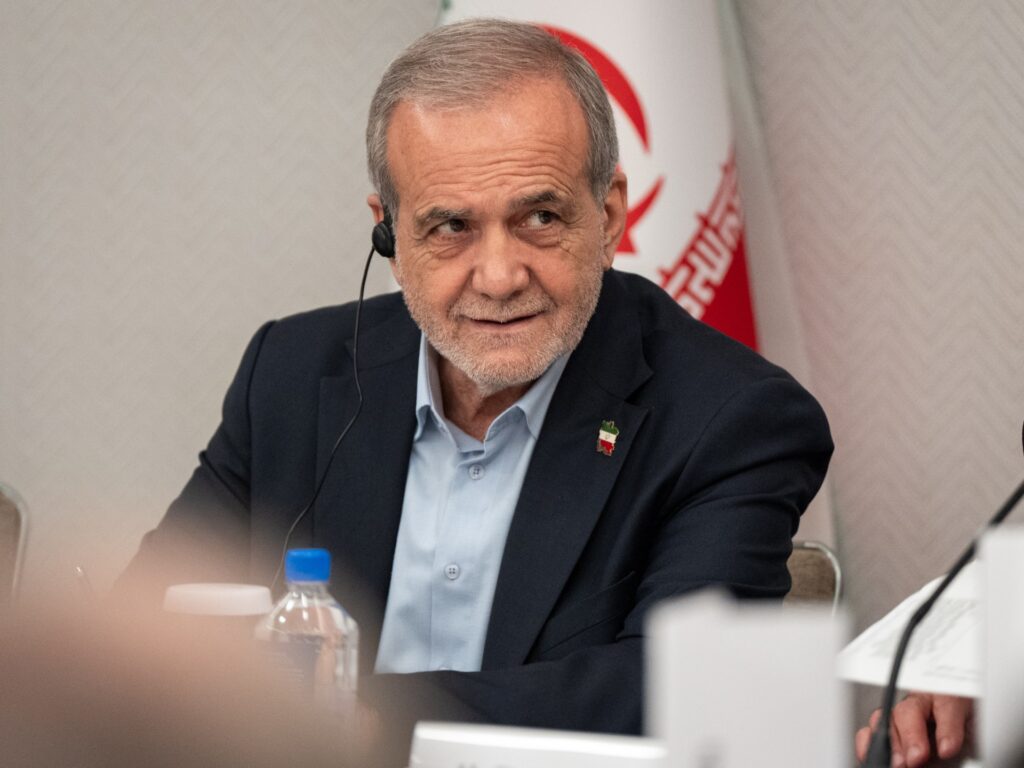
In a recent statement, Iran’s President highlighted significant foreign interference in the domestic unrest that has gripped the country. Masoud Pezeshkian, a prominent Iranian official, publicly accused foreign powers, specifically naming former U.S. President Donald Trump, Israeli Prime Minister Benjamin Netanyahu, and the European Union, of exploiting Iran’s internal difficulties and provoking societal tensions.
The protests, which erupted over various economic and political grievances, have seen a range of responses both domestically and internationally. President Pezeshkian’s remarks underscore a long-standing narrative in Iranian political discourse that external adversaries seek to destabilize the country by taking advantage of its vulnerabilities.
According to Pezeshkian, these foreign entities deliberately stirred discord to exacerbate the situation, aiming to weaken Iran’s internal cohesion and undermine its government. This statement reflects Tehran’s ongoing concerns over international influence and interference in its affairs, especially during periods of civil unrest.
The reference to Donald Trump and Netanyahu points to the heightened tensions during their respective leadership periods, marked by hardline policies against Iran, including sanctions and diplomatic isolation. The inclusion of the European Union further signals Tehran’s frustration with what it perceives as inconsistent or ineffective responses from Western governments to the crisis.
Iran’s internal challenges are multifaceted, involving economic hardships exacerbated by sanctions, political dissatisfaction, and demands for greater freedoms. The protests have been a manifestation of these layered issues, and the government’s response has been both defensive and assertive in highlighting external meddling.
Political analysts note that such allegations are common in Iran’s political rhetoric and serve to rally nationalist sentiments, delegitimize protest movements, and justify stringent measures against dissidents. Nonetheless, they also reveal genuine anxieties about the impacts of geopolitical pressures on Iran’s stability.
The international community has called for restraint and dialogue to address the root causes of the unrest, emphasizing human rights and the need for peaceful solutions. However, Tehran’s accusations complicate diplomatic efforts by framing the protests as a foreign-driven conspiracy rather than a reflection of domestic discontent.
In summary, President Masoud Pezeshkian’s declaration that Trump, Netanyahu, and the EU have provoked Iranian society during its tumultuous protests shines a light on the complex interplay between internal strife and external political gamesmanship. It highlights Iran’s persistent stance against perceived foreign interference while revealing the broader geopolitical context surrounding the nation’s ongoing challenges.