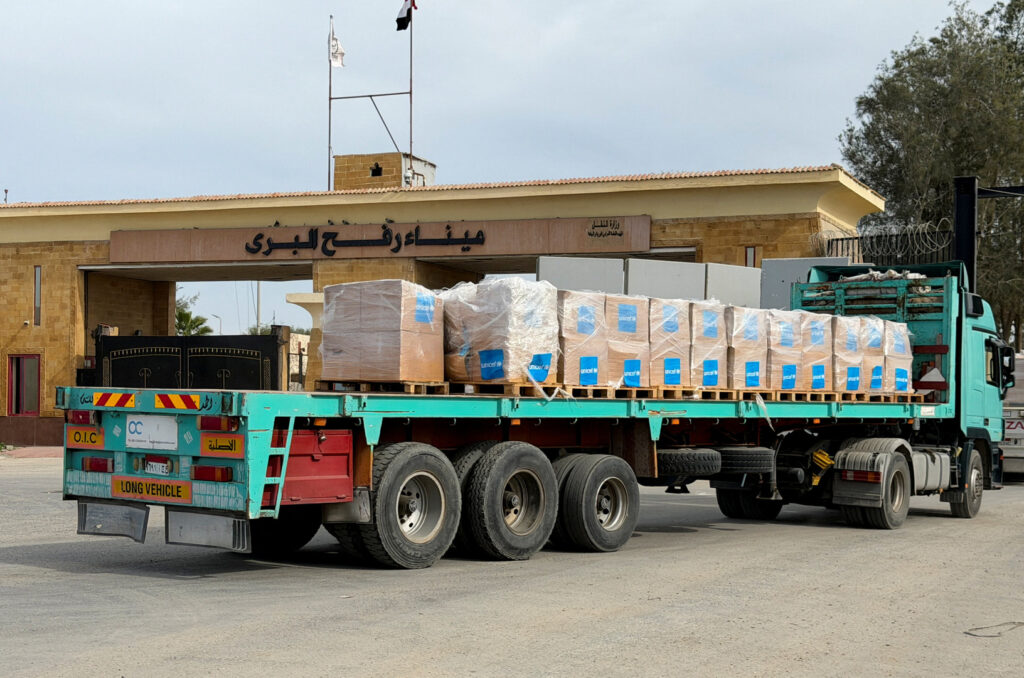
A truck carrying humanitarian aid at the Rafah border on the Egyptian side, in Rafah, Egypt, January 29, 2026. The Rafah border crossing is expected to open after Israel recovered the remains of the last remaining hostage held in Gaza. Picture taken with a mobile phone. REUTERS/Stringer
After nearly two years of closure, Israel has announced that the Rafah crossing will reopen on Sunday. This development comes amid continued reports of aid blockades in the region, sparking both hope and concern among the affected populations.
The Rafah crossing is a critical gateway between Gaza and Egypt, heavily relied upon for the movement of people and essential goods, including humanitarian aid. Its closure for almost two years has had significant repercussions on the daily lives of Palestinians, severely restricting their access to medical supplies, food, and other necessities.
Israel’s decision to reopen the crossing is seen as a step towards alleviating the prolonged humanitarian crisis. However, the move also raises questions about the ongoing blockage of aid supplies, as reports indicate that while the crossing may be open for passage, restrictions on aid deliveries remain in place.
Humanitarian organizations have long called for an uninterrupted flow of aid to Gaza to prevent further deterioration of living conditions. The blockade has led to shortages in hospitals, schools, and private households, exacerbating an already dire situation.
The political context surrounding the decision is complex. The Rafah crossing is the only entry and exit point between Gaza and Egypt, and its operation is often influenced by broader security concerns and political negotiations between Israel, Egypt, and Palestinian authorities.
Officials have stated that the reopening will allow limited movement of people and goods, aiming to facilitate urgent cases and improve the supply chain of essential items. Yet, skepticism remains among observers and local residents who have experienced the consequences of previous temporary openings.
The international community continues to watch closely, urging all parties to ensure that humanitarian needs are prioritized and that aid can flow without hindrance. Reopening Rafah could mark a significant moment toward easing the blockade, but sustained efforts and cooperation will be essential to achieve long-term relief.
In summary, the reopening of the Rafah crossing after nearly two years stands as a pivotal event in the ongoing situation between Israel and Gaza. As Israel prepares to lift the closure on Sunday, the true impact of this decision will depend on the extent to which aid and essential supplies are allowed to reach those in need, and how the surrounding political challenges are managed moving forward.