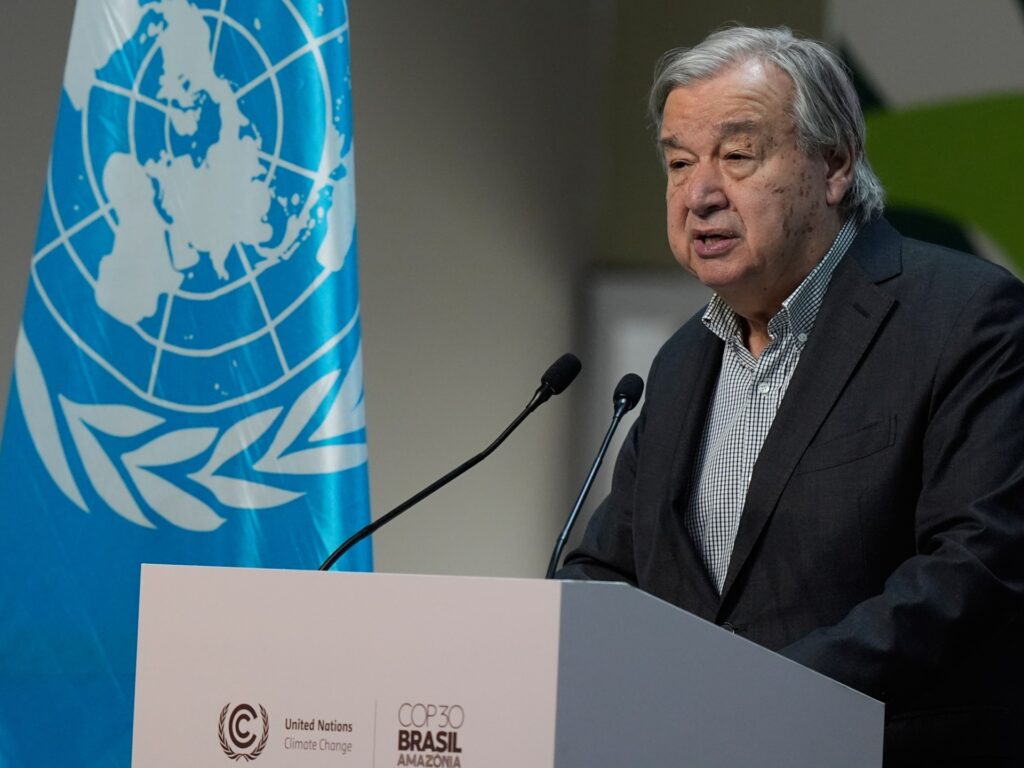
United Nations Secretary-General Antonio Guterres has issued a stark warning regarding the financial instability facing the United Nations, highlighting the risk of an imminent financial collapse if urgent action is not taken. In a recent address, Guterres called on UN member states to tackle the growing issue of unpaid dues and urged them to undertake a comprehensive overhaul of the organization’s financial rules.
Guterres emphasized that the financial health of the UN is at a critical juncture because many member states have failed to make full and timely payments of their assessed contributions. This shortfall has created significant budgetary gaps, undermining the organization’s ability to carry out its essential functions, including peacekeeping operations, humanitarian aid, and pandemic response efforts.
“The UN’s financial situation is perilous,” Guterres stated. “We are on the brink of a financial collapse that will impair our work unless urgent measures are implemented.”
The Secretary-General highlighted that the current financial rules governing the UN have not evolved sufficiently to meet the demands of today’s complex global challenges. He called for a reformative approach to ensure transparency, accountability, and efficiency in managing the budget.
Many member states have expressed concern over the backlog of unpaid contributions, which reportedly total billions of dollars. The delays have compelled the UN to rely on credit and temporary measures, posing risks to operational continuity.
Guterres urged the international community to adopt a long-term vision for reform that aligns with the UN’s mandate to maintain global peace, security, and sustainable development. He also encouraged member countries to reaffirm their commitment to multilateralism and the principles upon which the United Nations was founded.
Experts note that the ongoing financial woes may not only disrupt current programs but could also damage the UN’s credibility and effectiveness in addressing future crises. The warning from Guterres serves as a call to action for all stakeholders to prioritize financial reforms and timely payments.
As the UN seeks solutions, discussions are underway to introduce stricter policies regarding member contributions and to explore innovative funding mechanisms. These initiatives aim to create a more resilient financial framework that can better withstand geopolitical and economic fluctuations.
In conclusion, the message from Antonio Guterres is clear: without immediate and decisive action from member states, the financial foundation of the United Nations is at risk. The failure to address these issues could jeopardize the global institution’s ability to fulfill its critical mission in a rapidly changing world.