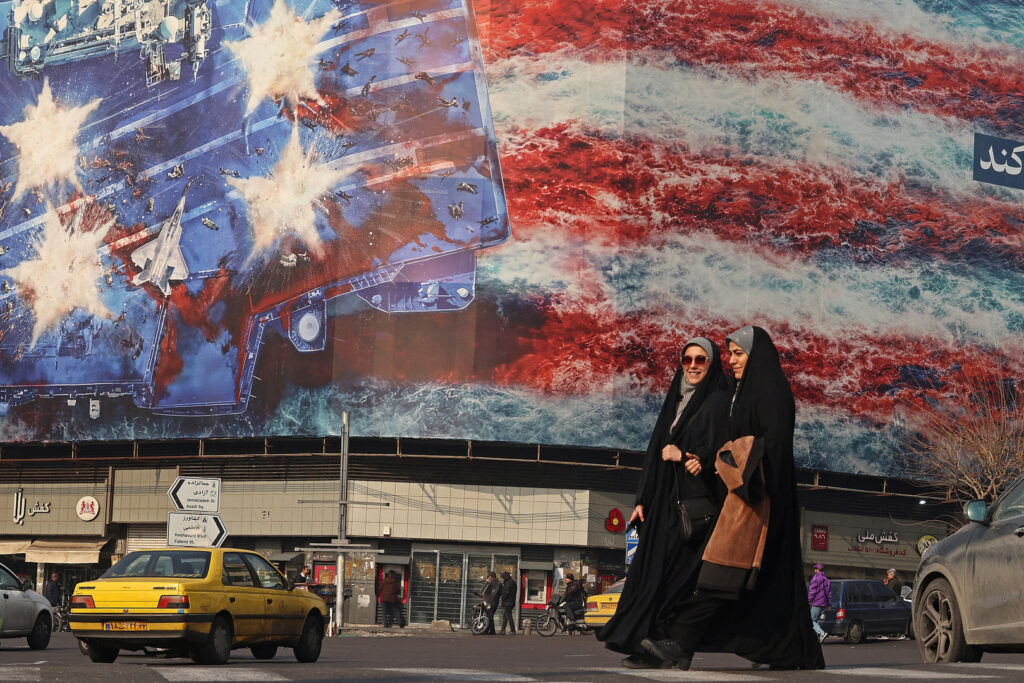
Iranian women walk past an anti-US billboard installed on a building at the Enqelab Square in Tehran on January 26, 2026. (Photo by ATTA KENARE / AFP)
In recent developments, the United States has announced a significant military build-up in the Middle East, focusing on increasing its presence near Iran. This move comes amid heightened tensions and the US administration’s statements about being prepared to strike Iran if necessary. This strategic military positioning raises several critical questions that experts, policymakers, and the international community are keen to understand.
First, what are the primary objectives behind the US military build-up near Iran? The official stance from the US government suggests that the build-up is intended as a deterrence measure, signaling strength and readiness to respond to any threats from Iran. There are concerns about Iran’s nuclear program, regional influence, and support for proxy groups, which the US perceives as destabilizing factors.
Second, how might this military build-up impact the delicate balance of power in the Middle East? The presence of additional US forces could escalate tensions not only with Iran but also with its regional allies and various factions active in the area. This may increase the risk of conflict or unintended incidents that could spiral out of control.
Third, what are the legal and diplomatic implications of this move? Deploying troops and military assets in proximity to Iran involves complex international laws and bilateral agreements with countries hosting US forces or providing logistical support. It also affects diplomatic efforts aimed at dialogue and negotiation with Iran.
Fourth, what are the potential responses from Iran and other regional powers? Iran’s leadership has historically reacted strongly to US military provocations, and there may be an increase in hostile rhetoric or retaliatory measures. Other regional actors, such as Russia, China, and Gulf Cooperation Council countries, will also play a crucial role in shaping the response to these developments.
Fifth, how does this military stance integrate with broader US foreign policy? The Trump administration’s approach to Iran is part of a broader strategy that includes economic sanctions, diplomatic pressure, and efforts to isolate Iran internationally. Military readiness complements these efforts but also risks escalating confrontation.
Sixth, what are the risks to US personnel and assets deployed in the region? With heightened tensions, US service members face increased danger from potential attacks by Iranian forces or their proxies. Protecting these personnel requires robust intelligence, surveillance, and defense measures.
Seventh, how might this build-up affect global markets, especially energy prices? The Middle East is a critical hub for the world’s oil supply, and any instability caused by military escalations can lead to fluctuations in oil prices, impacting global economies.
Eighth, what are the implications for regional security alliances? The US has longstanding relationships with key allies in the Middle East, including Israel and Saudi Arabia, who have vested interests in countering Iran’s influence. This military build-up might reinforce these alliances or complicate them depending on how events unfold.
Finally, what is the timeline and scale of this military deployment? Details about the number of troops, types of military assets involved, and duration of the deployment are crucial for assessing the seriousness and sustainability of the US military posture near Iran.
Overall, the US military build-up near Iran is a significant development that warrants close attention. It reflects the complexity of Middle Eastern geopolitics and the challenges of balancing deterrence with diplomacy in a volatile region. Observers will be watching closely to see how these dynamics evolve and what they mean for regional and global security.