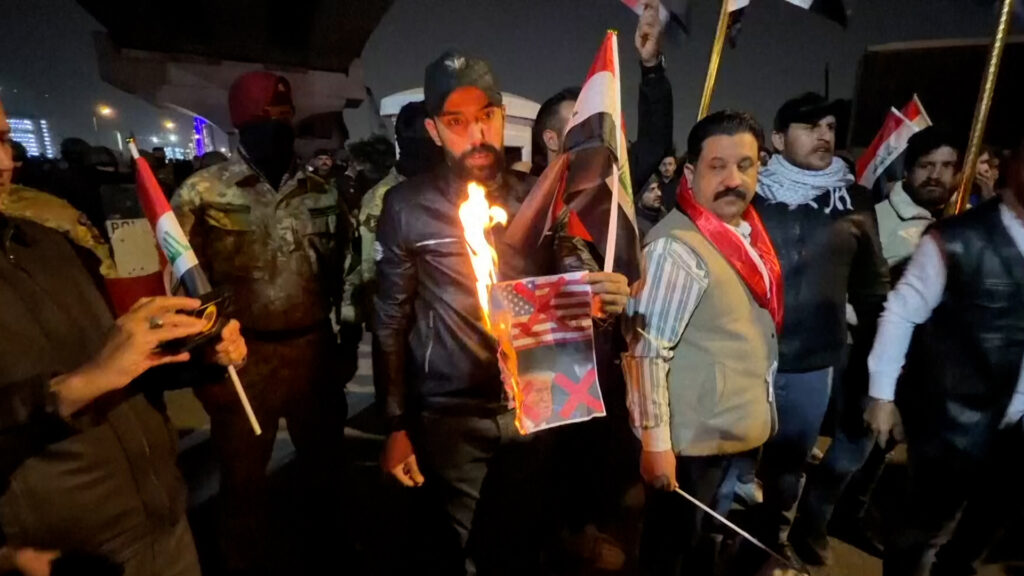
In a significant display of dissent, protesters in Baghdad took to the streets to burn photos of then-US President Donald Trump. This act was a direct rejection of Trump’s demands related to Iraq’s political figure Nouri al-Maliki. The atmosphere in Baghdad was charged, reflecting deep opposition among certain Iraqi factions towards external pressures and interference in the country’s political affairs.
Nouri al-Maliki, a prominent Iraqi politician and former Prime Minister, remains a controversial figure both within Iraq and internationally. Trump’s administration issued stark warnings concerning al-Maliki, which sparked outrage among his supporters and segments of the Iraqi population who see these demands as unwarranted interference.
The protests highlight the complex dynamics in Iraq where national sovereignty and foreign influence often clash. Critics of the US stance argue that such demands undermine Iraq’s internal political processes and fuel instability.
The photos of Trump being burned symbolize a broader resistance against perceived American intervention in Iraq’s governance. Protesters feel that decisions about Iraq’s future should be determined internally, free from external coercion.
This incident sheds light on the fragile state of Iraq-US relations at the time, marked by mutual distrust and conflicting interests. It also underscores the volatile environment in Iraq where political allegiances and foreign relations are deeply intertwined.
Observers note that this episode is reflective of a larger trend of anti-American sentiment in parts of the Middle East, propelled by policies and actions perceived as intrusive or damaging.
The Iraqi government and various political factions remain divided on how to navigate their relationship with the US amidst such public outcry. While some advocate for closer ties and cooperation, others call for a more independent approach to safeguard Iraq’s sovereignty.
As tensions persist, the international community watches closely, aware that developments in Iraq have significant implications for regional stability and security.
The protests and the burning of Trump’s photos are emblematic of ongoing challenges in balancing domestic politics with international diplomacy in Iraq. It remains crucial for all parties involved to engage in dialogue to mitigate conflict and promote a stable future for the nation.