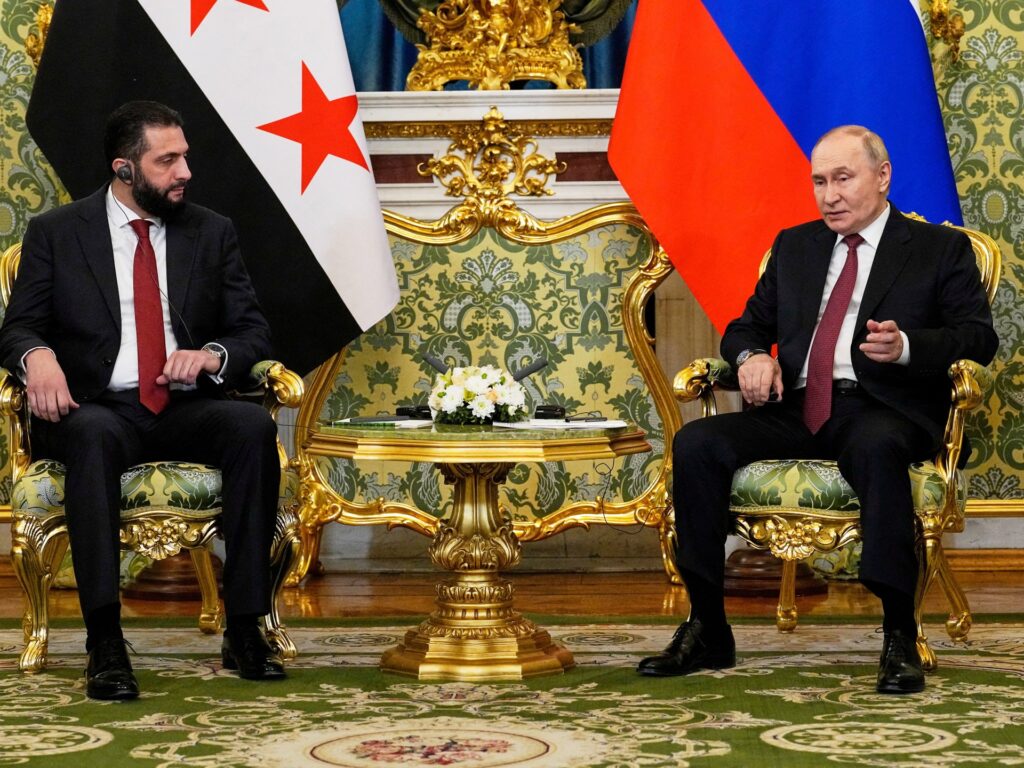
In a significant development highlighting the evolving ties between Russia and Syria, Walid al-Sharaa, a prominent Syrian political figure, recently held a high-level meeting with Russian President Vladimir Putin. The meeting comes at a time when Russia is actively seeking to solidify its military presence in Syria by securing long-term access to several strategic military bases.
Russia’s involvement in Syria has been a cornerstone of its Middle Eastern policy since it intervened militarily in 2015 to support President Bashar al-Assad’s government amid the ongoing civil war. The presence of Russian military bases in Syria has allowed Moscow to project power in the region and safeguard its geopolitical interests, particularly in the Eastern Mediterranean.
During the discussions with Putin, al-Sharaa reiterated Syria’s strategic value to Russia and emphasized the importance of continued Russian support for Assad’s regime. The talks also reportedly touched upon Russia’s desire to formalize and potentially expand its military installations in Syria, a move that could ensure a lasting Russian footprint in the volatile region.
However, despite Russia’s eagerness to cement these military arrangements, the Kremlin has maintained a cautious approach regarding political demands made by al-Sharaa, particularly concerning the repeated requests for the extradition of Bashar al-Assad. The Kremlin has yet to provide any indication that it will comply with these requests, signaling a complex interplay of diplomatic considerations.
The meeting also underscored the deepening military and political alliance between Moscow and Damascus. Analysts note that securing these bases is crucial for Russia’s broader strategic goals, including countering Western influence and maintaining access to warm-water ports.
Russia’s military infrastructure in Syria includes several key locations, such as the naval facility in Tartus and the airbase in Khmeimim, which have been instrumental in Moscow’s operations throughout the Syrian conflict. The potential expansion or legalization of these facilities would serve as a critical strategic asset for Russia, providing it with operational flexibility and a permanent foothold in the Middle East.
The discussions come amid ongoing global tensions and shifting alliances, where Syria remains a pivotal player due to its geographic location and political alliances. With al-Sharaa acting as a key intermediary, the talks may pave the way for deeper cooperation between the two nations, although the unresolved issue of Assad’s extradition remains a sticking point.
Diplomatic observers anticipate that future negotiations will continue to focus on balancing military, political, and legal issues, with Russia weighing the benefits of its military presence against the potential diplomatic costs of addressing Syrian political demands.
In conclusion, the meeting between al-Sharaa and Putin highlights Russia’s strategic ambition to secure and possibly expand its military infrastructure in Syria. At the same time, it sheds light on ongoing diplomatic complexities, particularly regarding Syria’s internal political dynamics and requests for political concessions. As the situation develops, the outcomes of this relationship will have significant implications for regional stability and international geopolitics.