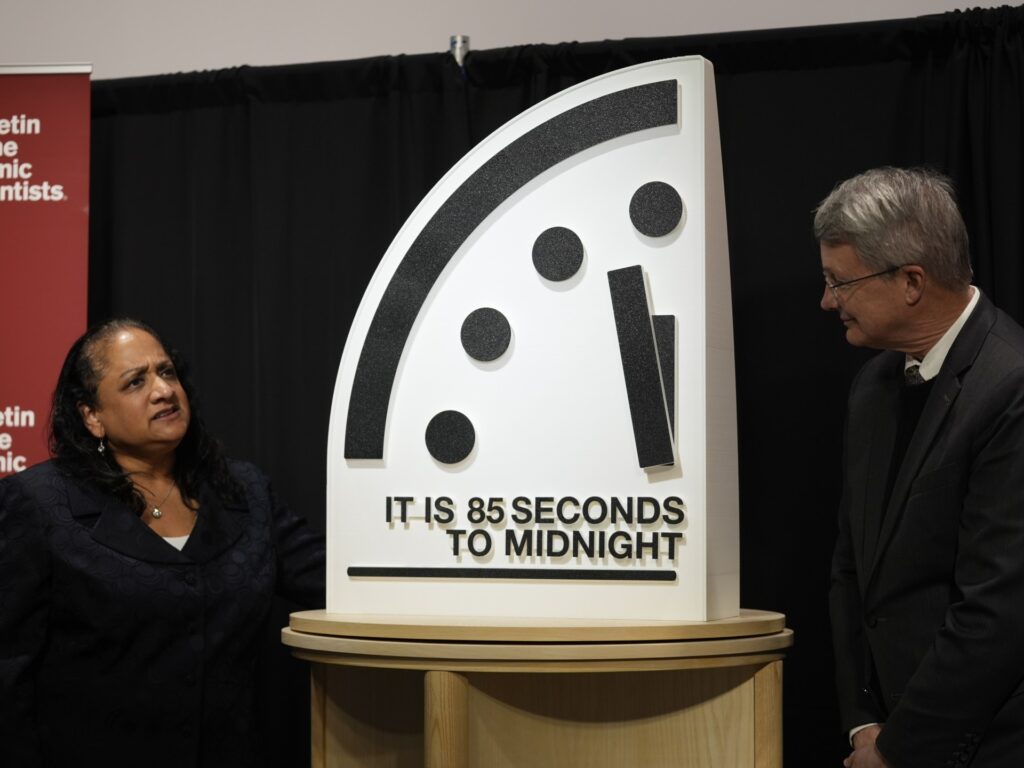
The symbolic Doomsday Clock, maintained by the Bulletin of the Atomic Scientists, has inched closer to midnight, signaling an alarming increase in global existential threats. The movement of the clock closer to midnight is a stark reminder of the growing dangers faced by humanity, particularly from nuclear risks and climate change.
Established in 1947, the Doomsday Clock is a visual metaphor that represents the likelihood of a man-made global catastrophe. Midnight on the clock symbolizes the end of civilization as we know it. The time is set annually by a group of experts who consider current global events affecting humanity’s survival.
In the latest announcement, the atomic scientists have emphasized the pressing need for urgent and decisive leadership to address the twin threats of nuclear conflict and climate change. They warn that delaying action on these critical issues could bring the world closer to irreversible disaster.
According to the scientists, the international community is currently facing unprecedented challenges. Nuclear arms modernization, geopolitical tensions, and the failure to curb greenhouse gas emissions are contributing to a dangerous global instability.
The Bulletin of the Atomic Scientists points out that despite technological advancements and greater awareness, progress in reducing nuclear arsenals has stalled, and some nations are enhancing their nuclear capabilities. Concurrently, global efforts to mitigate climate change have been insufficient to meet the goals set by the Paris Agreement, with greenhouse gas emissions continuing to rise.
Public engagement and pressure on political leaders are deemed essential to shift the current trajectory. Scientists urge citizens worldwide to demand faster, stronger commitments to disarmament, renewable energy transitions, and climate resilience measures.
The Doomsday Clock’s recent adjustment reflects a convergence of multiple existential threats, including biotechnological risks, misinformation, and cyber warfare, which further complicate global security and environmental stability.
Experts highlight that constructive international cooperation is the key to mitigating these risks. Collaborative treaties, transparent diplomacy, and investment in sustainable technologies are vital steps toward pushing the clock back from the edge.
Educational initiatives and media coverage play a crucial role in raising public understanding of these complex issues. A well-informed populace is more likely to support sustainable policies and hold governments accountable.
In conclusion, the symbolic movement of the Doomsday Clock closer to midnight serves as a critical call to action. It underscores the urgent necessity for governments, organizations, and individuals to prioritize safety, sustainability, and peace to avoid catastrophic consequences that threaten global civilization.
The atomic scientists reaffirm that it is not too late to change course but emphasize that time is rapidly running out. Immediate, coordinated action can lower these perilous risks and secure a safer future for all.