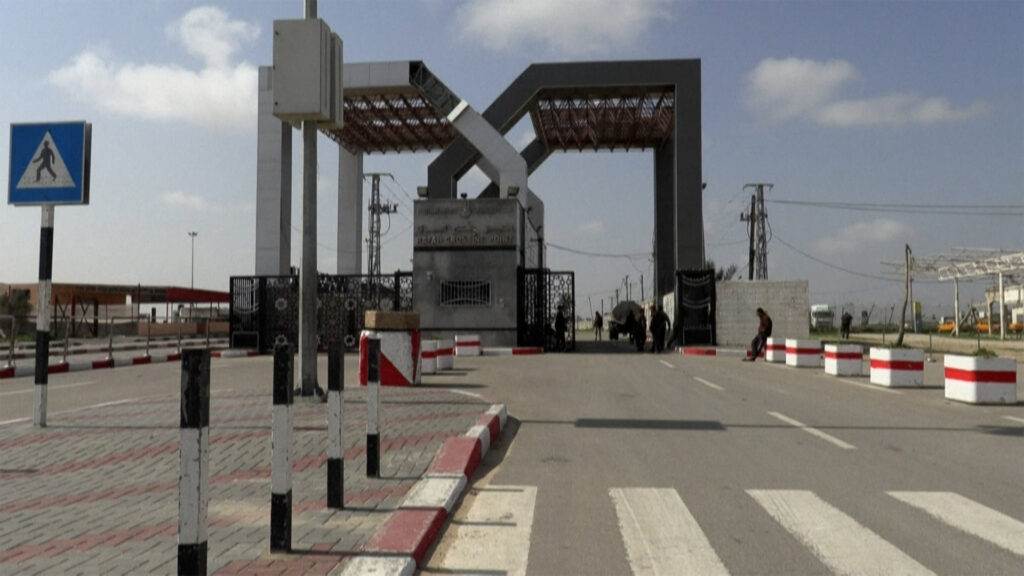
The Gaza Strip’s crucial Rafah crossing will reopen following the return of the last Israeli captive’s body held in Gaza, according to recent statements from Israeli officials. This development marks a significant point in the ongoing tensions and humanitarian concerns surrounding the region.
The Rafah crossing, which serves as the main gateway between Gaza and Egypt, has been a focal point for the movement of people, goods, and humanitarian aid. Its closure has had a substantial impact on the residents of Gaza, affecting access to essential supplies and medical assistance.
Israel’s decision to reopen the crossing is contingent upon the recovery and return of the last Israeli captive’s remains held by armed groups in Gaza. This move underscores the deep humanitarian and security complexities involved in the conflict.
The situation surrounding the captives has been a sensitive issue, with negotiations and efforts aimed at securing their release or return ongoing for months. The return of the body is seen as a critical step in easing tensions and potentially paving the way for further dialogue.
The reopening of the Rafah crossing carries significant implications for the people of Gaza, who have faced economic hardship and restricted access to essential services due to the crossing’s closure. It also highlights the interconnectedness of humanitarian concerns and political developments in the region.
Stakeholders, including international organizations, have closely monitored the situation, emphasizing the importance of ensuring safe and reliable access through Rafah to alleviate the humanitarian crisis.
The Israeli government’s announcement has been met with cautious optimism. While the return of the captive’s body and the reopening of the crossing are positive signals, many challenges remain in achieving lasting peace and stability.
The Rafah crossing’s status often reflects the broader dynamics of the Israeli-Palestinian conflict. Its reopening may facilitate increased movement and aid but depends heavily on the evolving political and security environment.
As of now, exact timelines for the reopening have not been detailed, pending the confirmation of the captive’s body return. However, the commitment to reopen the crossing symbolizes a complex yet hopeful development in a protracted conflict.
Humanitarian agencies have welcomed the prospect, hoping it will lead to improved conditions for Gaza’s population. Continued cooperation between Israel, Egypt, and Palestinian authorities will be crucial to maintain operational status and security.
The reopening also serves as a reminder of the profound human cost of the conflict, highlighting the ongoing need for dialogue, reconciliation, and durable solutions.
In conclusion, Israel’s indication to reopen Gaza’s Rafah crossing contingent upon the return of the last Israeli captive’s body represents a critical juncture. It holds promise for renewed humanitarian access and a potential de-escalation of tensions, albeit amidst persistent challenges and uncertainties.