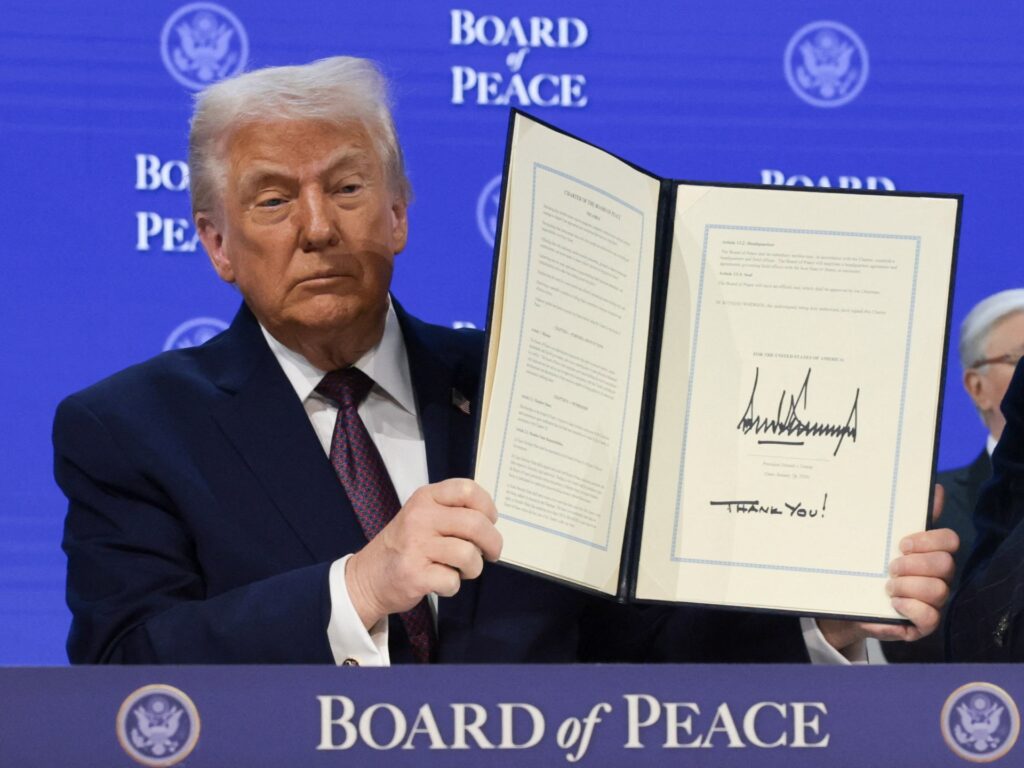
At the recent Davos forum, former U.S. President Donald Trump unveiled an ambitious development plan aimed at transforming Gaza into a regional hub of economic growth. The plan, often characterized as ‘imperial’ by critics, promises a future of coastal tourism, free trade zones, gleaming skyscrapers, and an influx of new jobs for Gaza’s beleaguered population.
The proposal outlines a vision for using Gaza’s strategic coastal location to attract investment and tourism, potentially turning the strip into a bustling center of economic activity. Elements of the plan include establishing free trade zones that would encourage international business and trade, and the construction of skyscrapers that symbolize modernity and economic resurgence.
However, the initiative has sparked significant controversy. Despite the grand ambitions presented at Davos, the plan notably lacks any consultation with Gaza’s residents or local governing bodies. This omission has raised questions about the plan’s feasibility and legitimacy, as well as its sensitivity to the complex political and social realities on the ground.
Critics argue that the approach seems disconnected from the current humanitarian and political challenges facing Gaza. The enclave has long been under an economic blockade, facing high unemployment rates, and has endured multiple conflicts that have devastated infrastructure and livelihoods.
Human rights advocates express concern that the plan’s focus on development and commercial interests overlooks the immediate needs of the population, such as access to basic services, healthcare, and education. There is also apprehension that the initiative could serve political interests rather than genuinely empower Gaza’s people.
Supporters of the plan point to the potential for economic revitalization, job creation, and improved living standards, suggesting that such a transformative vision is necessary for breaking the cycle of conflict and underdevelopment.
As discussions unfold, the lack of engagement with Gaza’s community remains a central issue. For any development plan to succeed, it would need to incorporate the voices and needs of the people it aims to serve.
In sum, Trump’s Gaza development plan offers a blend of grand economic objectives and serious debate over inclusivity and appropriateness. The promise of skyscrapers lining Gaza’s coast is enticing, but without genuine participation and consideration of local realities, the plan risks being seen as an external imposition rather than a pathway to sustainable growth and peace.