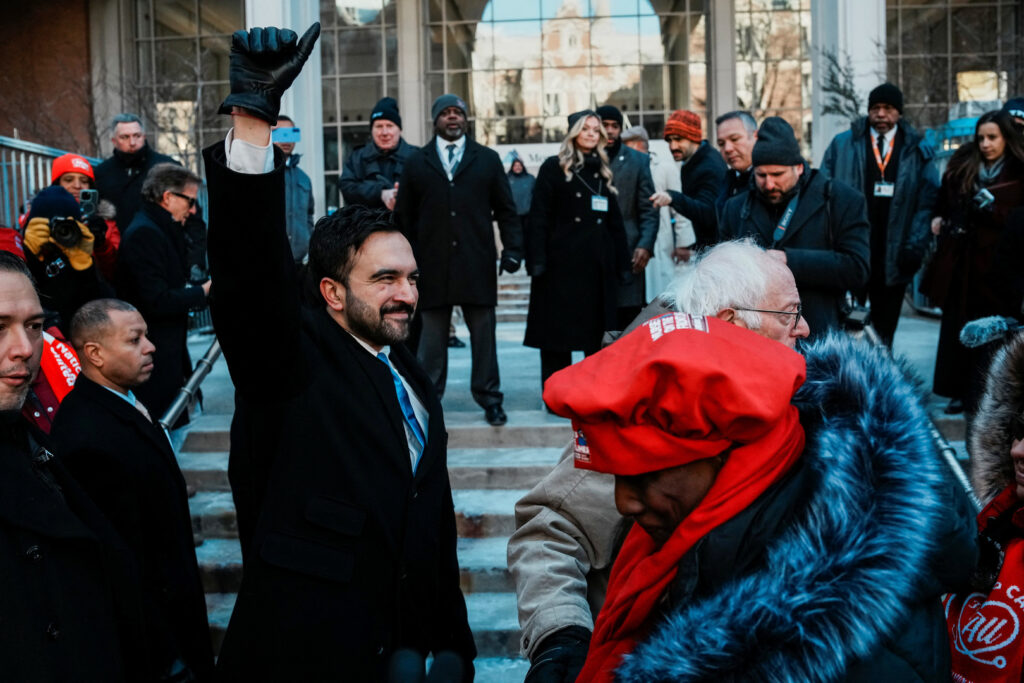
NYC Mayor Zohran Mamdani and U.S. Senator Bernie Sanders (I-VT) depart after they joined members of the New York State Nurses Association union during a picket outside Mount Sinai West in New York City, U.S., January 20, 2026. REUTERS/Eduardo Munoz
In a significant stance that has drawn attention across New York City and beyond, Mayor Zohran Mamdani has publicly defended Mahmoud Khalil, a pro-Palestine activist, in response to an imminent deportation order against him. Mamdani’s bold declaration that Khalil “deserves to stay” in New York City underscores a rising discourse around activism, citizenship, and the rights of immigrants within the urban landscape.
Mahmoud Khalil, a prominent figure known for his passionate advocacy for Palestinian causes, has faced a legal challenge threatening his residency status. The deportation order issued against him has sparked protests and widespread support from various communities, including influential political figures like Mayor Mamdani.
Mayor Mamdani articulated his support in a public statement, emphasizing Khalil’s contributions to the city’s vibrant social and cultural fabric. According to Mamdani, Khalil’s activism is a crucial part of the ongoing dialogue about justice and human rights, and removing him would be a blow not only to Khalil personally but to the countless communities that rally for similar causes.
The mayor’s defense of Khalil comes amid a broader national conversation about the deportation policies in the United States, particularly concerning activists and immigrants who have found themselves at odds with federal authorities. Mamdani highlighted the importance of protecting activists who are exercising their rights to free speech and assembly.
Community leaders and local organizations have echoed Mamdani’s sentiments, organizing rallies and petitions to halt the deportation proceedings. The activist community views Khalil as a symbol of resilience and dedication to the Palestinian cause. His presence in New York City serves as a reminder of the city’s diverse population and its role as a sanctuary for activists.
Legal experts analyzing the case suggest that the outcome could set a precedent influencing future immigration enforcement on activists with political causes. The intersection of immigration law and political activism is complex and fraught with tensions, making Khalil’s case especially pivotal.
Supporters argue that deporting Khalil would undermine the city’s commitment to inclusivity and multiculturalism. They point to the broader implications for immigrant activists nationwide who may feel threatened by such legal actions.
Opponents of Khalil’s presence in the country raise concerns related to immigration violations and national security, though these claims have been met with skepticism by human rights advocates who stress the importance of distinguishing activism from criminality.
As the legal battle unfolds, the spotlight remains intensely on New York City’s response and the positions of its leaders. Mayor Mamdani’s advocacy for Khalil signifies a potentially transformative approach to governance that prioritizes human rights and political freedoms over strict immigration crackdowns.
In conclusion, the defense of Mahmoud Khalil by Mayor Zohran Mamdani encapsulates a critical debate about the rights of immigrants and activists in the United States. It challenges the city to balance enforcing laws with honoring its identity as a refuge for those who seek to voice dissent and advocate for justice. The coming weeks will likely prove decisive, not only for Khalil’s future but for the broader discourse on activism, immigration, and social justice in America.