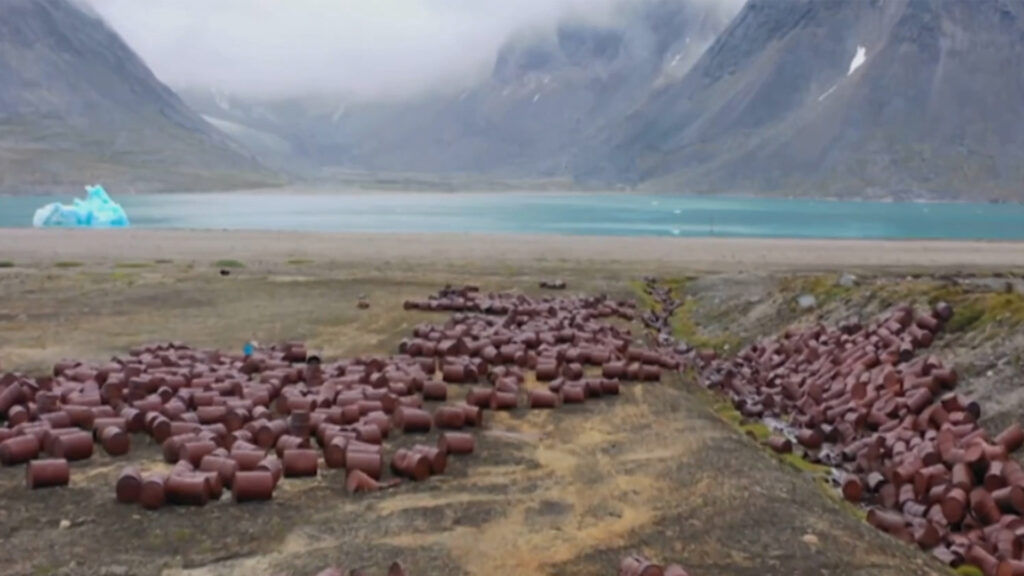
In the icy expanse of Greenland, a haunting legacy of forgotten Cold War-era military activity is resurfacing, drawing fresh attention to the environmental hazards left behind. Thousands of rusted barrels, colloquially known by local residents as “American flowers,” are leeching toxic waste into the pristine surroundings where an American military base once operated.
The abandoned US base, set up during the height of Cold War tensions, was part of a broader strategic initiative to maintain military superiority in the Arctic region. However, decades after the base was deserted, the aftermath of its presence continues to threaten the local ecosystem and the health of Greenland’s sparse population.
Residents have reported that these corroded barrels, many buried or partially buried in the permafrost, are now leaking hazardous substances into the soil and water. The contents of these barrels are believed to include a variety of toxic and chemical waste materials, which pose significant risks not only to the environment but also to human health.
Environmental experts have expressed alarm over the situation, emphasizing that the Arctic is particularly vulnerable due to its delicate ecosystem and slow regenerative capabilities. Toxic leaks in such areas can lead to long-lasting damage including contamination of water supplies, disruption of wildlife habitats, and bioaccumulation of hazardous substances in local flora and fauna.
The indigenous and local communities have long voiced their concerns regarding the environmental negligence linked to the abandoned base. Many have raised issues about the lack of adequate clean-up efforts by responsible parties, highlighting a gap in accountability and remediation.
Greenland’s authorities, together with international environmental groups, are calling for urgent intervention to address the contamination. They advocate for comprehensive assessments of the site, safe removal or containment of the waste barrels, and robust environmental monitoring to prevent further leakage.
This situation underscores the broader challenges of dealing with Cold War legacies, where abandoned military infrastructures around the world continue to impact ecosystems. The case in Greenland serves as a poignant reminder of the need for international cooperation in environmental management, especially in sensitive regions like the Arctic.
Efforts to remediate these toxic sites are often complex and expensive, but the consequences of inaction are severe. The health of Greenland’s population and the ecological integrity of one of the planet’s last great wildernesses depend on effective, sustained environmental stewardship.
As global awareness grows around environmental issues in the Arctic, the story of the “American flowers” barrels stands as a call to action to confront and correct historical environmental wrongs to ensure a safer, cleaner future for Greenland and the world at large.