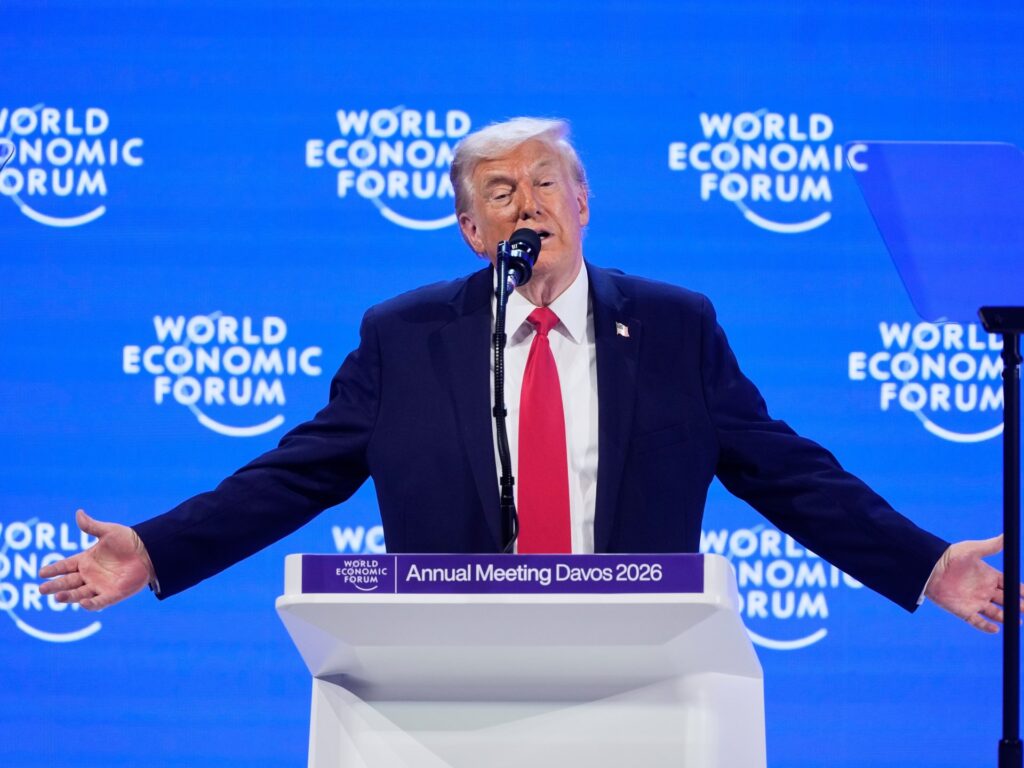
During his speech at the World Economic Forum in Davos, US President Donald Trump addressed the ongoing discussions surrounding Greenland, where he has previously expressed interest in annexing the island. Trump clarified his stance by ruling out the use of military force in pursuing acquisition of Greenland. Instead, he emphasized the importance of negotiations and diplomatic engagement in addressing his administration’s demands.
Greenland, an autonomous territory of Denmark, has attracted significant interest from the United States due to its strategic location and natural resources. Trump’s proposal to purchase Greenland was initially met with surprise and skepticism both domestically and internationally. Despite this, the President has maintained that the island could play a critical role in the US defense strategy and economic interests.
In his Davos address, Trump reiterated that his administration is seeking a peaceful resolution and is open to talks with the Danish government and Greenlandic authorities. He insisted that diplomacy remains the best path forward, underscoring his respect for international laws and partnerships.
The remarks come following a period of heightened tensions and mixed signals regarding America’s intentions toward Greenland. Previously, Denmark’s government had dismissed the idea of selling Greenland, describing it as an absurd proposal.
Trump’s call for negotiations suggests a shift toward a more conventional diplomatic approach, potentially easing concerns among US allies and the international community. His administration’s message highlights the interplay between geopolitical strategy and respect for sovereignty.
Experts note that any transfer of sovereignty would require complex legal procedures and consent from Greenland’s population, which enjoys significant self-governance. The US interest in Greenland stems from its strategic position in the Arctic, which has gained global attention due to climate change and new shipping routes.
While Trump’s announcement at Davos avoided aggressive posturing, it signaled the administration’s continued strategic interest in the region. The coming weeks could see increased dialogue among the US, Denmark, and Greenland as they navigate this unprecedented proposal.
This development has spurred widespread debate over sovereignty, international relations, and the future of the Arctic region. Observers are closely watching how negotiations unfold and what implications they might hold for global politics and security.
In summary, President Trump’s latest statements underscore a preference for negotiation over force concerning his aspirations toward Greenland. While challenges remain, this approach could pave the way for more constructive engagement between all parties involved.