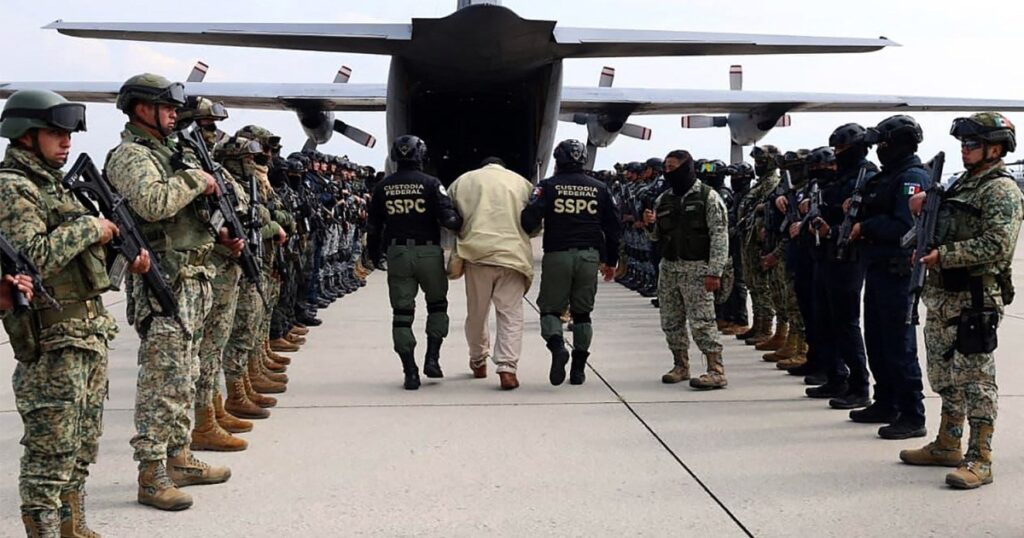
In a significant development in the ongoing fight against drug cartels, Mexico has extradited 37 more suspects accused of involvement with drug trafficking to the United States. This move comes at a time when tensions have been high, notably with former US President Donald Trump threatening attacks related to the issue.
Mexican Security Minister Omar Garcia Harfuch confirmed that the suspects were sent to the US under the assurance that they would not face the death penalty, a crucial condition for Mexico in cooperating with the US on these extraditions. Mexico’s strict opposition to capital punishment has long influenced its extradition policies, and the promise from US authorities was essential in securing the transfer of these individuals.
The extradited suspects are believed to be linked to some of the most notorious drug cartels operating in Mexico. These groups have been responsible for a significant portion of the drug violence that has plagued the region for years, involving illegal trafficking, money laundering, and violent criminal activities.
Omar Garcia Harfuch emphasized that Mexico is committed to a collaborative fight against organized crime, working closely with US law enforcement agencies to bring cartel members to justice. The cooperation underscores the priority both nations place on tackling the cross-border drug trade that fuels violence and insecurity on both sides of the border.
This development follows several previous rounds of extraditions where Mexico has handed over high-profile cartel suspects to the United States. Such actions serve both countries’ interests by ensuring these individuals face strong judicial systems capable of imposing lengthy sentences.
The issue has attracted attention recently due to inflammatory remarks from Donald Trump, who has expressed strong criticism of US administration policies on immigration and drug enforcement. Despite his threats of attacks or tougher actions, the current US administration continues to prioritize legal and judicial cooperation with Mexico to dismantle the drug cartels.
Human rights advocates have applauded the US commitment not to impose the death penalty, considering it a vital element of international cooperation respecting human rights norms. The assurance also reflects Mexico’s influence in negotiating terms that match its national legal standards, an important condition to maintain bilateral relations and justice processes.
Experts note that drug cartels have evolved into complex transnational organizations that require a united approach. These extraditions symbolize practical steps taken by the Mexican and US governments to address the problem jointly rather than through unilateral actions or threats.
The Mexican government remains vigilant and is enhancing security measures within the country to prevent cartel violence and illegal drug flows. Cooperation with international partners, especially the US, remains central to these efforts.
This episode is another chapter in the long-standing and complicated battle against drug cartels in North America. It highlights the necessity of diplomatic dialogue and judicial cooperation that respects both countries’ laws and international human rights standards.
The extradition of these 37 suspects sends a clear message to criminal networks that their actions will have consequences beyond Mexico’s borders and that cooperation will intensify to dismantle these dangerous organizations.
Authorities expect further extraditions in the coming months, aiming to maintain pressure on the cartels and disrupt their operations.
In conclusion, the recent extradition batch demonstrates the ongoing commitment of Mexico and the United States to collaborate against drug trafficking. Despite political rhetoric and challenges, the shared goal remains to enhance security and uphold justice for the populations affected by cartel violence.