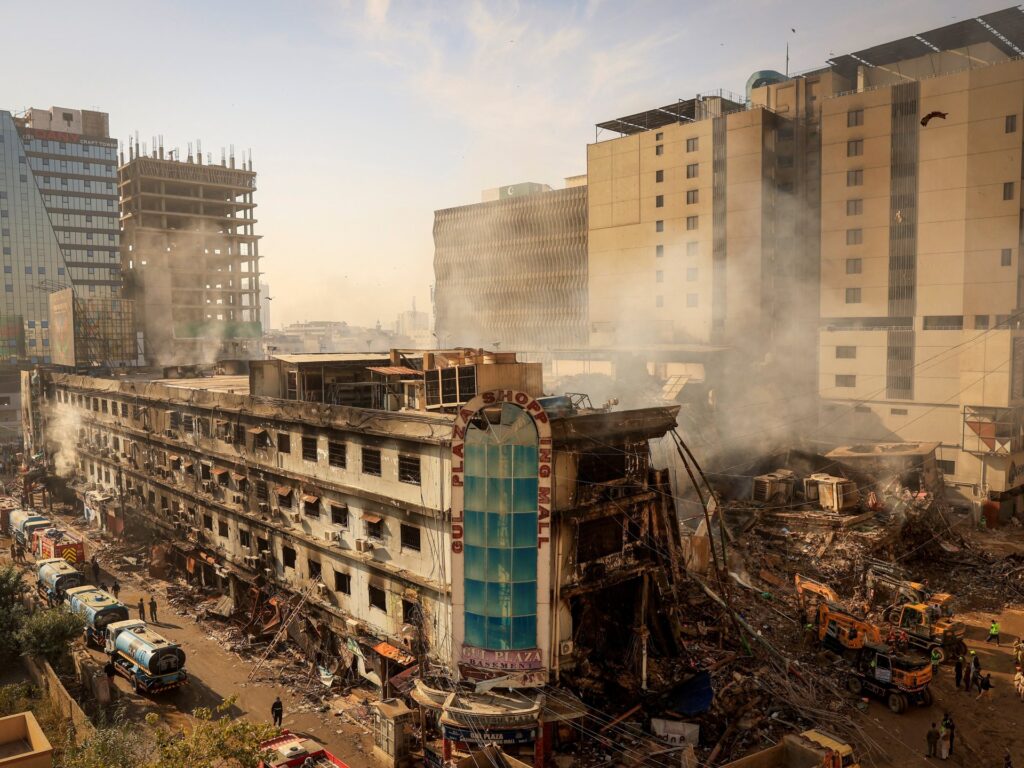
On a devastating day in Karachi, the city faced its deadliest fire in years at Gul Plaza, sparking a national conversation about the state of urban safety, emergency response, and governance. The inferno, which engulfed the commercial building, resulted in significant loss of life and injuries, exposing deep-rooted flaws in Karachi’s fire safety protocols and infrastructure.
Gul Plaza, located in one of Karachi’s busiest commercial districts, was packed when the fire broke out. Initial reports suggest that a short circuit might have triggered the blaze, but the rapid spread was exacerbated by poor building materials and the absence of adequate fire containment systems. Eyewitnesses described chaotic scenes with thick smoke, people trapped on upper floors, and rescue teams struggling to gain swift access.
The fire highlighted the glaring deficiencies in Karachi’s rescue capacity. Emergency services were overwhelmed, and many delays were reported in the arrival of firefighting units due to heavy traffic and lack of coordination. More worryingly, the fire safety compliance of Gul Plaza itself came under scrutiny, with allegations of unauthorized structural modifications, locked emergency exits, and no functional fire sprinkler systems.
This disaster is symptomatic of wider urban governance challenges in Karachi. The city’s regulatory enforcement mechanisms appear weak, allowing many commercial structures to evade safety norms. It revealed a pattern where urban expansion and commercial development outpace safety and disaster preparedness measures, creating high-risk environments for residents and workers.
Following the tragedy, local authorities have pledged to strengthen fire safety inspections and enforce stricter compliance with building codes across Karachi. Plans to upgrade firefighting infrastructure, improve emergency response training, and enhance urban planning are underway. However, experts caution that without sustained political will and community involvement, real change might remain elusive.
The Gul Plaza fire is a harsh reminder of the urgent need to prioritize urban safety and resilience. It underscores the importance of comprehensive risk management strategies that encompass infrastructure safety, effective rescue operations, and transparent governance. For Karachi, a city housing millions, such strategies are not just desirable but essential to prevent future catastrophes.
In the aftermath, survivors and families of the victims demand justice and accountability. The tragedy has reignited public discourse on the rights of citizens to live and work in safe conditions, prompting calls for a long-overdue overhaul of urban safety regulation.
As Karachi mourns, the hope is that this disaster will catalyze a new era of safety consciousness and governance reforms. The lessons from Gul Plaza must serve as a foundation for stronger protections and resilient urban environments that safeguard lives against similar incidents.
Ultimately, the Gul Plaza fire stands as a somber chapter in Karachi’s history, one that exposes painful truths but also offers a pivotal opportunity for transformation in how the city addresses safety and urban governance going forward.