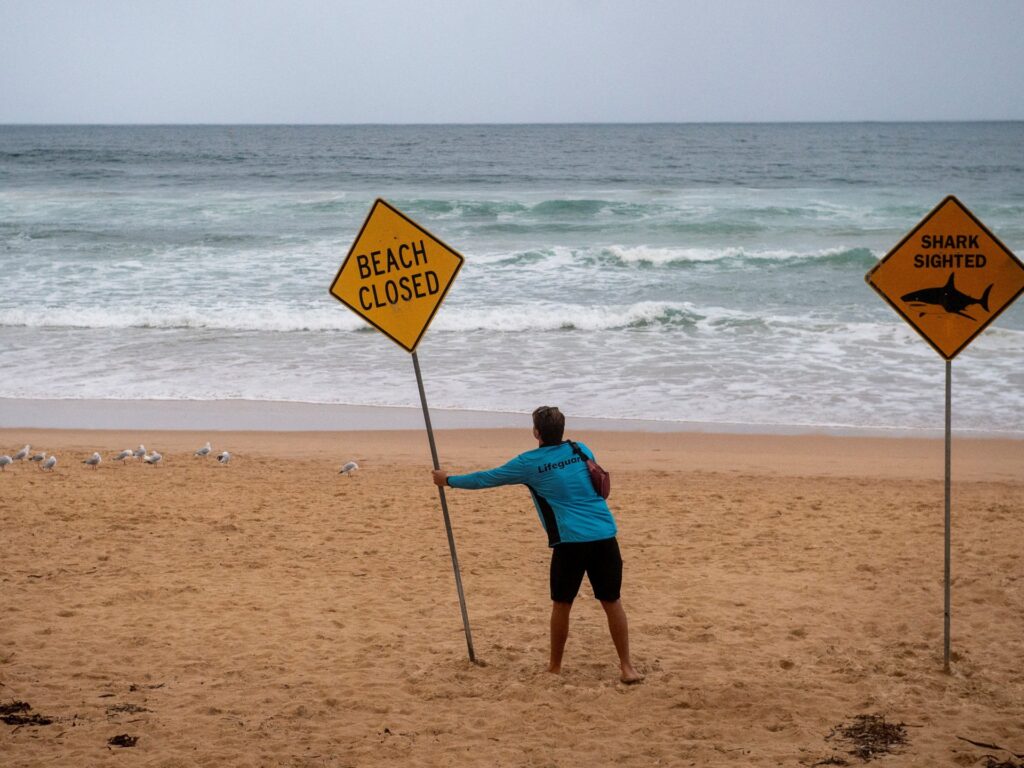
Authorities in Australia have shut down dozens of beaches along the east coast of New South Wales (NSW) after a series of shark attacks occurred since Sunday. The region has witnessed four separate incidents, prompting officials to take precautionary measures to ensure public safety.
Experts believe that recent rainy weather conditions have contributed to the increase in shark activity near popular beach areas. Heavy rainfall often leads to changes in water salinity and sediment runoff, which attract sharks closer to shore in search of food. The NSW coastline, known for its beautiful sandy beaches, has become a hotspot for these predatory marine animals during this period.
Local authorities have issued warnings advising beachgoers to avoid entering the water until the situation is deemed safe. Lifeguards and marine patrols are increasing their presence along affected beaches, monitoring for any further signs of shark activity. Authorities are also using drones and helicopters to conduct aerial surveillance and provide real-time updates to the public.
The shark attacks have caused concern among residents and tourists alike. Emergency services responded swiftly to each incident, providing medical care to those injured. Fortunately, none of the attacks have been fatal, but officials stress the importance of vigilance and caution.
Shark experts explain that sharks are drawn to areas with increased prey availability, and changes in environmental conditions such as rainfall, water temperature, and currents can influence their movements. When rivers discharge more freshwater and debris into the ocean after heavy rain, prey species such as fish and seals may concentrate closer to shore, attracting sharks.
The NSW government is working closely with marine biologists and environmental agencies to monitor shark populations and behavioral patterns. In addition to beach closures, they are considering long-term strategies to mitigate shark encounters, including the use of exclusion nets and warning systems.
Public education campaigns are underway to inform beach users about how to reduce the risk of shark interactions. Experts recommend avoiding swimming at dawn or dusk, staying in groups, and refraining from wearing shiny jewelry or brightly colored swimwear that might attract sharks.
The beach closures have impacted local businesses, especially those reliant on tourism during the busy season. However, residents generally support the measures, prioritizing safety over convenience.
As weather conditions stabilize, authorities will reassess the situation and gradually reopen the beaches when it is safe to do so. The community is urged to stay updated through official channels and report any shark sightings immediately.
This series of shark attacks has raised broader questions about human interaction with marine ecosystems and the need for balanced approaches to ensure both human and wildlife safety. Ongoing research and adaptive management strategies will be crucial for coexisting with ocean predators in a changing environment.
For now, precaution remains the key, with beach-goers encouraged to follow advisories and respect closures as NSW navigates this challenging period of heightened shark activity.