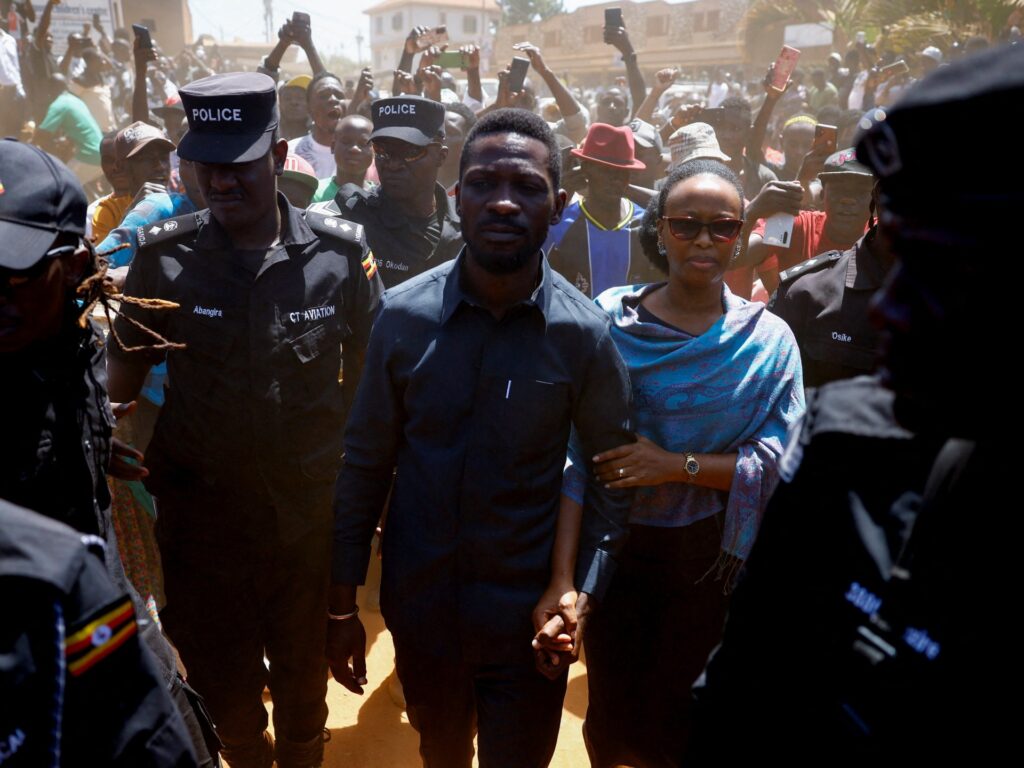
In the midst of a turbulent presidential election in Uganda, opposition leader Bobi Wine has reportedly escaped a police and army raid on his residence. The raid occurred in the wake of the disputed vote, as incumbent President Yoweri Museveni appears poised to secure yet another term in office.
The political climate in Uganda has been charged with tension, violence, and allegations of electoral malpractice. Bobi Wine, a prominent opposition figure and musician turned politician, has been a vocal critic of Museveni’s long-standing regime. His campaign has galvanized a significant portion of the youth and urban population, who have expressed frustration with what they perceive as decades of authoritarian rule and economic stagnation.
According to reports, security forces surrounded Wine’s home early on election day, aiming to detain him amidst a crackdown on opposition activities. However, Wine managed to evade capture, fueling further unrest among his supporters. Eyewitnesses describe a heavily militarized operation, with police and army personnel exerting control over several neighborhoods, which raised concerns about the suppression of dissent.
President Museveni, who has been in power since 1986, is widely expected to be declared the election winner. The government and electoral commission have maintained that the vote was conducted fairly, despite widespread allegations from opposition and international observers of vote rigging, intimidation, and media restrictions.
The contested election has deepened divisions within Uganda, with human rights groups condemning the aggressive tactics used by the authorities against opposition candidates and activists. The ruling party has accused the opposition of attempting to destabilize the country through misinformation and inciting violence.
Bobi Wine’s escape from the raid has become a symbolic moment in the election saga, representing the resilience of the opposition in the face of state repression. His supporters are calling for peaceful protests and international attention to ensure the integrity of Uganda’s democratic process.
The international community has expressed concern over the escalating tensions, urging all parties to respect human rights and the rule of law. Observers are closely monitoring the situation, emphasizing the importance of transparency and accountability in the election results.
As the political drama unfolds, Uganda faces a critical juncture. The disputed vote highlights enduring challenges in the country’s governance, including electoral credibility, political freedoms, and civil liberties. How these issues are addressed will significantly shape Uganda’s future trajectory and the prospects for democratic progress.
In sum, Bobi Wine’s narrow escape from the raid amidst a contentious presidential election underscores the fraught political landscape in Uganda. It spotlights the ongoing struggle between entrenched power and emerging opposition voices demanding change. The coming days and weeks are likely to be pivotal, with potential implications not only for Uganda but also for the broader region’s stability and democratic aspirations.