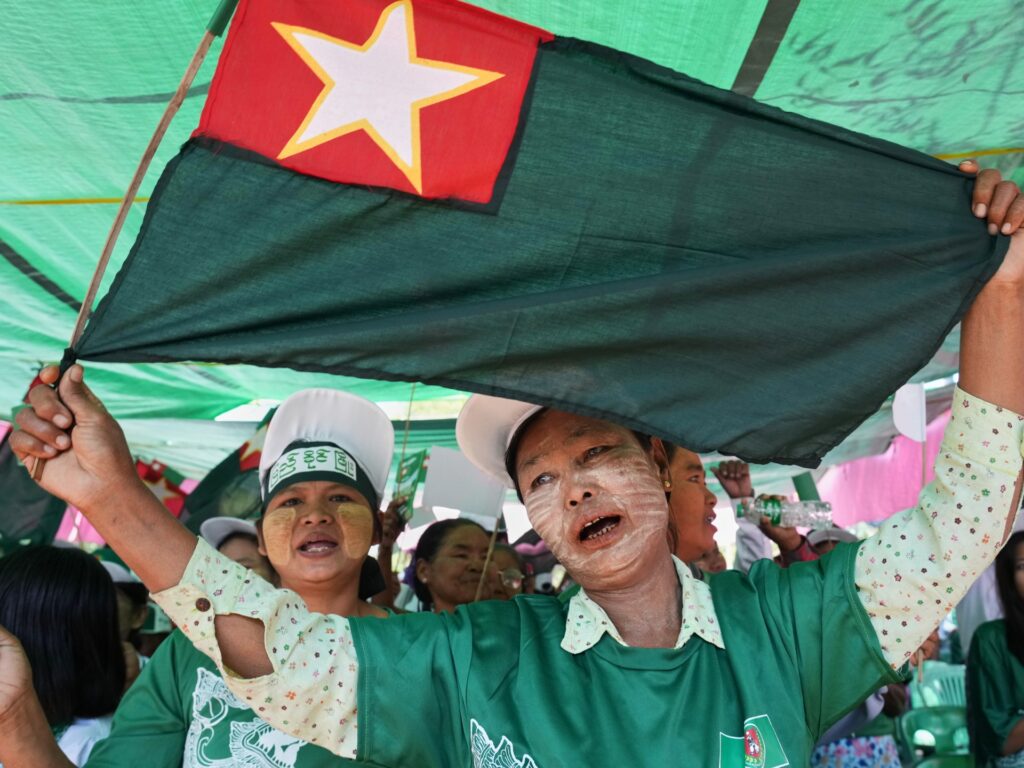
Myanmar’s election has entered a critical phase with the military-backed Union Solidarity and Development Party (USDP) taking the lead after the second round of voting. This electoral progress comes amid heightened tensions and widespread criticism both domestically and internationally.
According to reports, the USDP’s performance in the recent polls has positioned it as the dominant party, increasing its influence in the country’s legislative assemblies. This election is closely watched due to Myanmar’s tumultuous political environment, where the military has traditionally maintained strong control over the government.
Despite the apparent momentum for the military-backed party, significant concerns have been raised by various stakeholders. Human rights organizations, opposition parties, and international observers have voiced strong criticisms about the election’s integrity.
Opponents of the election process argue that the polls were neither free nor fair. They point to documented irregularities such as restricted access to voting, intimidation of voters and opposition candidates, and limited freedom of the press during the campaign period. These issues have undermined public confidence in the electoral process.
The National League for Democracy (NLD), Myanmar’s main opposition party, has been particularly vocal, accusing the military and its allies of manipulating electoral procedures to maintain power. They contend that the election does not represent the will of the people and demands a transparent investigation into the reported violations.
Human rights advocates have also condemned the voting environment, citing repressive actions against activists and civil society groups. Many claim that the military’s involvement in the election process hampers democratic development and violates international human rights standards.
International actors, including the United Nations and several Western governments, have expressed concern over the situation. They have called for impartial scrutiny of the election results and urged the Myanmar government to uphold democratic principles and respect for human rights.
Local communities have experienced polarization as the results unfold, with some supporting the military’s narrative of stability, while others fear a rollback of democratic gains achieved in recent years. The political climate remains fragile, and the potential for further unrest exists.
The lead shown by the USDP in the second round of voting could consolidate military dominance in Myanmar’s political landscape, impacting future policy directions and governance models.
Observers warn that the ongoing political crisis risks exacerbating ethnic conflicts in the country, possibly destabilizing the broader region.
The election results, though incomplete at this stage, highlight the complex interplay between military influence and democratic aspirations in Myanmar.
As the counts continue, the international community remains attentive to developments, hoping for a resolution that supports peace and democratic progress.
In conclusion, Myanmar stands at a pivotal moment: the outcome of this election will significantly shape its political trajectory. The balance between military authority and civilian governance continues to be a defining issue. Ensuring free and fair elections is essential for Myanmar’s future stability and respect for human rights.