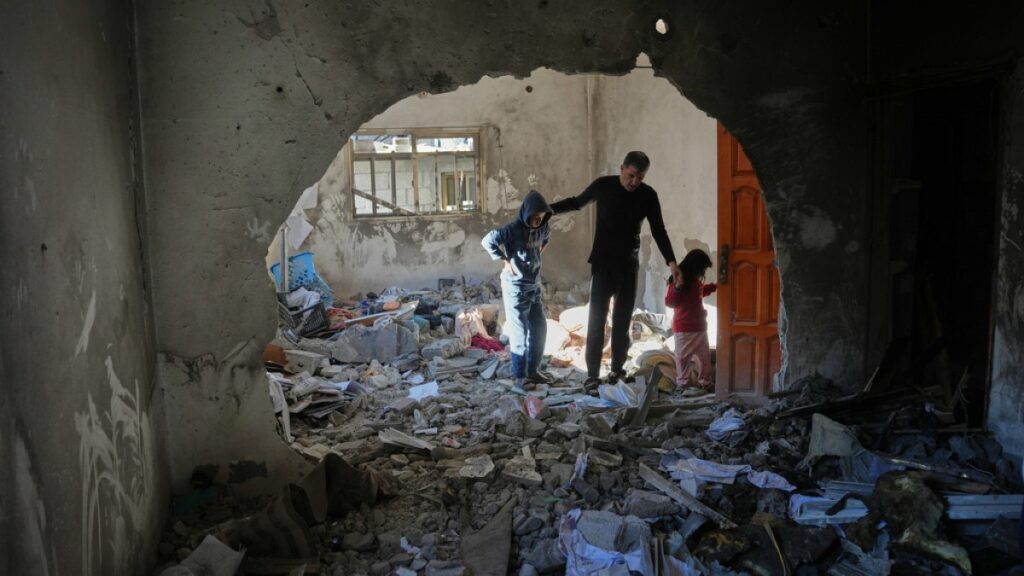
Tensions and violence continue to escalate in the Gaza Strip as Israeli military attacks have resulted in multiple casualties. The situation remains dire for Palestinians on the ground who are struggling to meet basic needs such as food, shelter, and safety. This humanitarian crisis unfolds even as key Palestinian governance representatives convene in Cairo for critical discussions.
The Cairo meeting of the Gaza governance committee is seen as a significant political development amid ongoing conflict. However, for many Palestinians living amidst the hardships, such political talks appear disconnected from their urgent realities. The pervasive sentiment on the ground highlights a deep skepticism about the efficacy and relevance of distant political plans and proposals.
One major point of contention is the Trump administration’s peace plan, which Palestinians widely regard as a distant and abstract framework that fails to address their immediate humanitarian and political concerns. Despite the international community’s focus on negotiation and peace processes, the conditions for Palestinians continue to worsen.
The Israeli attacks have exacerbated the already fragile living conditions in Gaza, where a substantial portion of the population is dependent on humanitarian aid. Access to essential resources like food and medical supplies remains critically limited due to the ongoing blockade and frequent military operations.
Human rights organizations have condemned the ongoing violence and urged all parties to prioritize civilian protection. They stress the urgent need for a ceasefire to enable aid delivery and to prevent further loss of life.
Meanwhile, inside Cairo, Palestinian leaders face the formidable task of reconciling internal political divisions and addressing the pressing needs of their people amid external aggression. The governance committee dialogue aims to unify strategies for governance and resistance, yet challenges remain steep.
The international reaction to this latest surge in violence has included calls for restraint and renewed efforts toward diplomatic solutions. However, the gap between diplomatic rhetoric and the harsh realities on the ground continues to widen.
For Palestinians in Gaza, the daily struggle for survival overshadows political negotiations. Many view the peace plan as an abstract concept promoted by foreign powers, disconnected from their lived experiences of conflict and deprivation.
As Israeli attacks persist, the humanitarian crisis deepens, leaving countless families vulnerable and uncertain about their future. International mediation and aid efforts continue, but the overarching need remains for an urgent and effective resolution to the conflict.
Without immediate intervention and a durable peace, the cycle of violence and suffering is expected to continue, undermining prospects for stability in the region. The convergence of political talks in Cairo and the ongoing violence in Gaza highlights the complex and urgent nature of the Palestinian plight, calling for renewed global attention and action.