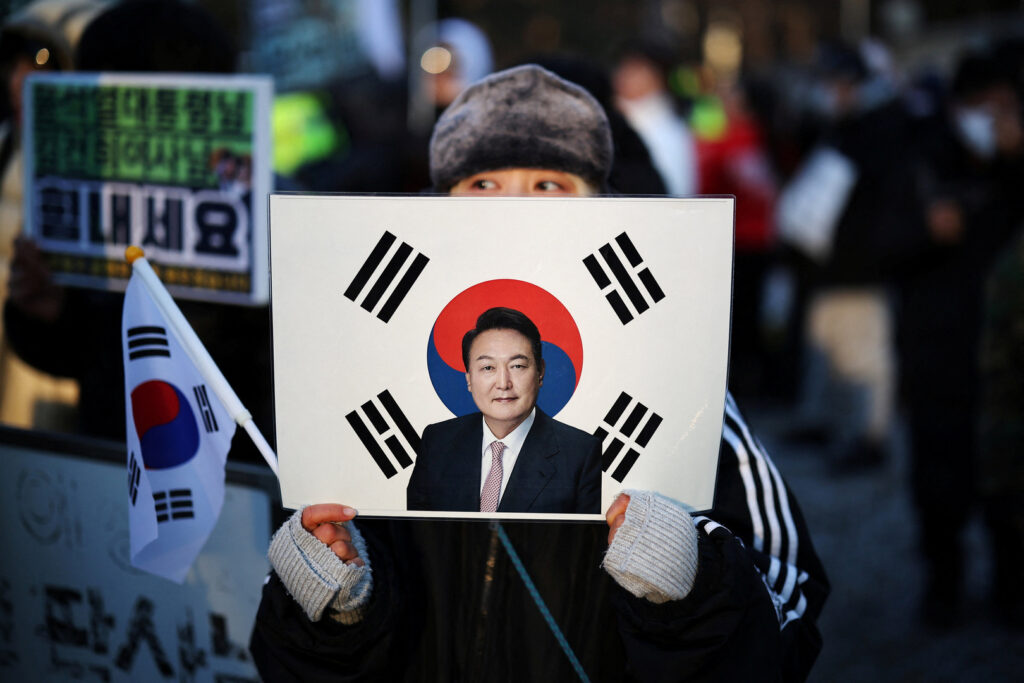
A woman holds a sign bearing South Korean national flag with a portrait of former President Yoon Suk Yeol, as they wait for his arrival for the final arguments in his insurrection trial, at a court in Seoul, South Korea, January 13, 2026. REUTERS/Kim Hong-Ji
South Korea has seen a historic verdict as the former president, Yoon Suk Yeol, was sentenced to five years in jail by a South Korean court. This ruling marks a significant chapter in the nation’s ongoing efforts to address past political controversies and uphold accountability at the highest levels of leadership.
Yoon Suk Yeol, who held the office of the president, faced charges related to the imposition and management of martial law during his tenure. The court found him guilty, concluding that his actions violated legal provisions and civil liberties, which led to the sentencing.
Martial law in South Korea has historically been a sensitive subject due to its implications on civil rights and political freedom. The case against Yoon underscores the judiciary’s resolve to scrutinize decisions made under the guise of national security and ensure they align with democratic principles.
Legal experts suggest this verdict could set a precedent for how future administrations are held accountable for state actions that affect civil liberties and governance rights. The trial attracted widespread attention across the nation, sparking debates on the balance between national security and individual freedoms.
Public reactions have been mixed, with some viewing the sentencing as a necessary step toward justice and transparency, while others warn about the political ramifications that might affect the country’s stability.
This case is part of a larger context of South Korea’s political landscape, where the rule of law and democratic values continue to be vigorously contested and defended. The decision to imprison a former president is rare and highlights the intense scrutiny applied to leadership roles.
Yoon Suk Yeol has yet to release a public statement regarding the verdict but is expected to appeal the decision. The appeal process may prolong the legal battle and keep the nation deeply engaged with the unfolding developments.
International observers are also watching closely, as South Korea’s handling of this case could influence its diplomatic relations and image as a mature democracy committed to justice and human rights.
Ultimately, this landmark case serves as a powerful reminder of the complexities and responsibilities involved in governance, especially relating to emergency powers and civilian oversight. It reflects the ongoing challenges democracies face in balancing authority with accountability and maintaining public trust.
The judiciary’s firm stance reiterates the message that no individual, regardless of their position, is above the law, reinforcing the foundation of democratic rule and respect for human rights in South Korea.