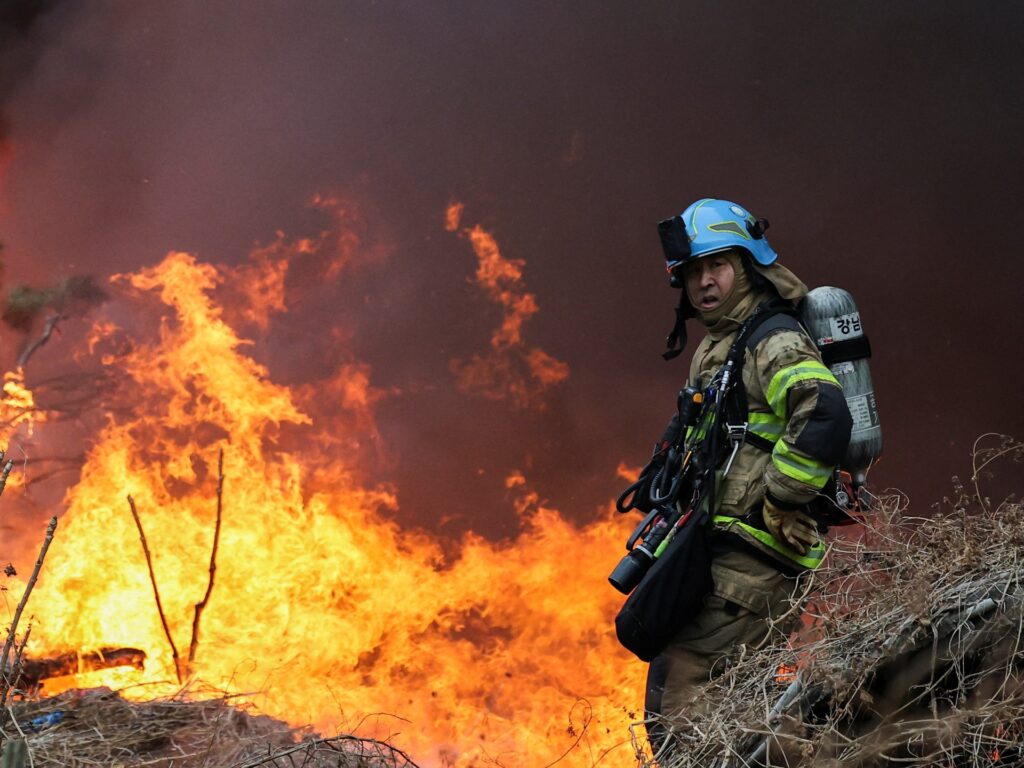
A massive fire recently broke out in one of the last remaining shanty towns on the outskirts of Seoul, South Korea, near the city’s affluent Gangnam district. Firefighters responded swiftly to the blaze that swept through makeshift homes, managing to prevent any casualties despite the scale of the fire.
The incident highlights an ongoing issue faced by Seoul, where small communities of informal housing exist alongside some of the country’s most modern and expensive neighborhoods. These shanty towns, often constructed from temporary materials, are highly vulnerable to fires, which can spread rapidly due to the dense and flammable nature of the buildings.
Emergency personnel worked tirelessly to control the fire, battling intense flames under challenging conditions. Their efforts were aided by local residents and authorities who coordinated evacuation and firefighting efforts.
Fortunately, there were no reports of injuries or loss of life. Firefighters managed to contain the fire within several hours, limiting the damage to a portion of the shanty town.
Officials are expected to investigate the cause of the fire as part of broader efforts to enhance safety and living conditions in these vulnerable communities.
The blaze draws attention to the contrast between Seoul’s modern districts and the marginalized areas where some residents live in precarious conditions. The government has been under pressure to improve housing and infrastructure to prevent future tragedies.
Residents displaced by the fire will require support including temporary shelter and aid, and local authorities plan to engage in rebuilding efforts.
This event serves as a reminder of the ongoing social and economic disparities within rapidly urbanizing cities like Seoul, and the critical need for inclusive urban development policies.