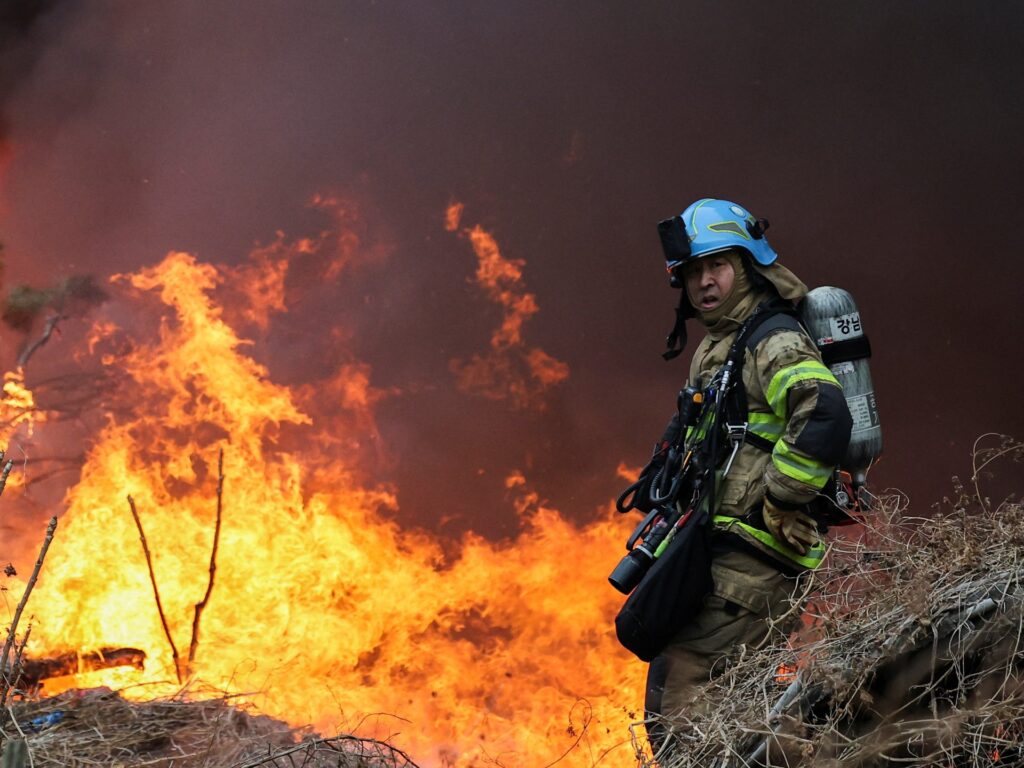
A significant fire erupted in one of the last remaining shanty towns situated on the outskirts of Seoul’s affluent Gangnam district. South Korean firefighters responded swiftly to the blaze, which consumed numerous makeshift homes constructed from flammable materials, posing challenges in containment efforts. Despite the scale and intensity of the fire, authorities reported no casualties or injuries, a fortunate outcome amid the chaos.
The shanty town, a stark contrast to the surrounding upscale neighborhoods, has long been home to a vulnerable community living in unregulated, informal housing. The fire broke out in the early hours, rapidly spreading due to the tightly packed nature of the structures and the high winds that day. Firefighters worked for hours, using extensive water resources and tactical strategies to prevent the fire from spreading further into the adjacent residential areas.
This incident has highlighted the precarious living conditions faced by many residents in the shantytown, raising concerns about safety standards and the need for improved housing policies. The local government has promised to review urban development plans with an emphasis on protecting vulnerable populations and preventing future disasters.
Emergency services praised the coordination and professionalism displayed during the response, noting that the lack of casualties was due to quick evacuation efforts and community cooperation. Investigations into the cause of the blaze are ongoing, with preliminary reports suggesting a possible electrical fault or unattended heating sources as potential triggers.
As the community begins assessing the damage, relief organizations are mobilizing to provide aid to those displaced by the fire. Temporary shelters and essential supplies are being arranged to assist families in need. The tragedy serves as a poignant reminder of the socio-economic divide in Seoul and emphasizes the necessity for sustainable urban development that includes all citizens.
The Seoul fire department has urged residents in similar informal settlements to take precautionary measures due to the high risk of fire emergencies in densely built and flammable housing environments. Public awareness campaigns are expected to increase, focusing on fire prevention and safety practices tailored to these unique living conditions.
Future plans include engaging with the affected communities to co-develop safer housing solutions that respect the cultural and social fabric of the neighborhoods while ensuring compliance with fire safety regulations.
In conclusion, this devastating fire at Seoul’s last shanty town not only underscores the resilience and bravery of the firefighters but also calls attention to urgent social and infrastructural issues. It paves the way for discussions about inclusive urban planning, adequate housing, and emergency preparedness in rapidly growing metropolitan areas like Seoul.