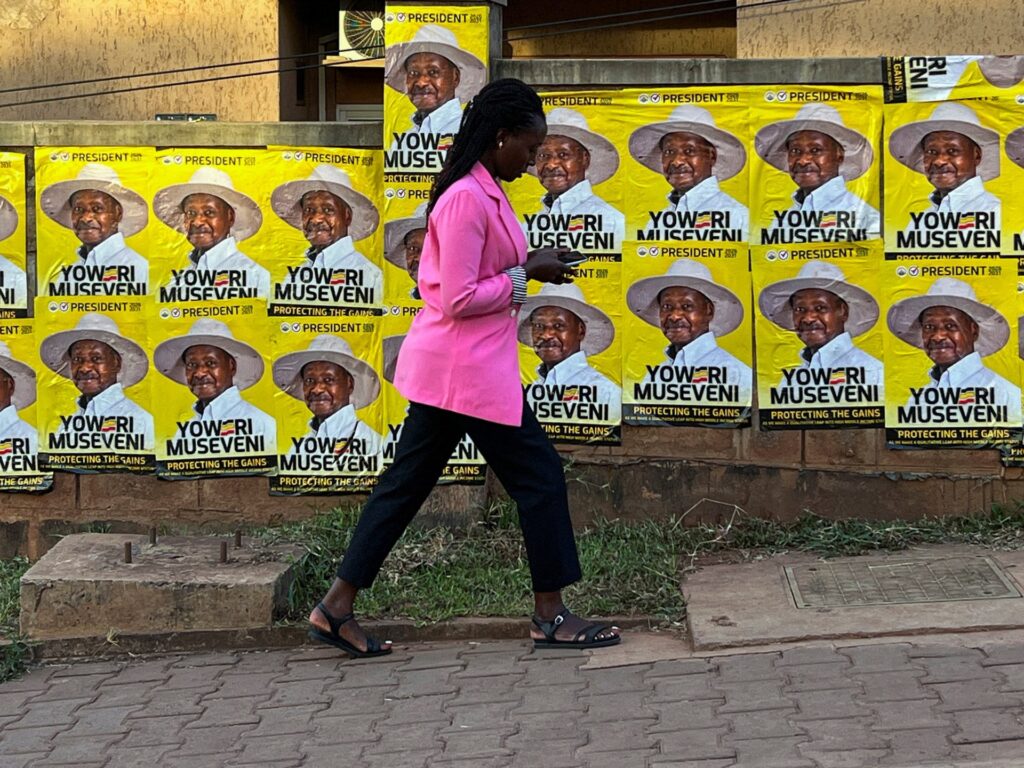
As Uganda approaches a pivotal election, the nation’s young population stands at the crossroads of hope and anxiety. With 70% of Ugandans under the age of 35, the youth demographic holds significant influence and expectation for change or continuity in their country’s political landscape.
The current president, Yoweri Museveni, aged 81, has ruled Uganda for over four decades. His tenure, which began in 1986, has seen significant developments but also controversies and accusations of suppressing opposition voices. Museveni’s decision to seek another term intensifies tensions as many young Ugandans yearn for new leadership that can address their aspirations for stability and opportunities.
Economic challenges persist in Uganda, including high unemployment rates among the youth, limited access to quality education, and difficulties in health care. These issues contribute to the uncertainty surrounding the election, as many young voters hope for policies that improve their quality of life.
The political environment leading up to the election is tense. There have been reports of increased security presence, restrictions on political gatherings, and heightened rhetoric among opposition leaders and government officials. For young Ugandans, this atmosphere is a double-edged sword—while there is a desire for a peaceful and fair electoral process, there is also concern about potential unrest or political suppression.
Youth activism has played a critical role in recent years, with young Ugandans organizing protests, engaging in social media campaigns, and advocating for reforms. This energetic participation underscores the importance of the election for the country’s future trajectory.
Observers both within Uganda and internationally are watching closely. The election’s outcome will not only affect Uganda’s political future but also its social and economic development. Stability is key for attracting investment and nurturing growth sectors such as technology and agriculture, sectors that could provide meaningful work for the burgeoning youth population.
Furthermore, the election reflects broader regional trends in East Africa, where long-standing leaders face growing calls for democratic reform from youthful populations eager for change.
In summary, Uganda’s youth embodies the hopes and challenges of a nation at a turning point. As the election nears, their aspirations for stability, job opportunities, and a responsive government stand in contrast to the enduring rule of a president who has defined the country’s politics for decades. How these dynamics play out will shape the future of Uganda and influence the aspirations of millions of young people eagerly awaiting the dawn of a new chapter.