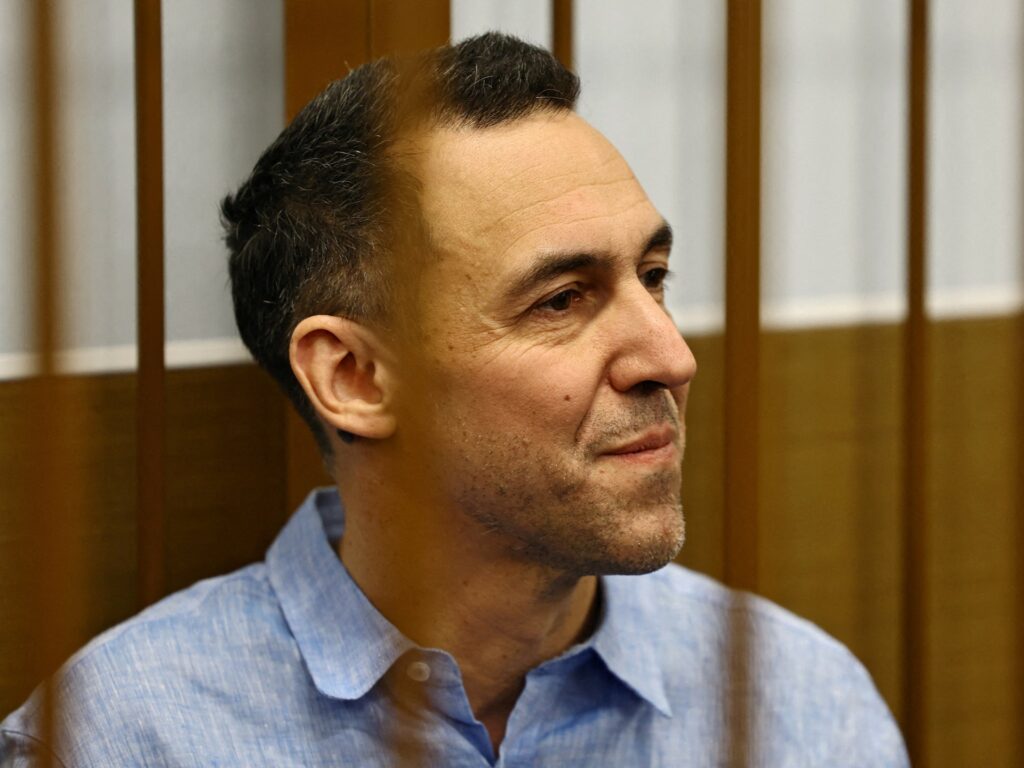
In a significant development, Russia has released Laurent Vinatier, a French researcher who had been sentenced to three years in prison. Vinatier was accused of violating Russia’s controversial ‘foreign agent’ laws, which have been criticized internationally for their stringent regulations on foreign-funded individuals and organizations.
Laurent Vinatier’s detention had sparked concern across diplomatic circles, as his work and time in Russia were closely monitored following accusations related to foreign influence and legal compliance. His sentencing to three years in prison had drawn attention from human rights advocates and the French government, who called for his release.
The recent prisoner exchange signifies a diplomatic thaw and a strategic move from both Russia and France amid ongoing geopolitical tensions. This exchange reflects the complex interplay between legal proceedings, diplomacy, and international relations that often surround cases involving foreign nationals detained under politically sensitive charges.
Vinatier’s release was facilitated through negotiations that involved high-level discussions between the two nations, indicating an effort to alleviate diplomatic strains and foster cooperation despite ongoing disagreements on various issues. Prisoner exchanges have historically served as a tool for countries to resolve contentious detentions while maintaining mutual respect and dialogue.
The French government welcomed Vinatier’s release, highlighting the importance of protecting its citizens abroad and supporting individuals facing legal challenges overseas. Officials expressed hope that this exchange would pave the way for improved bilateral relations and more constructive engagement in the future.
Meanwhile, Russia emphasized the enforcement of its legal framework and sovereignty, underscoring the necessity of upholding its national laws while engaging in diplomatic processes. The term ‘foreign agent’ laws in Russia pertains to legislation aimed at regulating organizations and individuals receiving foreign funding and deemed to be involved in political activities.
This law has been a focal point of criticism due to its broad definitions and the implications it has had on NGOs, researchers, and activists operating within Russia. The law requires entities labeled as ‘foreign agents’ to adhere to strict reporting standards and is often viewed as a mechanism to restrict foreign influence and monitor dissent.
Laurent Vinatier’s case brought international attention to the challenges faced by foreign researchers and experts working in Russia. It highlighted concerns about the limits imposed on academic freedom and the potential repercussions for those caught in the nexus of legal and political conflicts.
The exchange involving Vinatier adds to a series of recent prisoner swaps between Russia and various countries, reflecting a pragmatic approach to managing diplomatic disputes while mitigating the human cost associated with such detentions.
Experts suggest that such exchanges, while politically charged, are crucial in maintaining channels of communication and building trust amid strained international relations. They often act as confidence-building measures that can lead to broader discussions on cooperation and conflict resolution.
For Vinatier personally, his release marks the end of a challenging period, and his return to France is anticipated to renew his work and personal life free from the constraints encountered abroad. His case also serves as a reminder of the delicate balance between national security concerns and the protection of foreign nationals.
Moving forward, the incident may encourage both Russia and other nations to engage in dialogue to clarify legal standards and improve transparency regarding foreign nationals’ treatment, especially researchers and academics who contribute to cross-border knowledge exchange.
In conclusion, the release of Laurent Vinatier through a prisoner exchange stands as an important moment in Franco-Russian relations, emphasizing the role of diplomatic engagement in resolving individual cases within broader geopolitical contexts. It underscores the ongoing challenges and opportunities that exist at the intersection of law, diplomacy, and human rights.